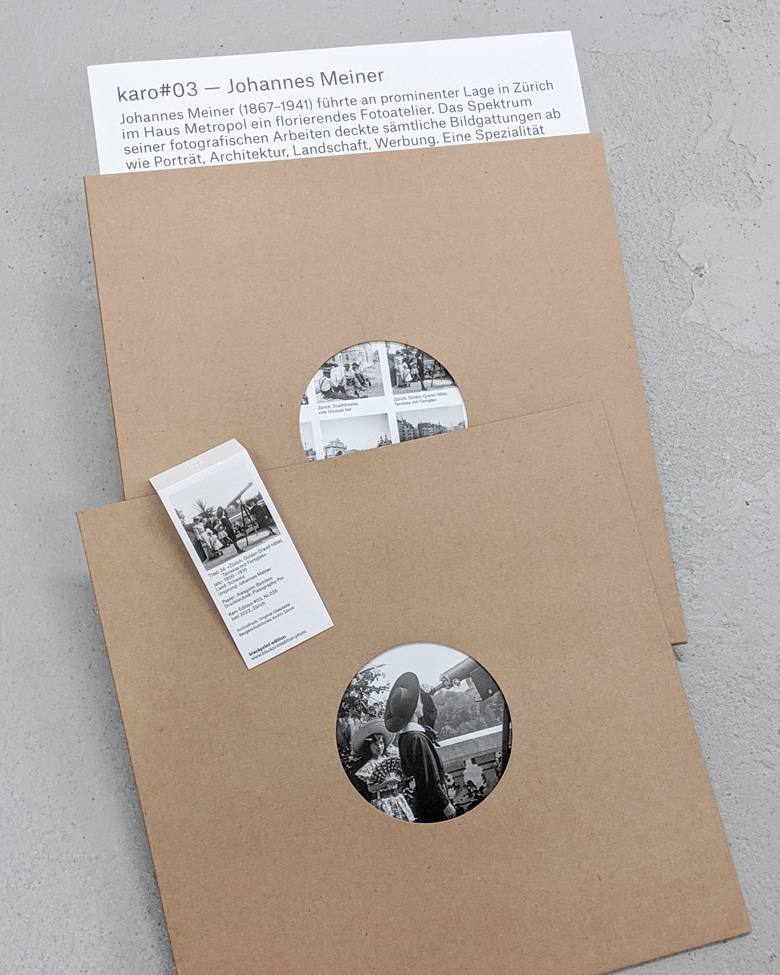
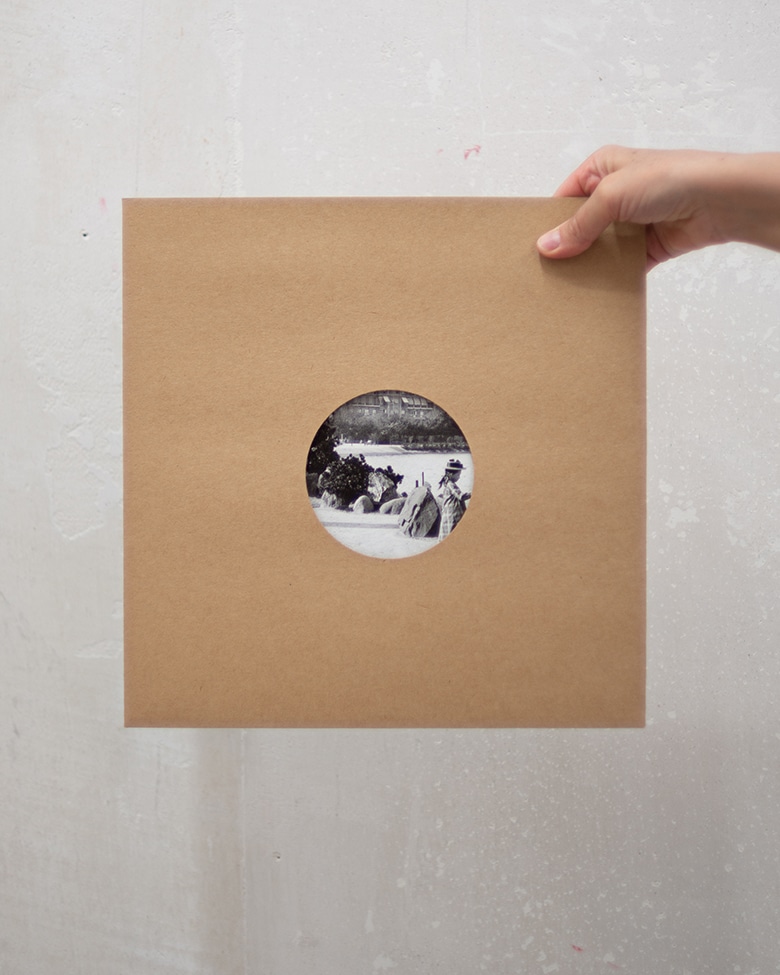
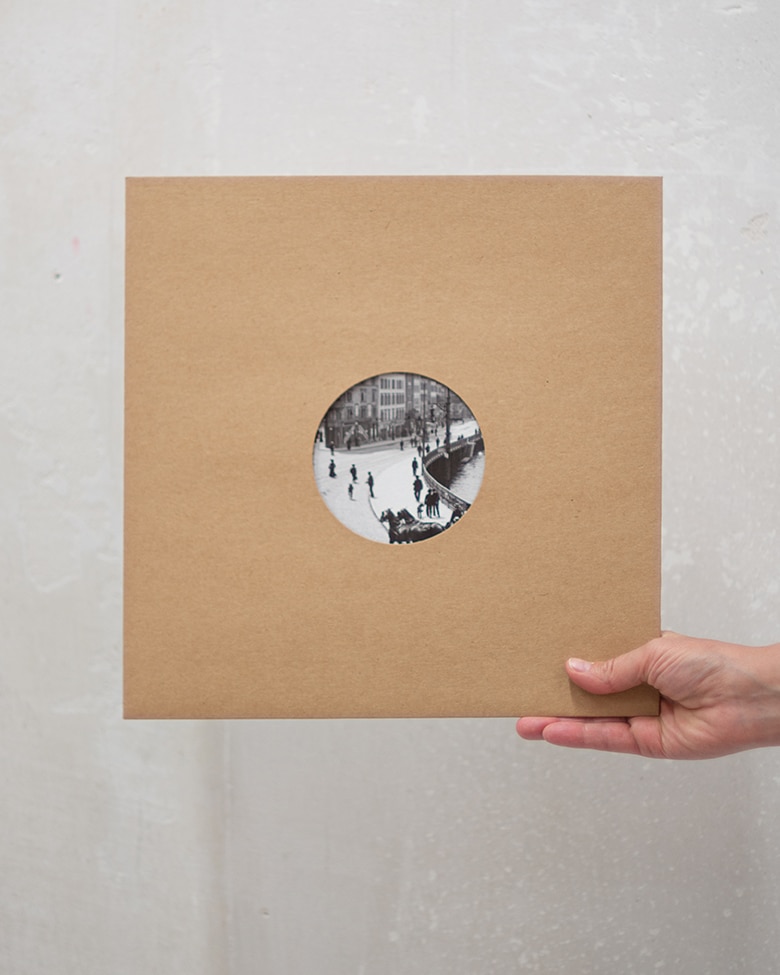
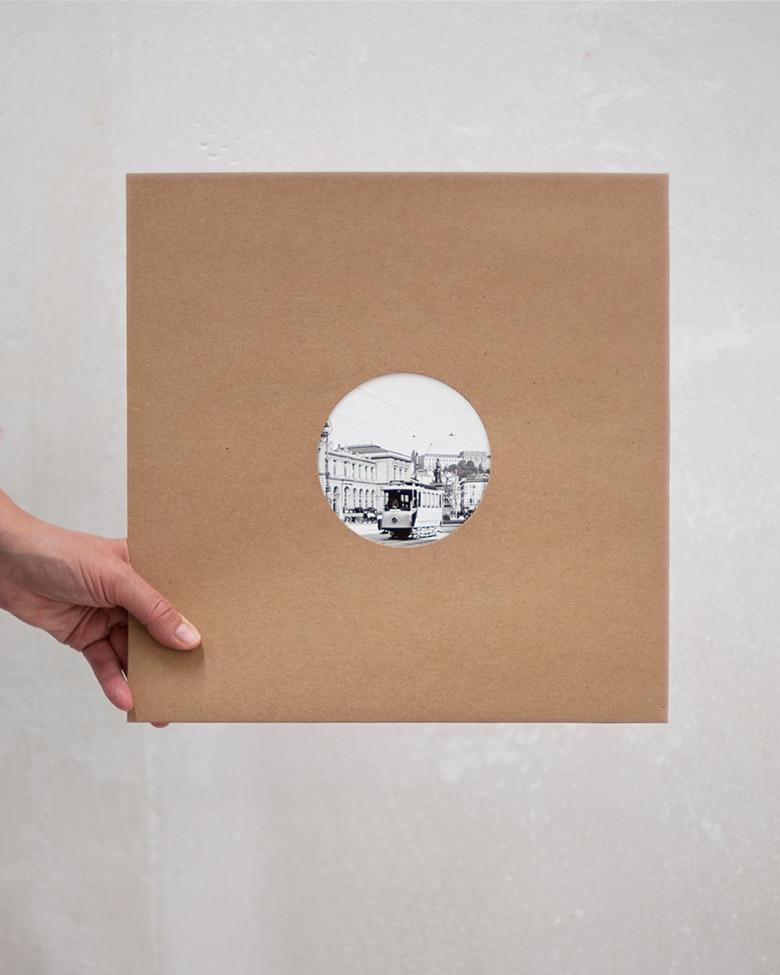
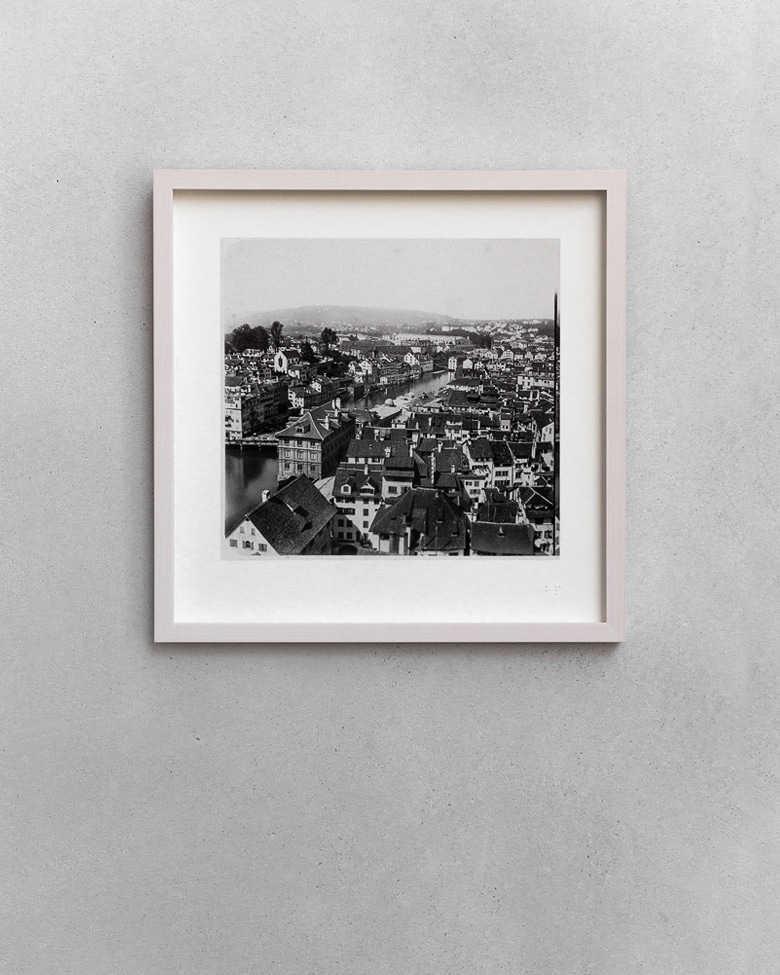
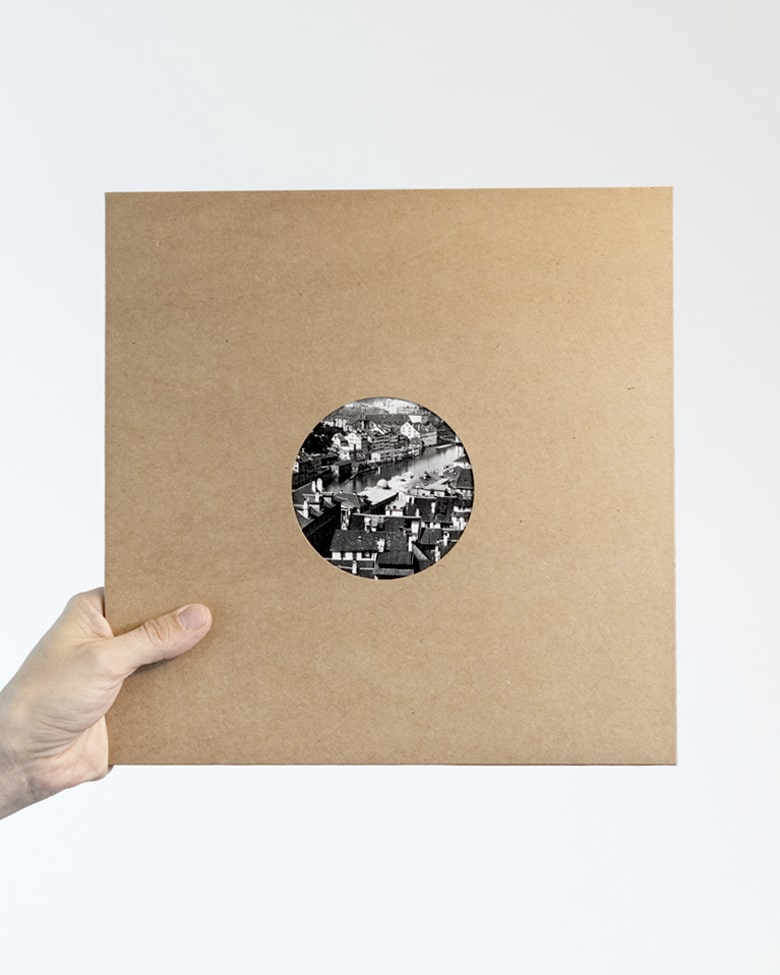
Johannes Meiner (1867–1941) ran a photographic studio in Zurich’s Metropol House, working across all genres: portraits, architecture, urban views, advertising. His speciality was stereoscopy — a format whose square constraint, once reframed, fits naturally into the Karo. His plates document Zurich between approximately 1890 and 1920, and are today held at the Baugeschichtliches Archiv der Stadt Zürich, the institution in collaboration with which this selection was assembled by Ylva Meyer.
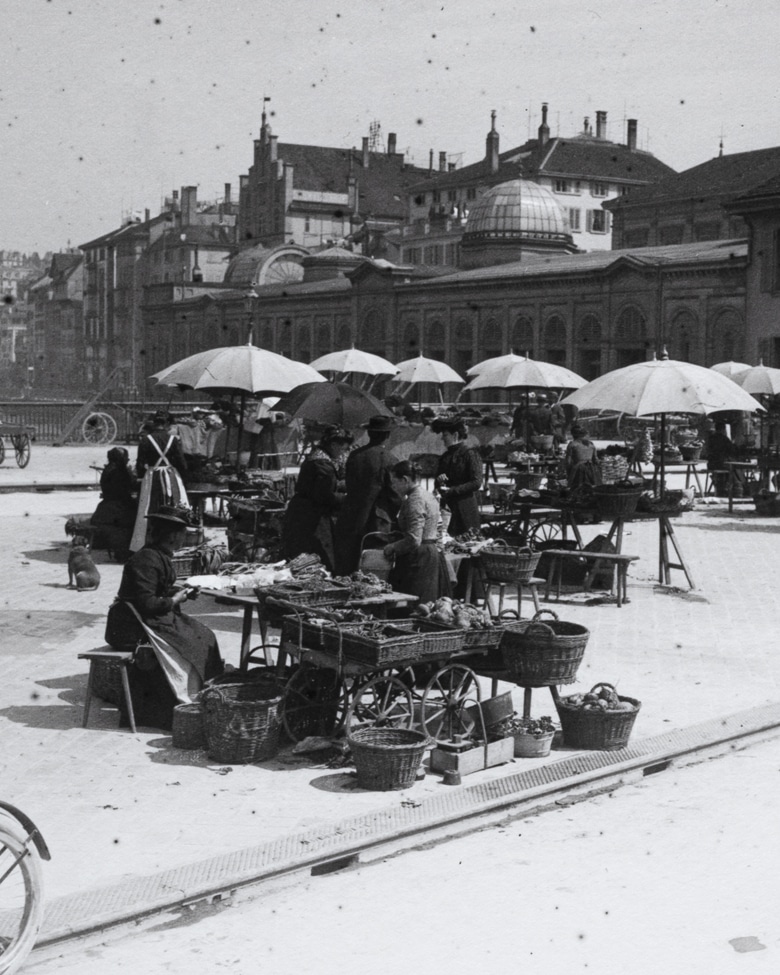
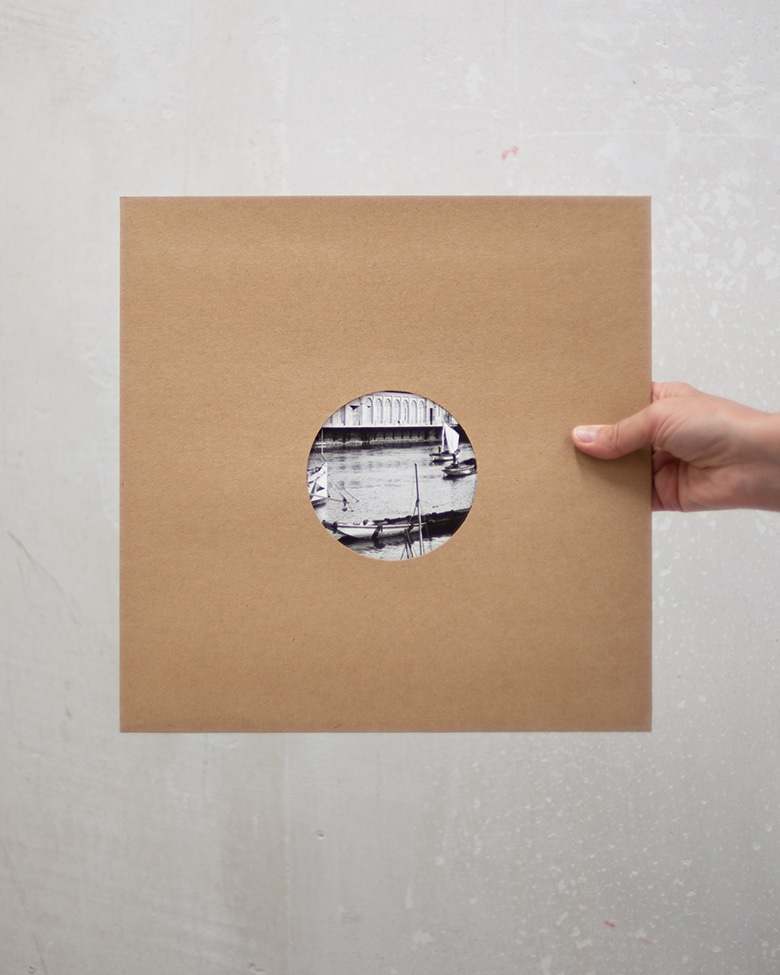
The Rathausbrücke — known in Zurich by its informal name, the Gemüsebrücke, or vegetable bridge — had served as a market site since the early fourteenth century. It is among the oldest and widest stone bridge structures in Switzerland, connecting the left and right banks of the Limmat in the heart of the Altstadt, and for five centuries it was the city’s only passable river crossing. In 1881 the old wooden bridge construction was replaced by a cast-iron structure designed by engineer Ludwig von Tetmajer, at which point the fixed market stalls were removed. The outdoor market continued on the bridge and in the adjacent area. The informal name remained — and still does today. The building visible in the background, with its arched arcade facade and glass-domed roof, is the Fleischhalle, the city’s centralised meat market built in 1864–1866 at Limmatquai 61, which would be demolished in 1962.
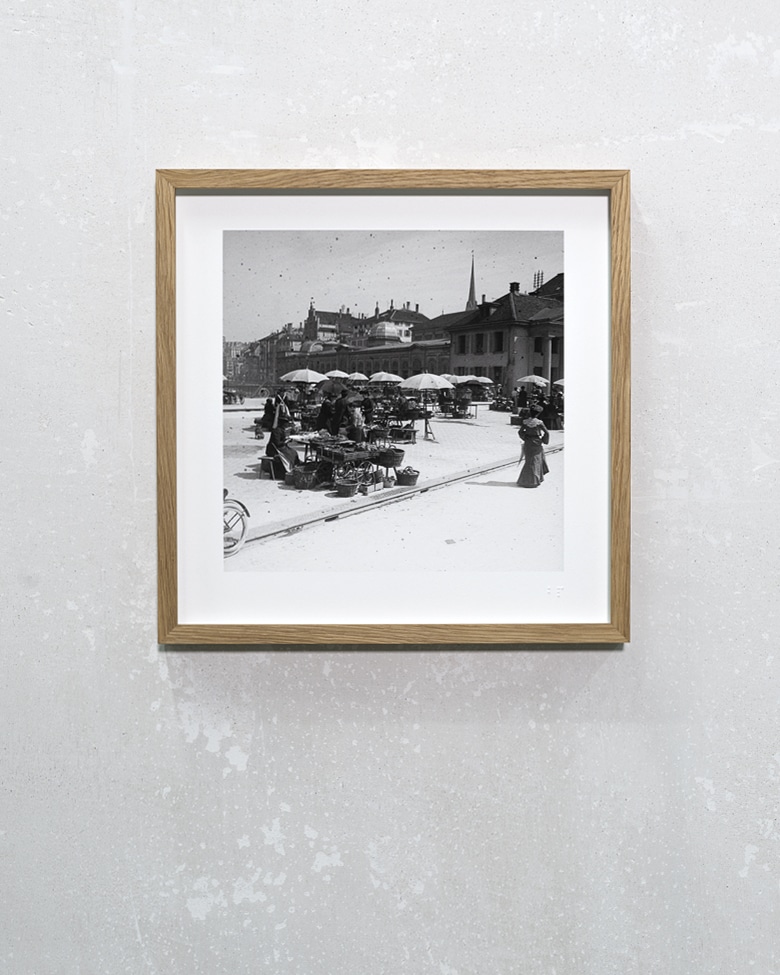
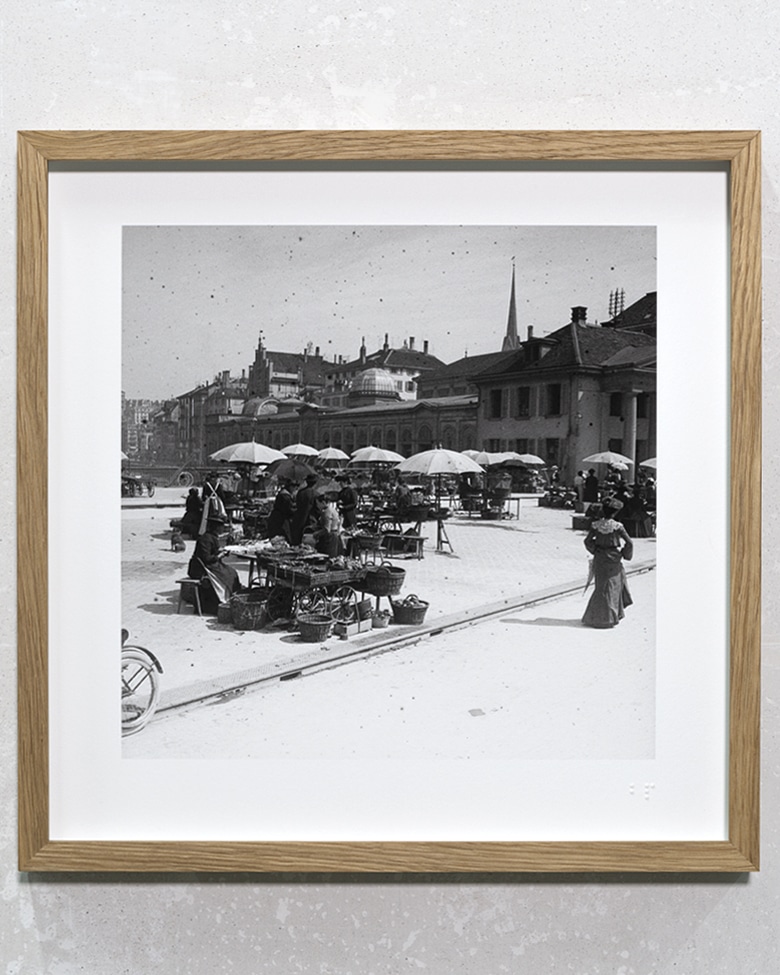
Meiner photographed the market from within it, not from a distance. The foreground is occupied entirely by the working infrastructure of the stalls: wicker baskets stacked at various levels, a wheeled cart used as a mobile display surface, a woman vendor seated at her bench. The white market umbrellas recede in parallel toward the Fleischhalle facade. The tram rail crossing the lower edge of the frame places the scene precisely: the Gemüsebrücke, at the point where the city’s medieval commercial life continued to function alongside its electrified infrastructure.
The plate
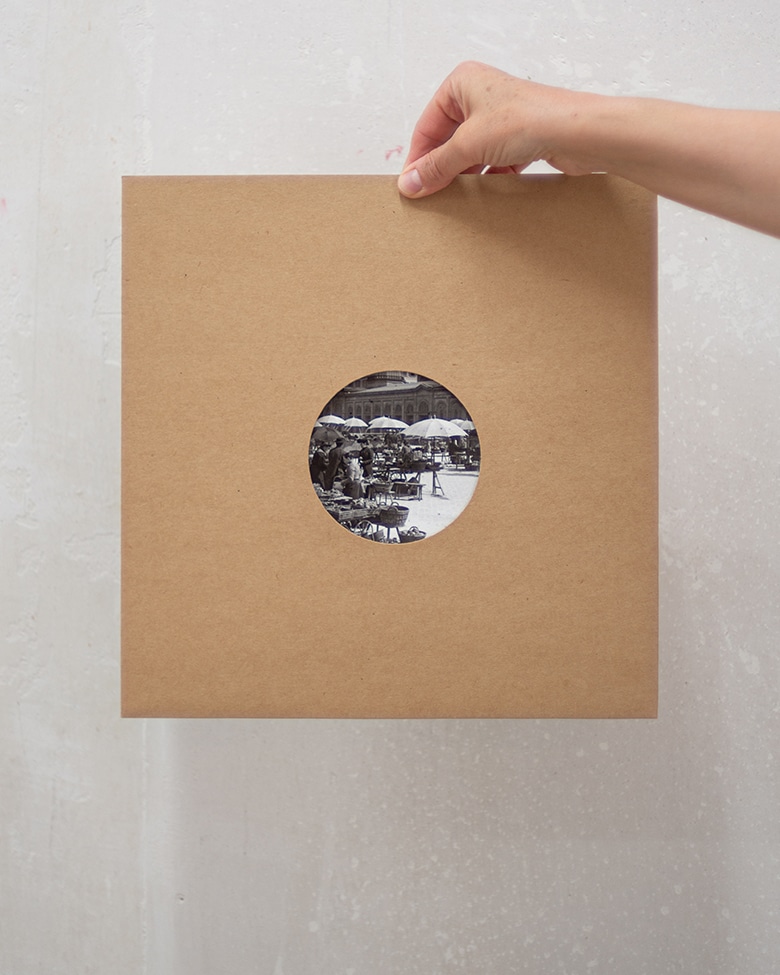
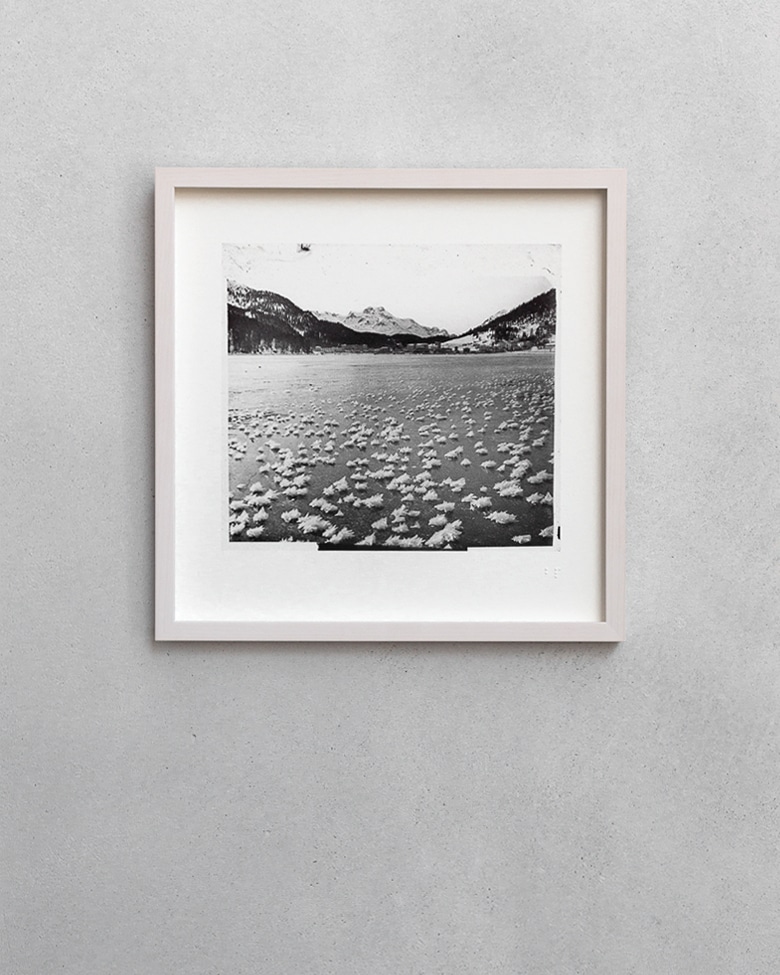
Stereoscopic glass slide titled “Zürich, Gemüsebrücke, n. Fleischhalle zu.” Selected from the Johannes Meiner holdings at the Baugeschichtliches Archiv der Stadt Zürich. Dated c. 1900–1910. Piezography® Pro print on Awagami Bamboo Washi, 250 g/m² — made by the Awagami Factory in Tokushima, Japan, directed by the Fujimori family for eight generations, within a washi tradition in the Awa region dating to the 7th century. 30 × 30 cm. Edition of 200, Zürich.