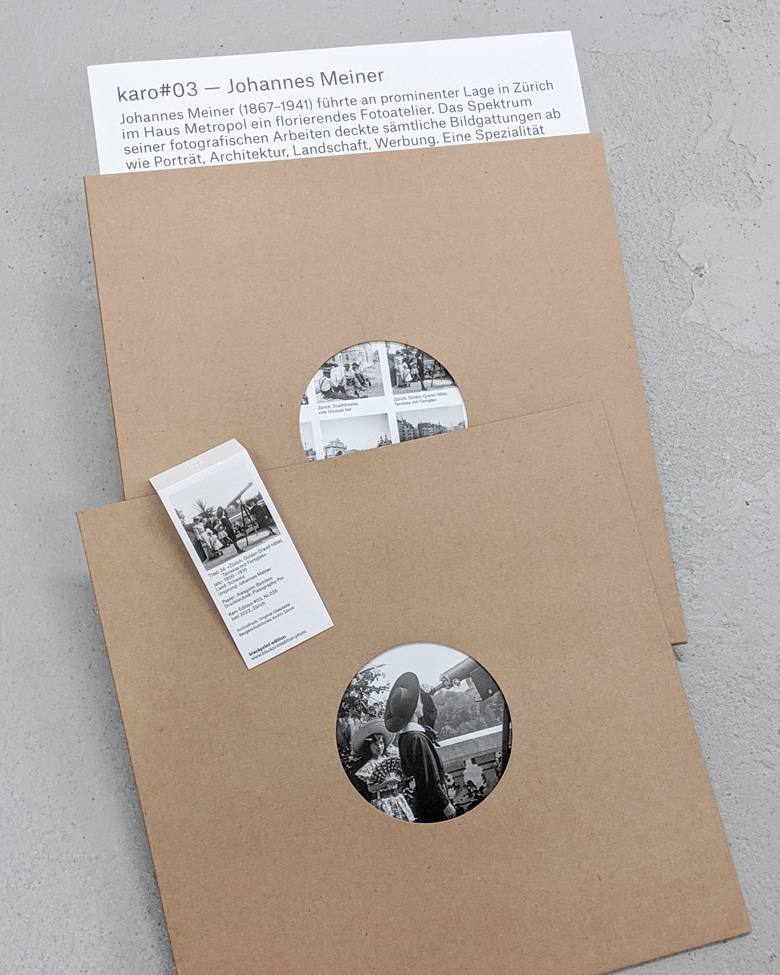
Johannes Meiner (1867–1941) ran a photographic studio in Zurich’s Metropol House, working across all genres: portraits, architecture, urban views, advertising. His speciality was stereoscopy — a format whose square constraint, once reframed, fits naturally into the Karo. His plates document Zurich between approximately 1890 and 1920, and are today held at the Baugeschichtliches Archiv der Stadt Zürich, the institution in collaboration with which this selection was assembled by Ylva Meyer.
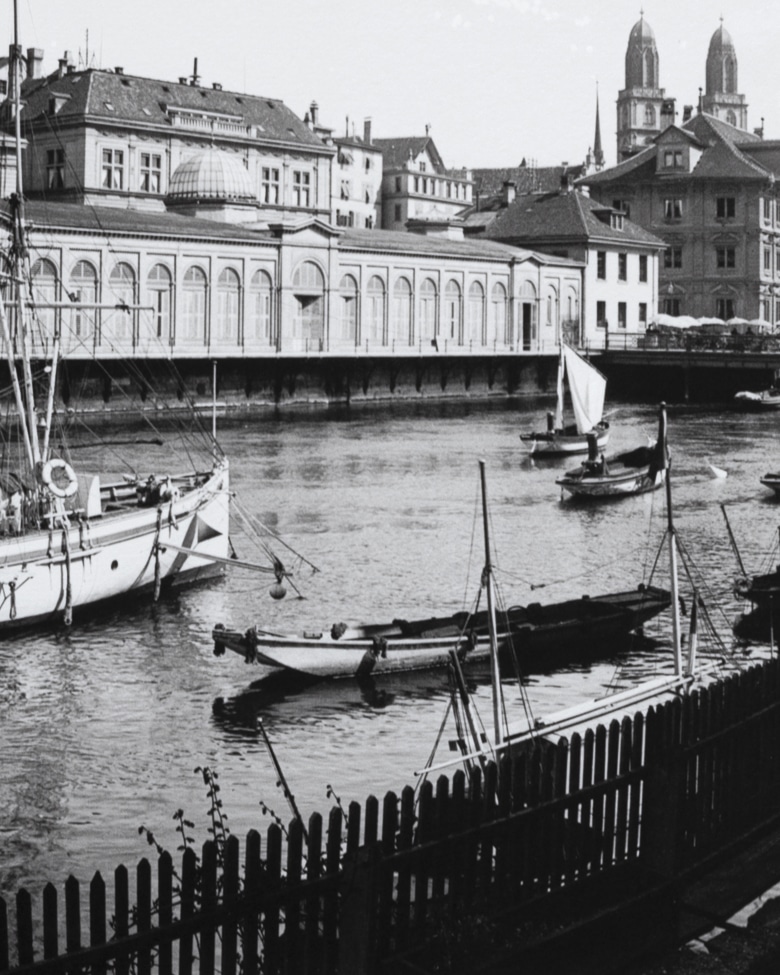
The Fleischhalle was built between 1864 and 1866 to designs by the city architect Ludwig Hanhart, on the site of the old slaughterhouse at what is now Limmatquai 61. It was conceived as a centralised meat market — private butchers were prohibited at the time for hygiene reasons — and opened on 10 April 1866. Hanhart designed it in a Byzantine style, with domes and arched windows along its facade facing the Limmat. Zürich residents gave it an immediate and lasting nickname: Kalbshaxenmoschee — the veal knuckle mosque.
In an irony that defined its entire history, the ban on private butchers was lifted the same year the building opened. What had been planned as an exclusive market became immediately redundant. At its peak the hall held around forty stalls; by 1900 there were nineteen; by 1950, six. The last remaining tenants fought its demolition all the way to the Federal Court, without success. It was torn down in 1962 despite protests from architects and artists, a decision widely regretted afterwards.
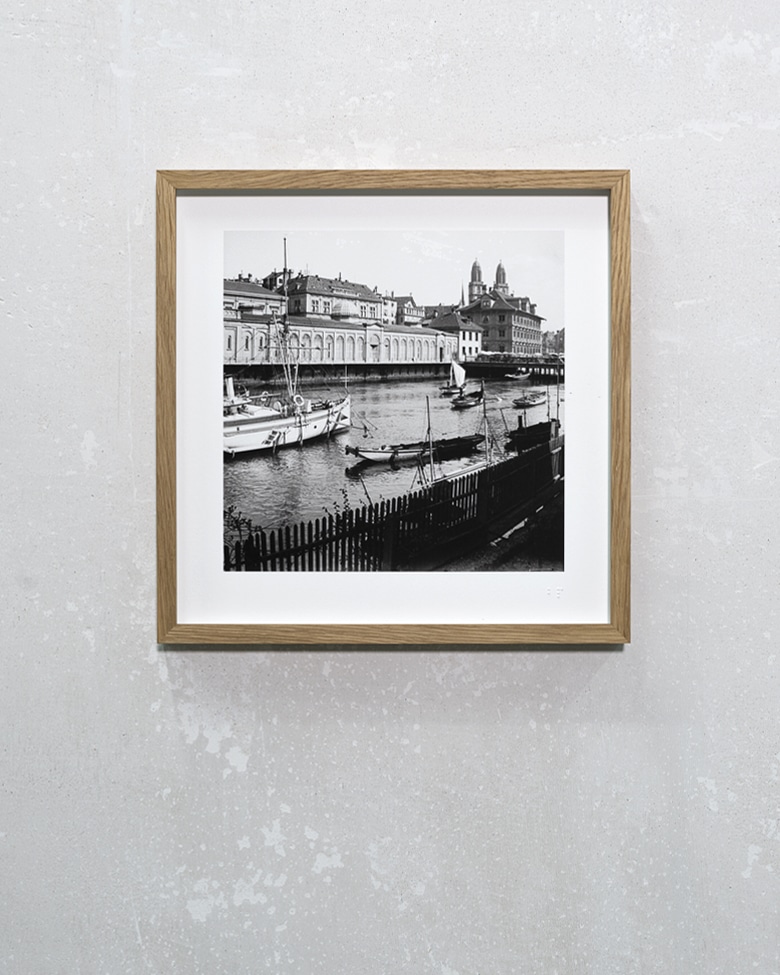
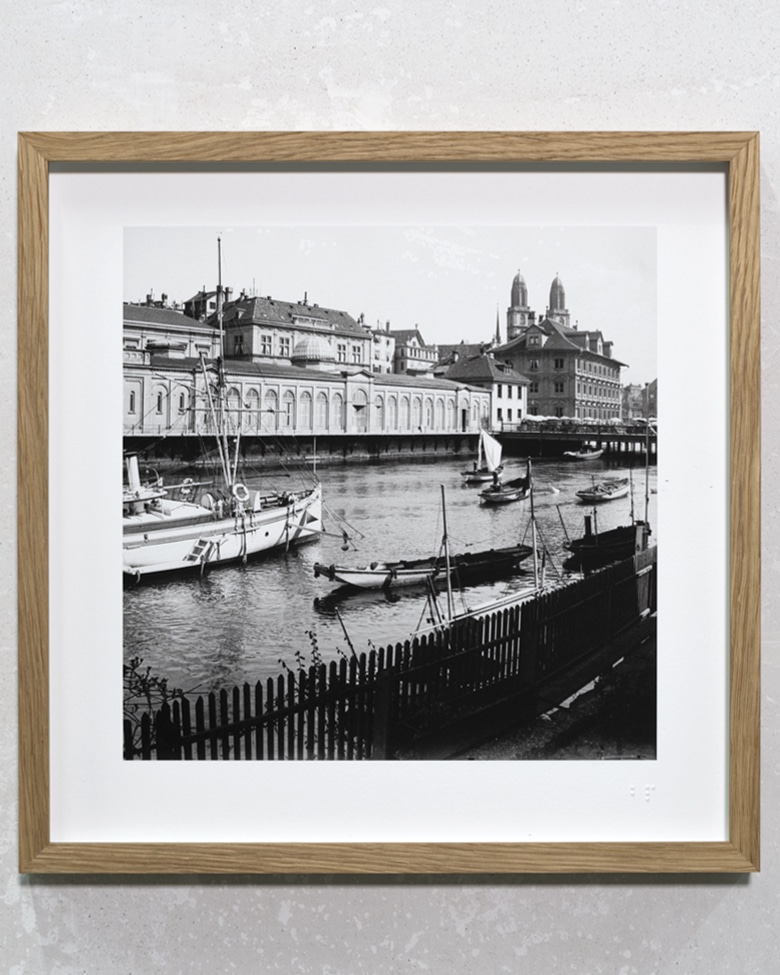
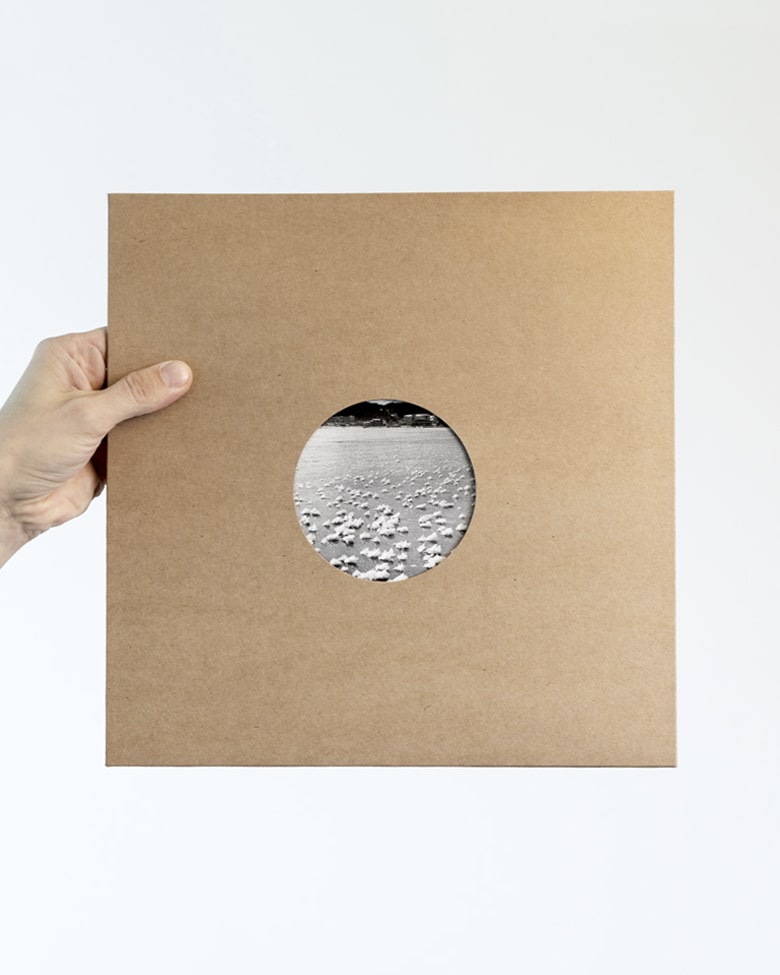
Meiner photographs the building from the water — or more precisely, from the opposite bank, looking across the Limmat toward the right bank. Sailboats and a steamer occupy the foreground; the building’s arcade runs the length of the middle ground; the Grossmünster’s twin towers close the composition at the upper right. The view is characteristic of his stereoscopic practice: water as foreground plane, the city as backdrop, depth created by the distance between the two.
The plate
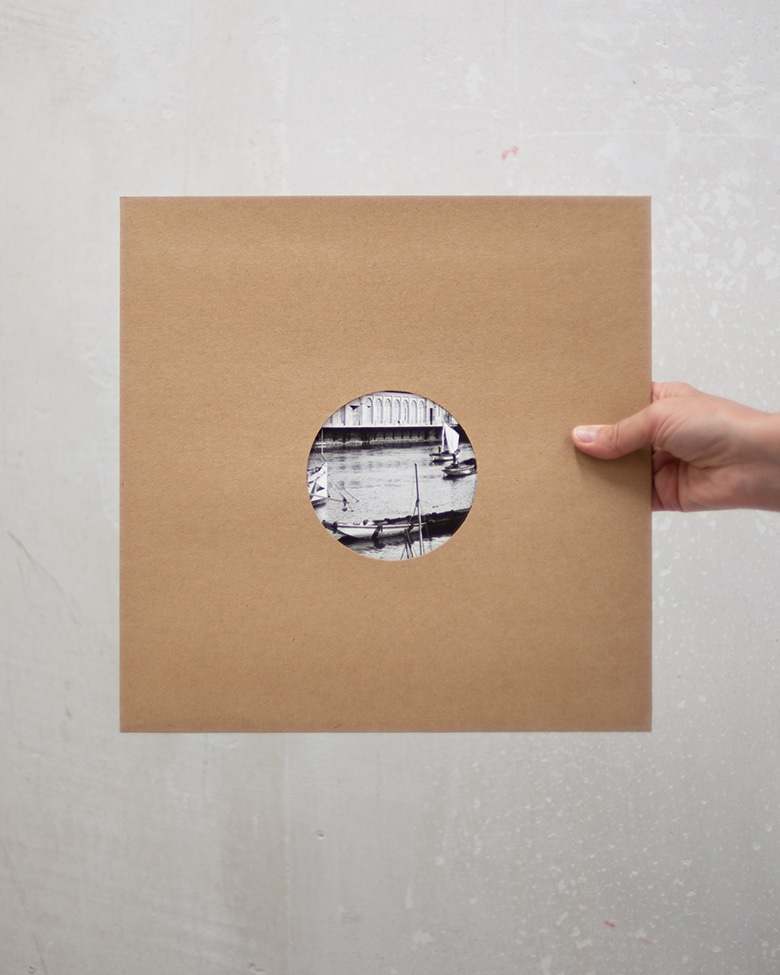
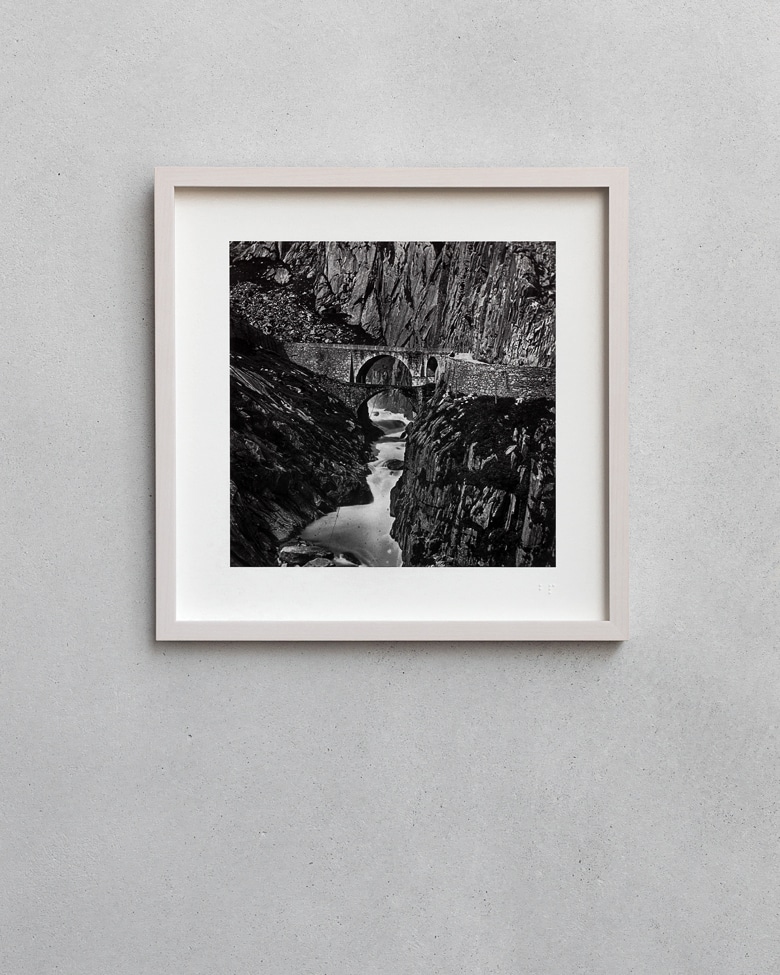
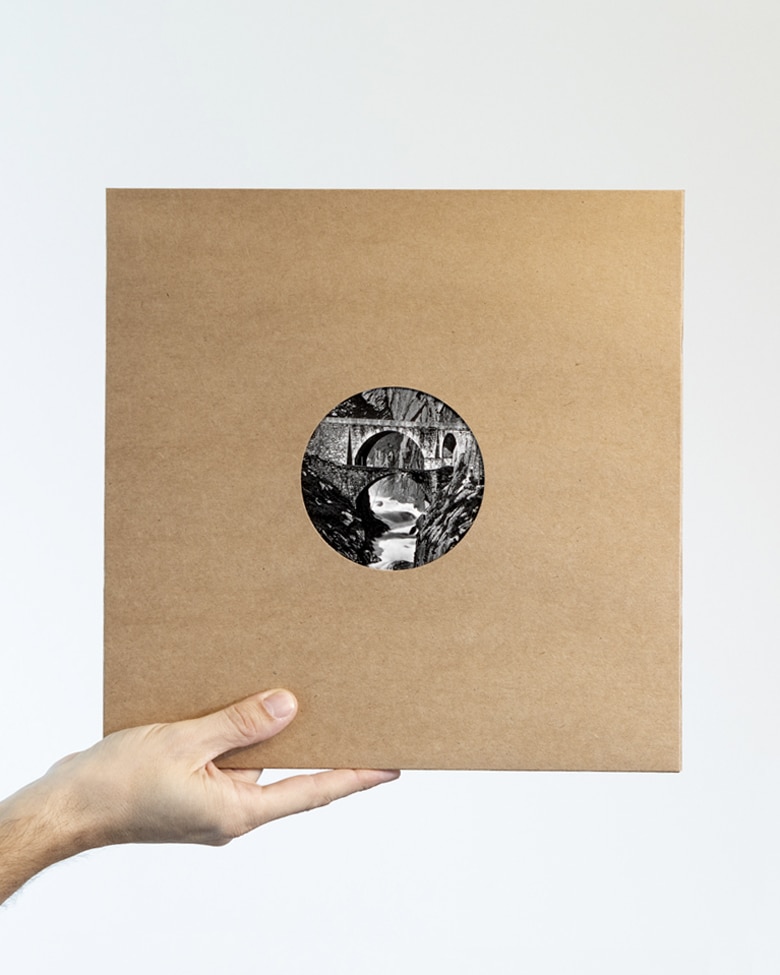
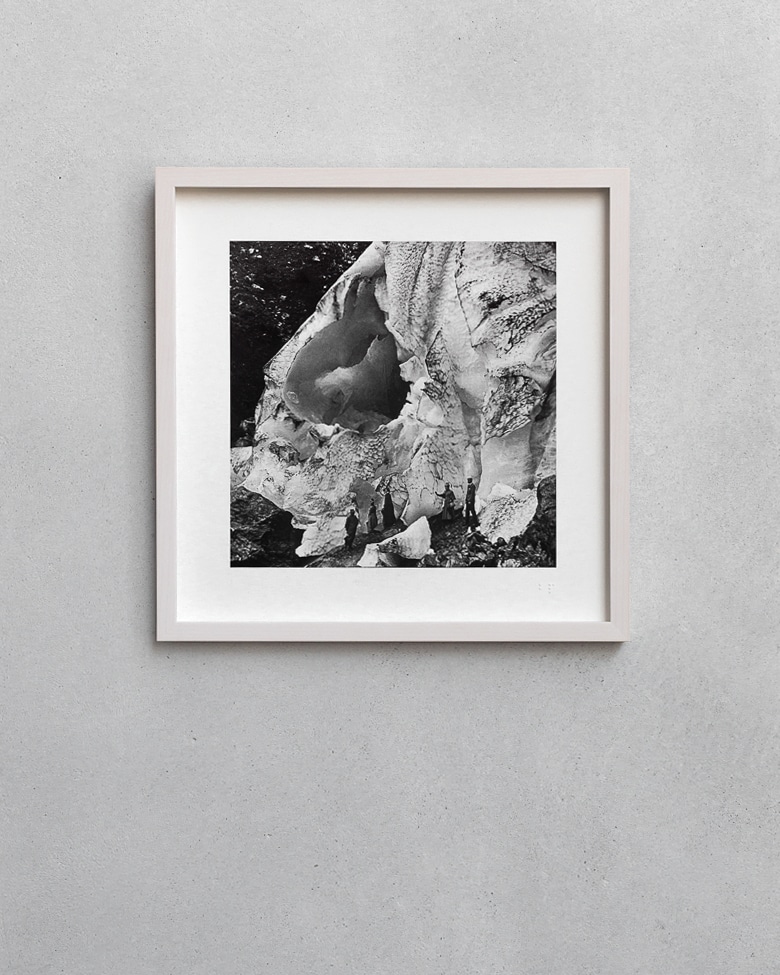
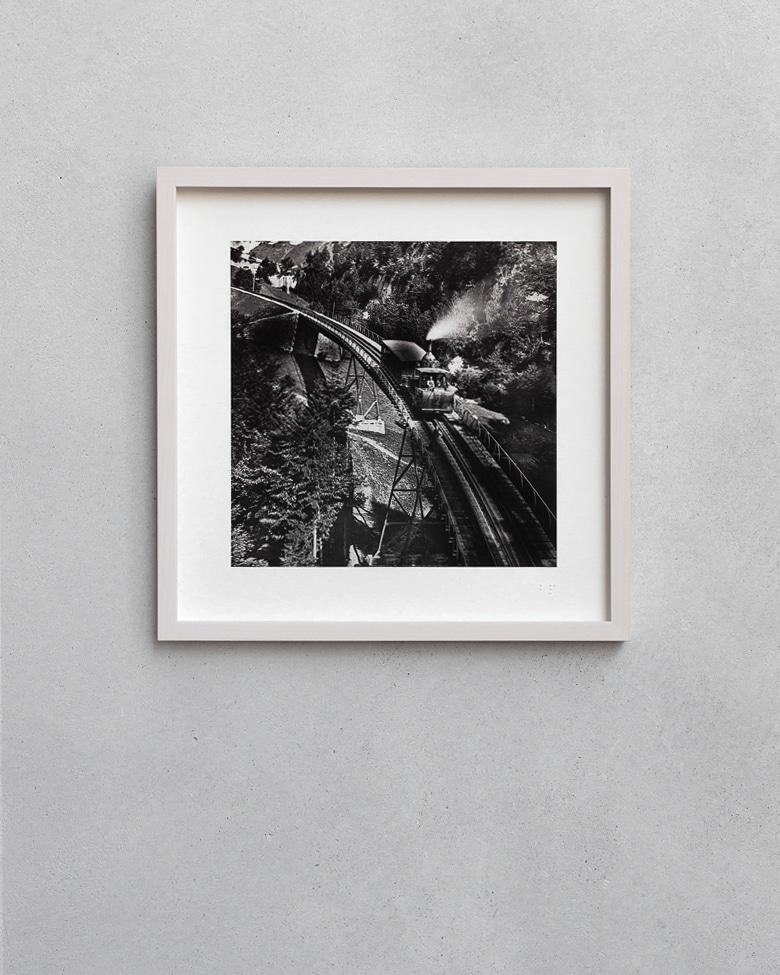
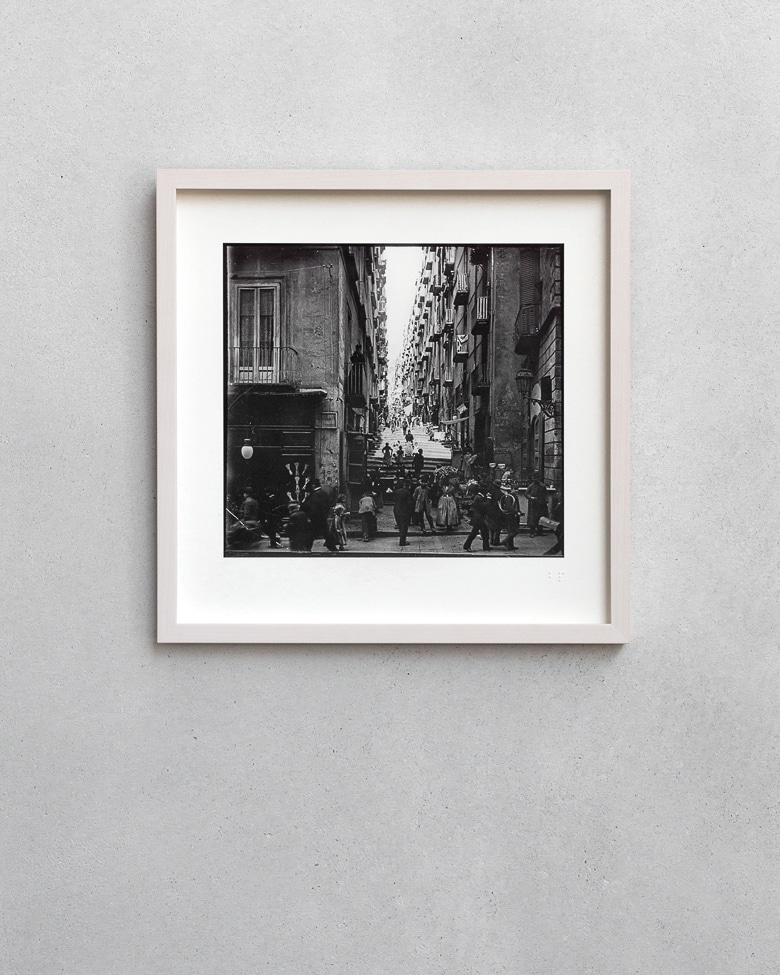
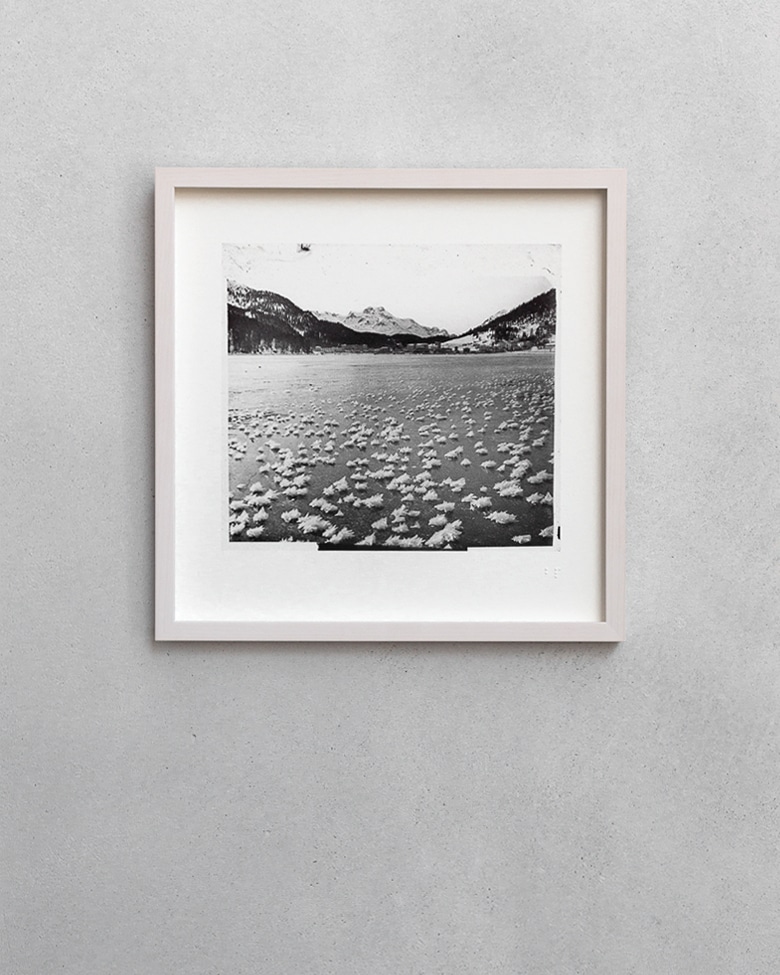
Stereoscopic glass slide. Plate title not confirmed from product page. Selected from the Johannes Meiner holdings at the Baugeschichtliches Archiv der Stadt Zürich. Dated c. 1900–1910. Piezography® Pro print on Awagami Bamboo Washi, 250 g/m² — made by the Awagami Factory in Tokushima, Japan, directed by the Fujimori family for eight generations, within a washi tradition in the Awa region dating to the 7th century. 30 × 30 cm. Edition of 200, Zürich.