Lachenal & Favre
J. Lachenal and L. Favre operated a Geneva-based photographic studio producing stereoscopic glass slides for the Swiss and European market. Their 1874 general catalogue — preserved at the Bibliothèque nationale de France — documents a programme extending from Parisian monuments to the Swiss Alps, with a Swiss series covering the major cities, passes, and alpine subjects of the period. Catalogue number 520 places this plate near the opening of their Swiss series, which begins at number 500 with subjects around Bellinzona and the Gotthard. Their work circulated within the same European stereoscopic trade as Ferrier & Soulier, and their Swiss documentation overlaps in both geography and period with the earlier Parisian firm’s catalogue.
The new station
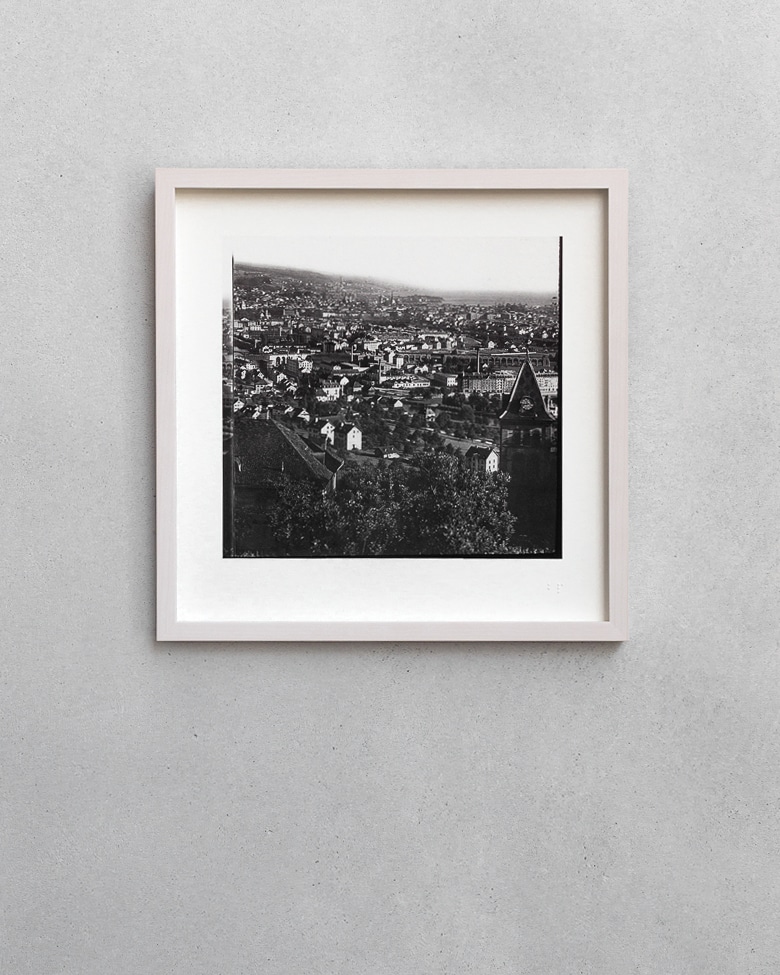
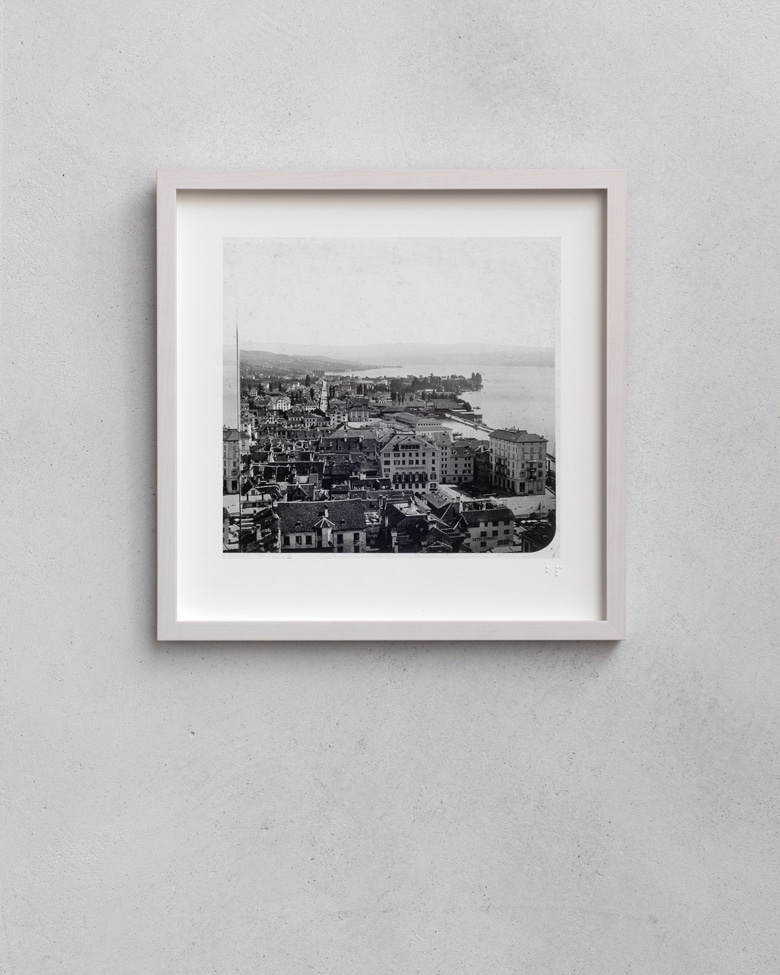
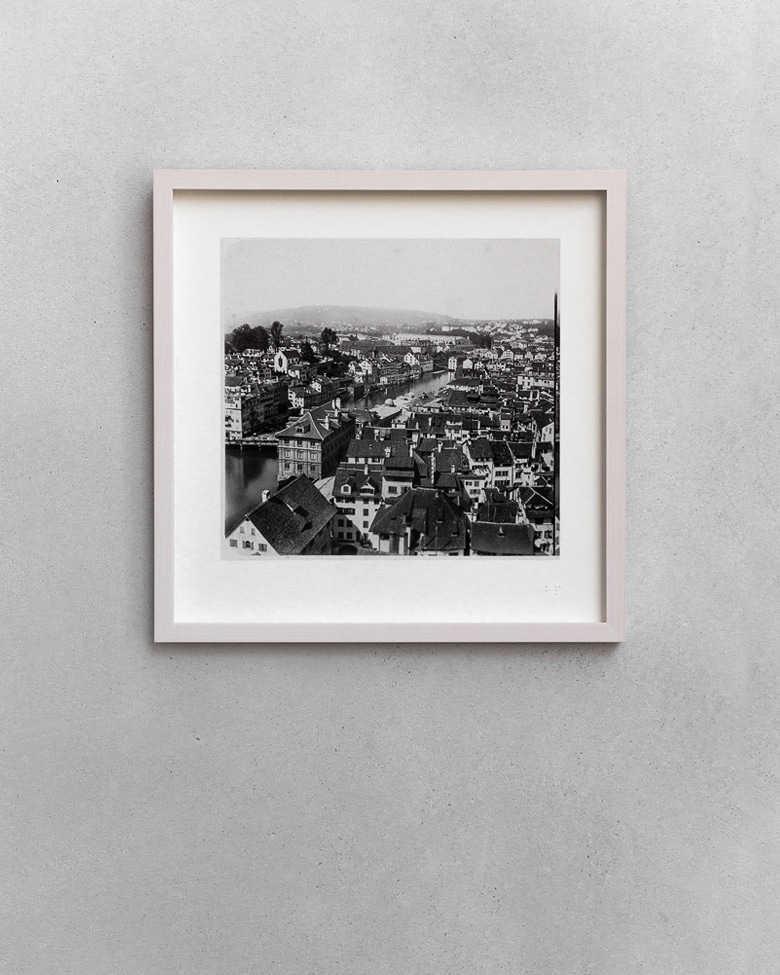
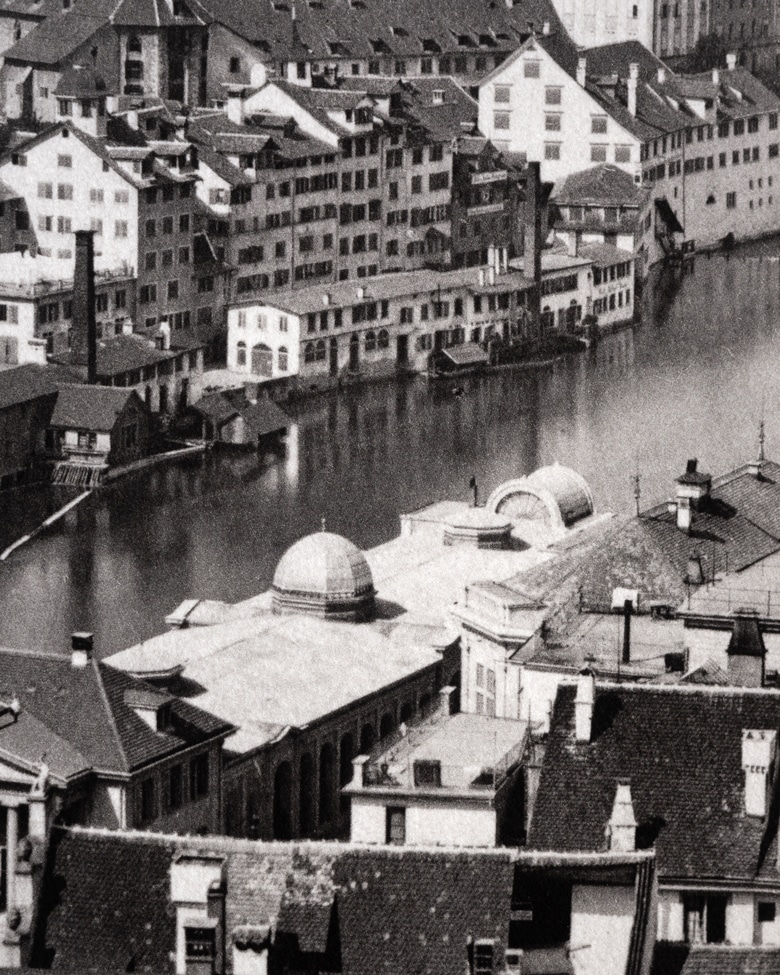
The Zürich Hauptbahnhof that appears in this plate had been completed the same year the photograph was taken. The old 1847 terminus — visible in the Ferrier & Soulier view from nine years earlier — had been demolished to make way for the new building designed by Jakob Friedrich Wanner in a Neo-Renaissance style. The hall with its prominent arcade of rounded arches, its pitched glass roof and its symmetrical façade represented a deliberate statement about Zürich’s ambitions as a railway city: by 1871, multiple lines converged on the site, connecting the city to Winterthur, to the lake, and to the expanding national network. The 1847 building had been adequate for a single line terminus; the 1871 hall was built for a junction. The station retained this function until 1930, when rail traffic was moved into the adjacent train shed and the Wanner hall became a concourse.
The composition
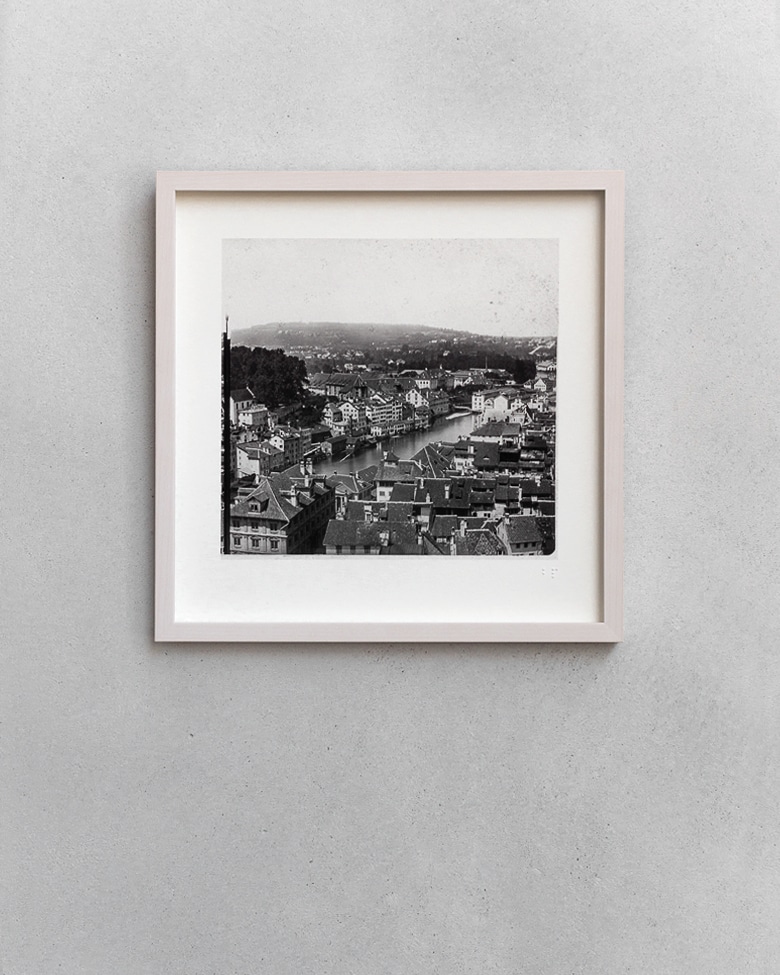
From the same tower, the same north-facing view: the Limmat diagonal, the compressed rooftops of the Altstadt filling the foreground, the river narrowing between the two banks toward the background. What has changed is the skyline. Where the 1862 plate shows a low, anonymous roofline at the far end of the river corridor, this plate shows the new Hauptbahnhof’s arcade in full — arches, pilasters, and the glass roof clearly legible even at distance. The plate title “Côté du chemin de fer” makes the subject explicit: this is not a panorama of Zürich, but a document of the city’s railway side. The nine years between the two plates collapse into a single comparison, available to any viewer who held both slides to the light.
The plate
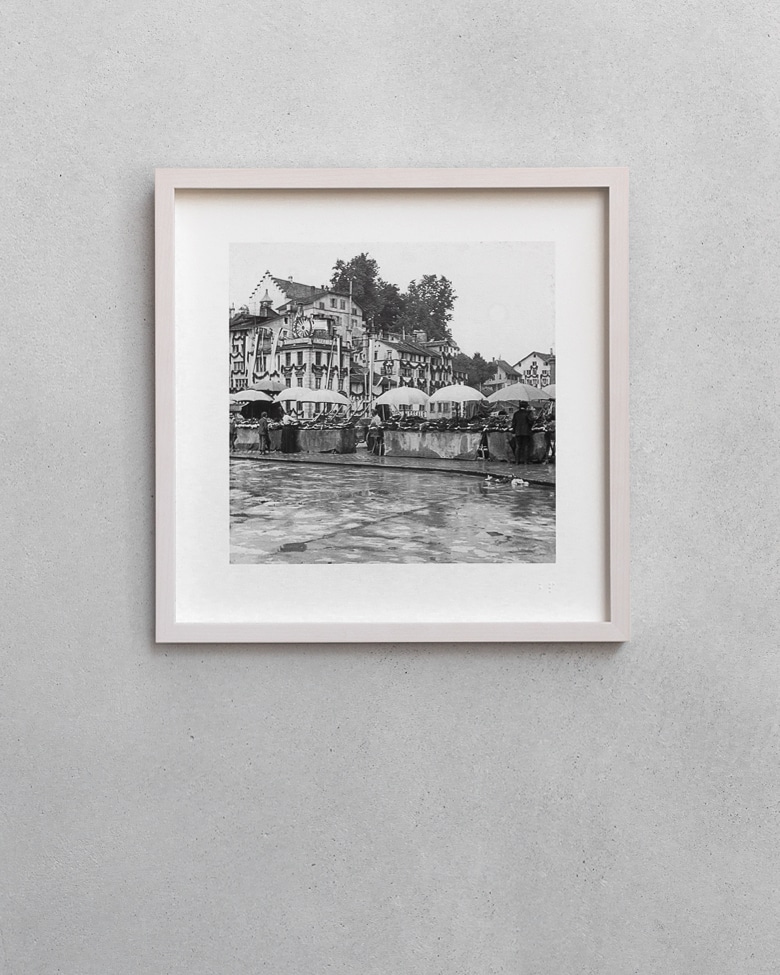
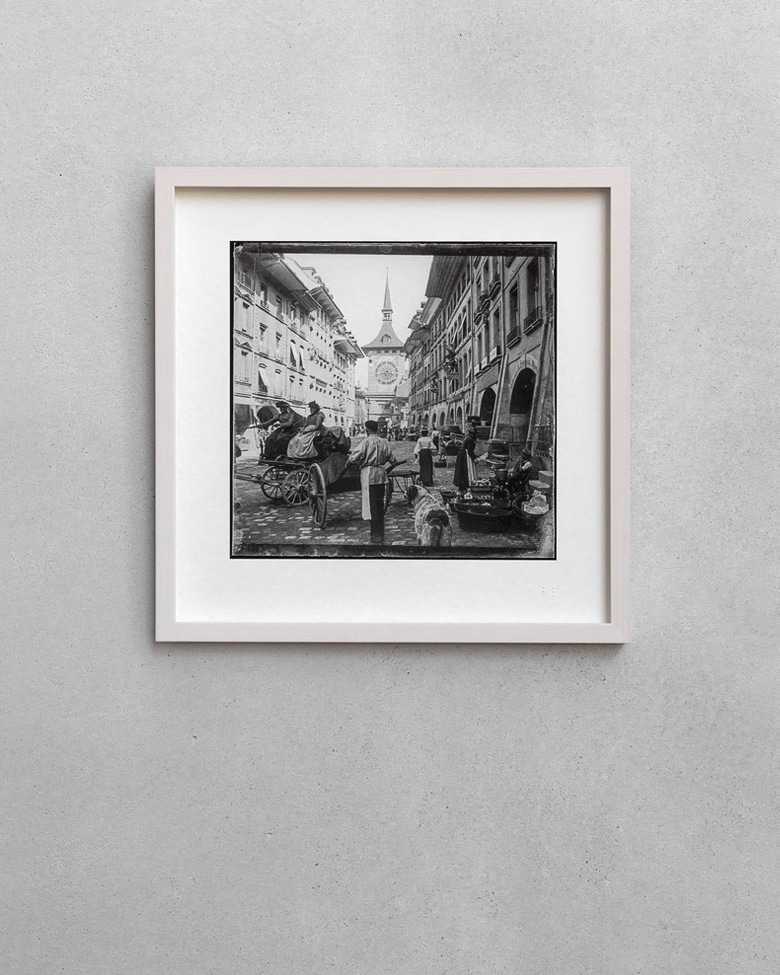
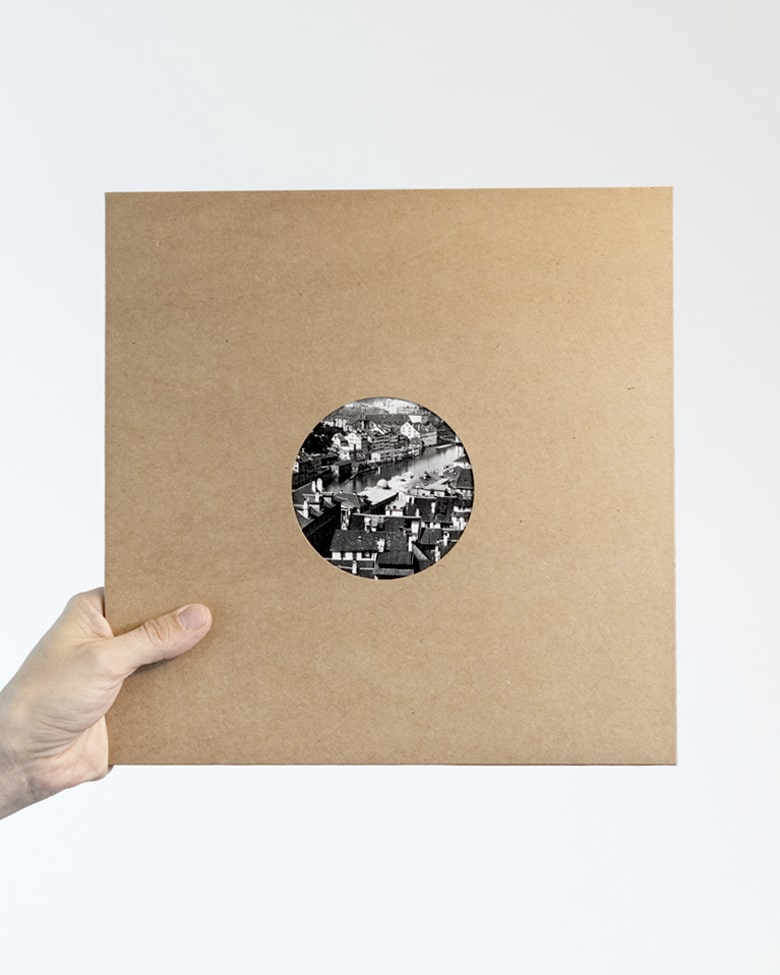
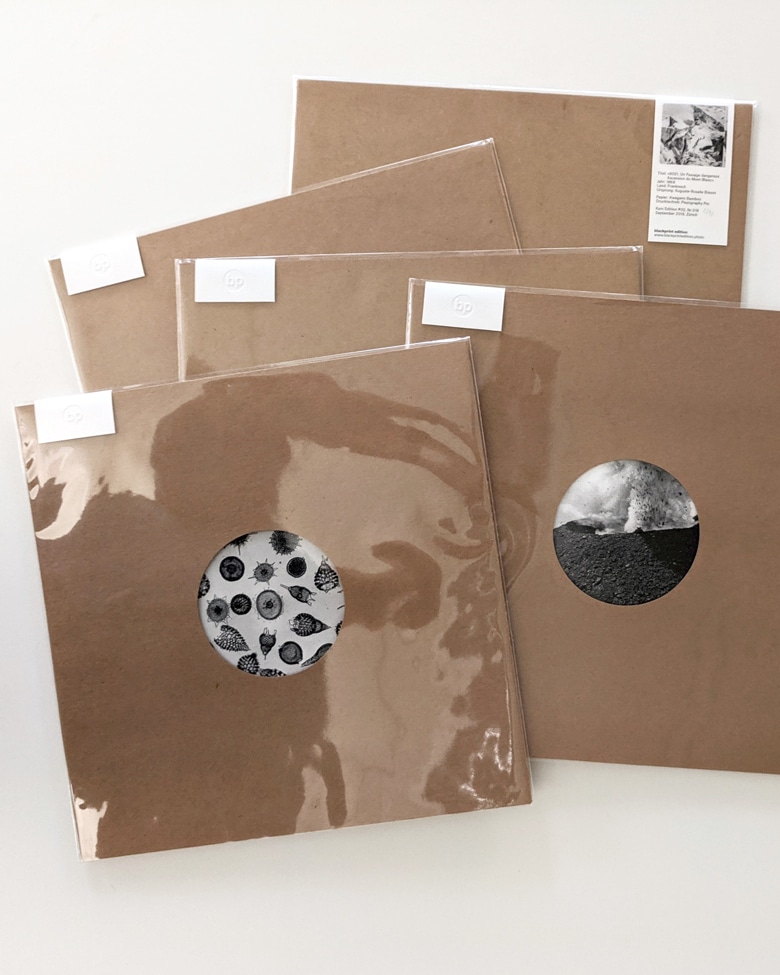
Stereoscopic glass slide, 8.3 × 17 cm, blackprint collection. Plate title: “520. Zurich. Côté du chemin de fer. Suisse.” Photographer: Lachenal & Favre, Geneva. Piezography00ae Pro print on Awagami Bamboo Washi, 250 g/m² — made by the Awagami Factory in Tokushima, Japan, directed by the Fujimori family for eight generations, within a washi tradition in the Awa region dating to the 7th century. 30 × 30 cm. Edition of 90, Zürich.