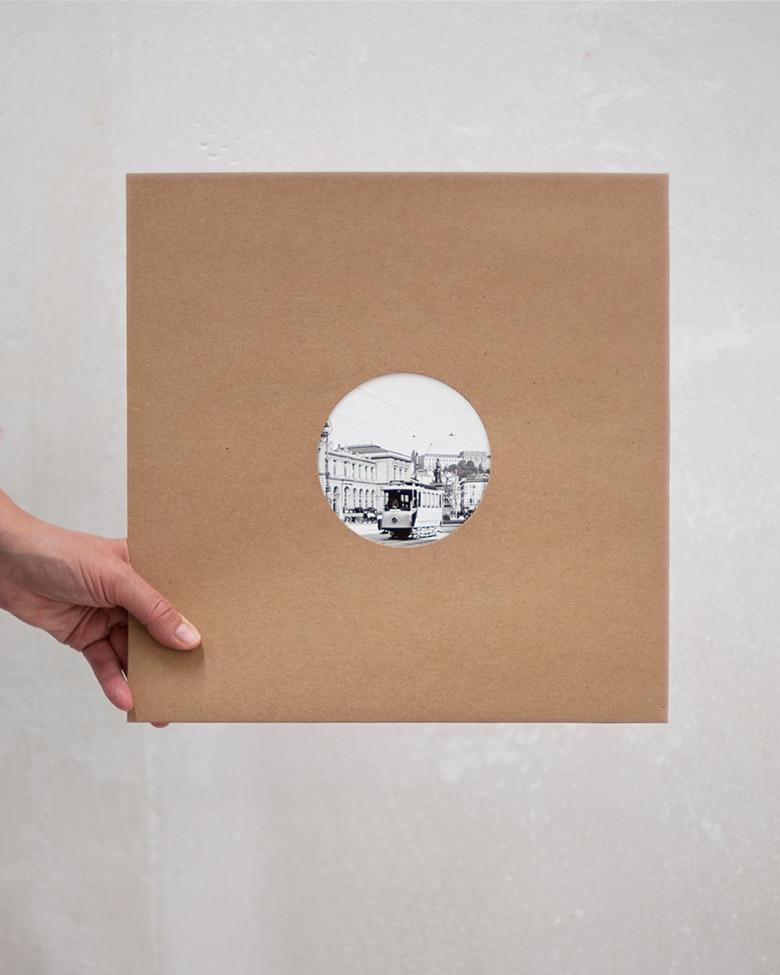
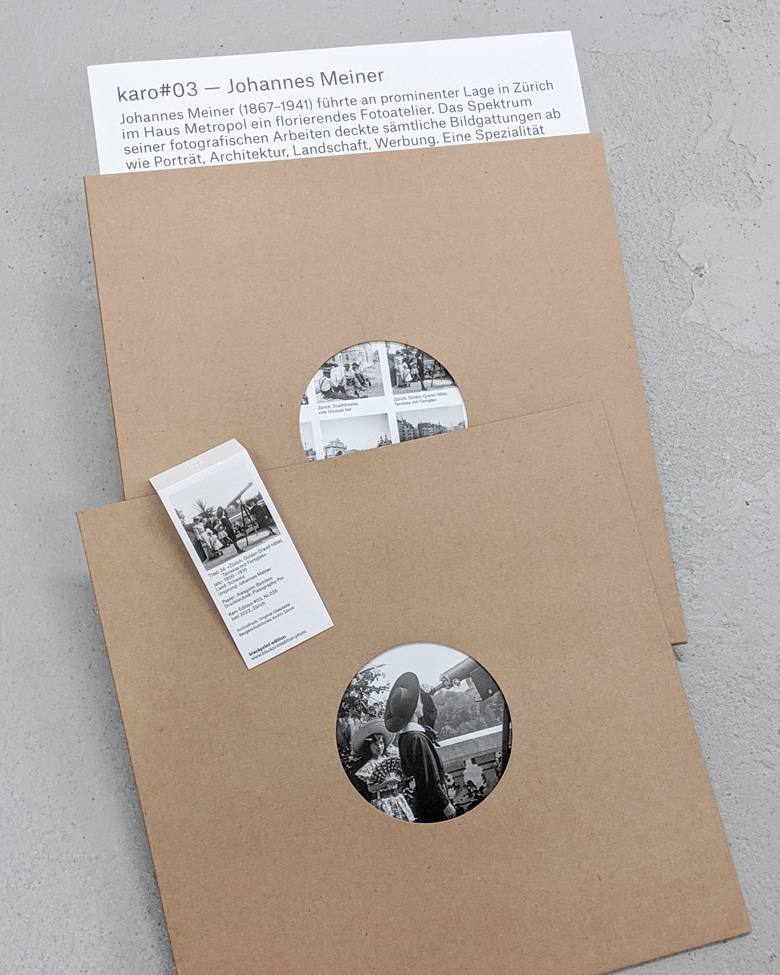
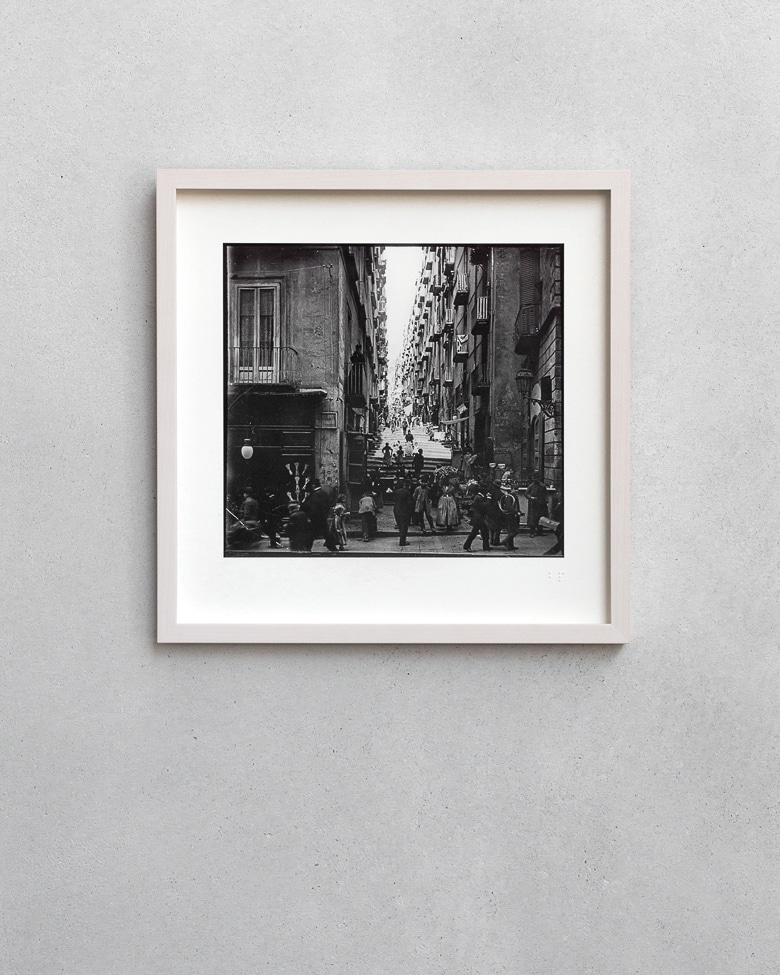
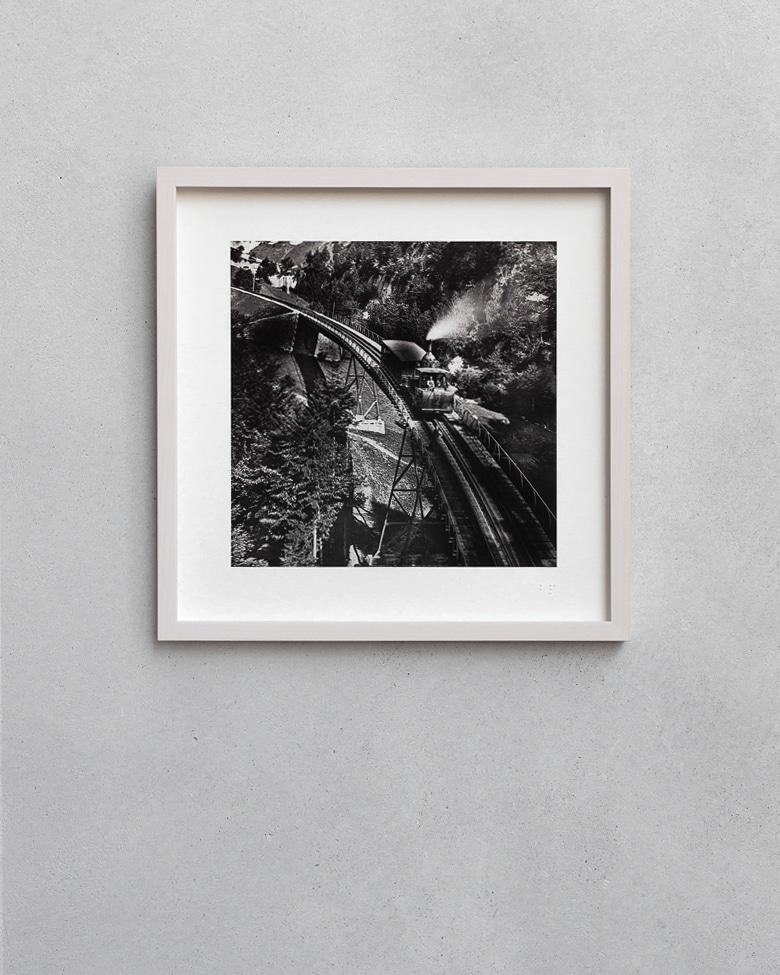
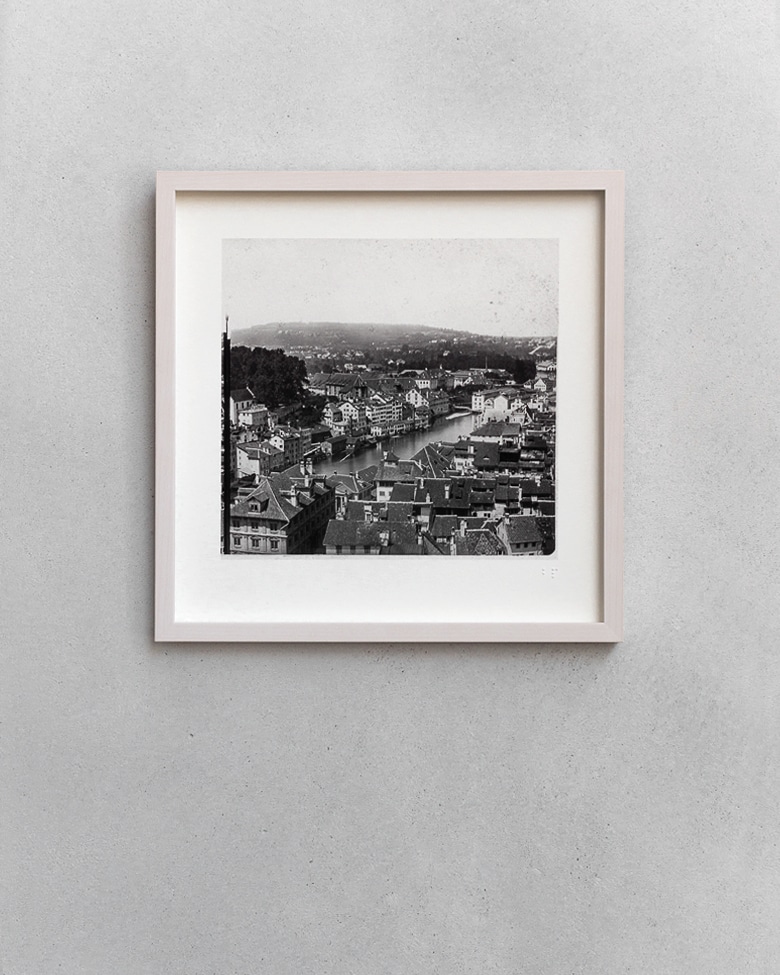
Johannes Meiner (1867–1941) ran a photographic studio in Zurich’s Metropol House, working across all genres: portraits, architecture, urban views, advertising. His speciality was stereoscopy — a format whose square constraint, once reframed, fits naturally into the Karo. His plates document Zurich between approximately 1890 and 1920, and are today held at the Baugeschichtliches Archiv der Stadt Zürich, the institution in collaboration with which this selection was assembled by Ylva Meyer.
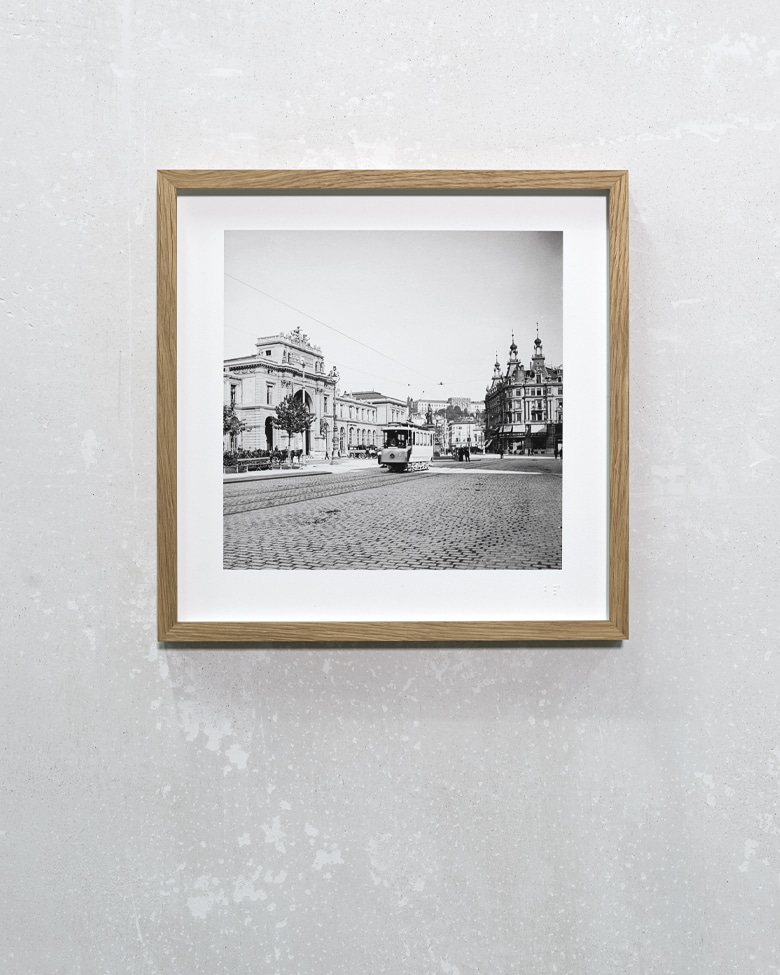
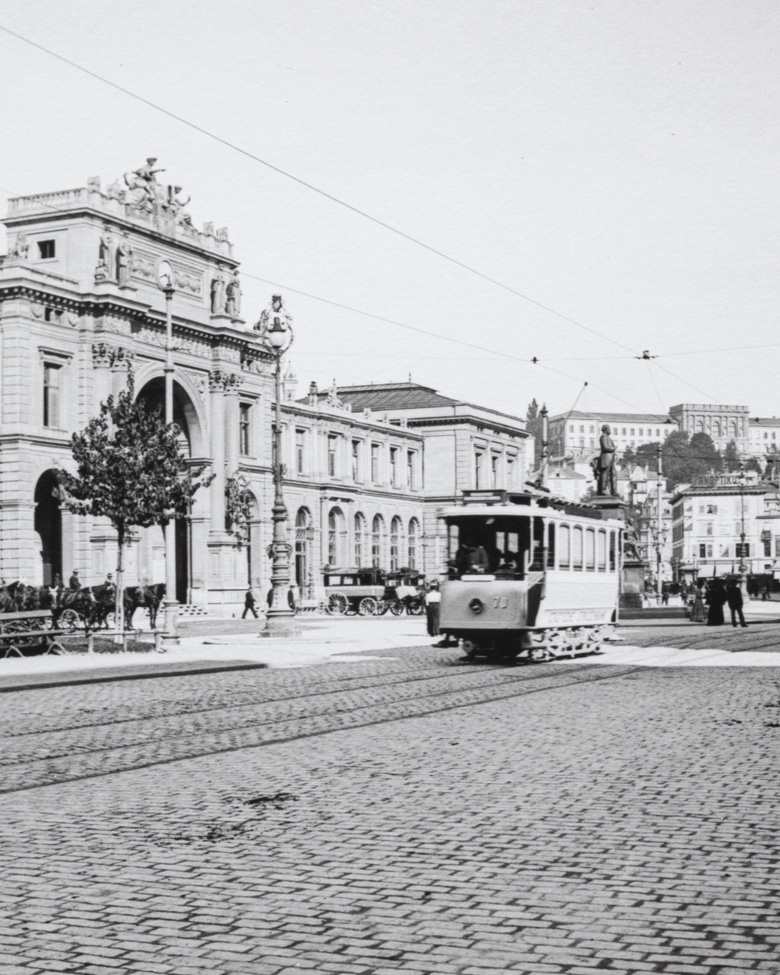
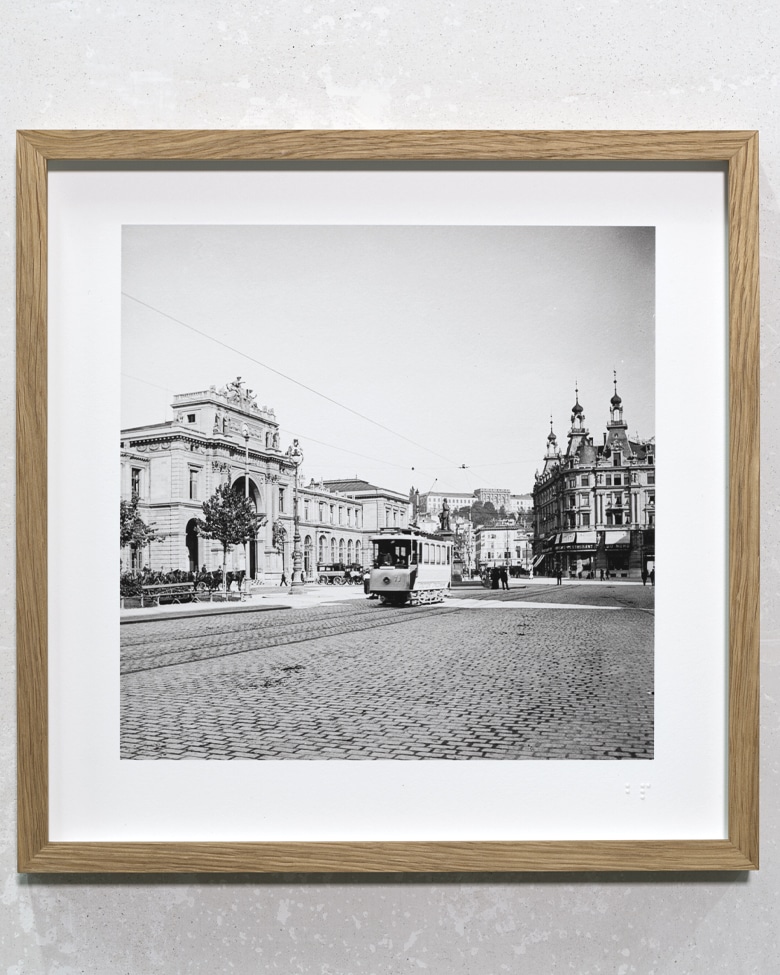
The Hauptbahnhof whose facade dominates the left of this image was completed in 1871 — the terminus that made Zurich the centre of the Swiss rail network and, in doing so, transformed it from a mid-sized trading town into the country’s largest city. At the centre of the square, at the axis between the station’s main entrance and the head of Bahnhofstrasse, stands the bronze monument to Alfred Escher (1819–1882), unveiled in June 1889 — the man who, more than any other, had built both the rail network and the financial infrastructure that funded it. The statue, by sculptor Richard Kissling, was already a contested object at the moment of its installation: workers demonstrated against it, and the army was deployed at the unveiling. By the time Meiner photographed the square, the monument had been in place for at least a decade.
The electric tram visible in the foreground — car no. 73 on Zurich’s network, electrified in 1894 — crosses a square still served in parallel by horse-drawn carriages waiting at the station entrance. The overhead wires of the tram network cross the sky above the cobblestones. The photograph is taken from the south, looking directly toward the station facade, and the composition is as frontal as its plate title suggests: Front-Ansicht, a head-on view of the city’s most consequential public space, taken at the moment when its principal elements — station, monument, tram — had all recently arrived and had not yet settled into the ordinary.
The plate
Stereoscopic glass slide titled “Zürich, Bahnhofplatz, Front-Ansicht.” Selected from the Johannes Meiner holdings at the Baugeschichtliches Archiv der Stadt Zürich. Dated c. 1900–1910. Piezography® Pro print on Awagami Bamboo Washi, 250 g/m² — made by the Awagami Factory in Tokushima, Japan, directed by the Fujimori family for eight generations, within a washi tradition in the Awa region dating to the 7th century. 30 × 30 cm. Edition of 200, Zürich.