The photographer
George Washington Wilson (1823–1893) was an Aberdeen-based photographer who became one of the most prolific producers of stereoscopic and lantern slides in Britain. His firm, established in the 1850s, built a catalogue of some 20,000 views covering Scotland, England, and continental Europe. Wilson was among the first photographers to master instantaneous exposure for street scenes, and his technical command extended equally to landscape and natural phenomena subjects. The St. Moritz plate belongs to his European Alpine series, produced during the period when the Engadin was emerging as an international winter destination. Newton & Co., one of the principal British manufacturers and distributors of magic lantern slides, published the image in their catalogue under the number 38, with the description “Ice-flowers on St. Moritz Lake (beautifully distinct)” — the parenthetical a commercial notation, but also a precise one.
Frost flowers on lake ice
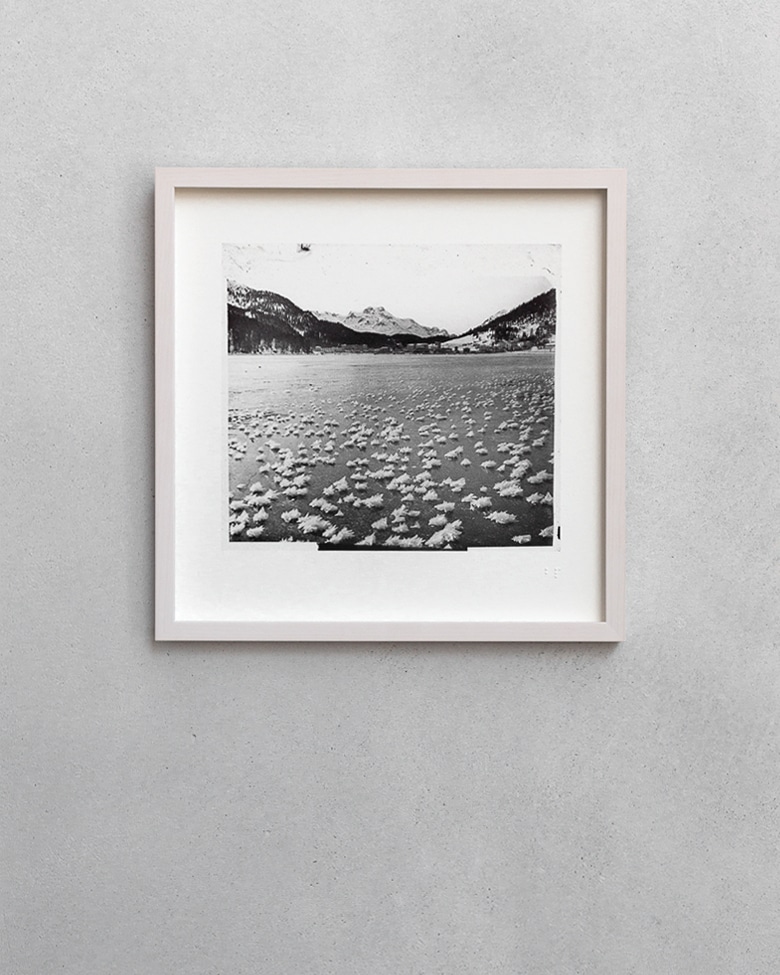
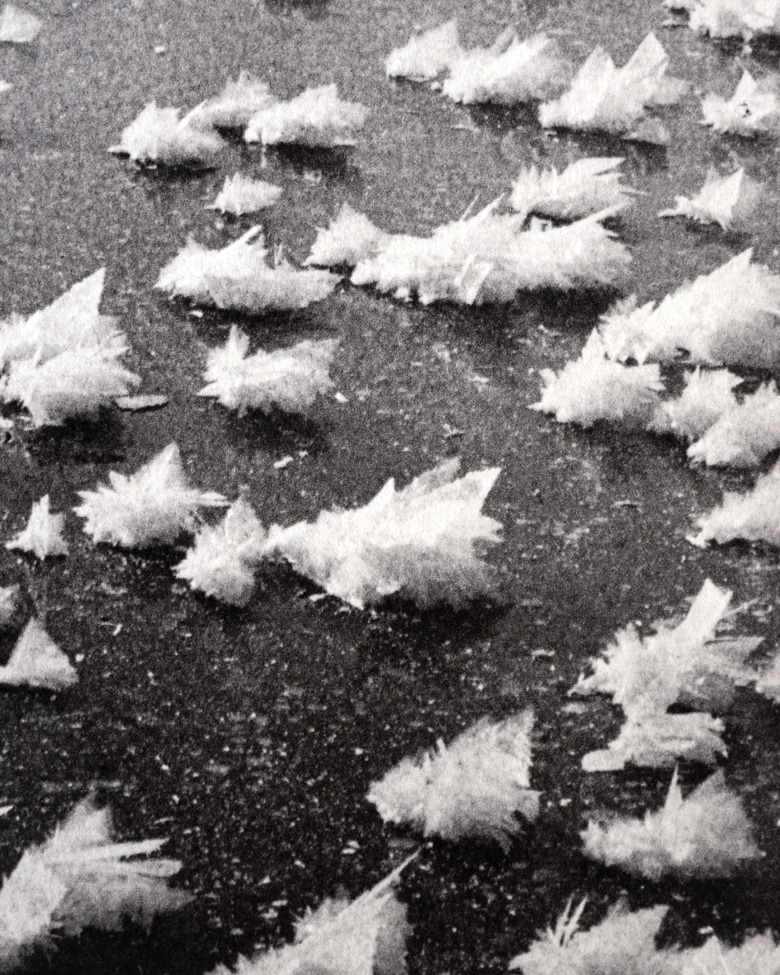
Frost flowers are clusters of ice crystals that grow on the surface of newly frozen, thin lake ice under conditions of extreme cold and complete calm. They form when a large temperature differential — at least 15°C — exists between the ice surface and the air directly above it: water vapour sublimates from the slightly warmer ice into the colder overlying air, which becomes supersaturated, and the excess vapour deposits as dendritic ice crystals on any protrusion from the surface. The process requires the absence of wind, which would disperse the supersaturated layer, and ceases as soon as the ice thickens enough to cool its upper surface. On fresh water, these conditions arise only during sudden, sharp freezing events — making lake frost flowers a relatively rare phenomenon. At St. Moritz, at 1,800 metres in the Engadin valley, the lake freezes reliably each winter and the high altitude amplifies the temperature differentials that produce them. The town visible in the background — already an established winter destination by the late 1880s, largely through Johannes Badrutt’s famous 1864 invitation to his English summer guests to return in winter — had made the frozen lake itself a subject of interest as much as a sporting ground.
The composition
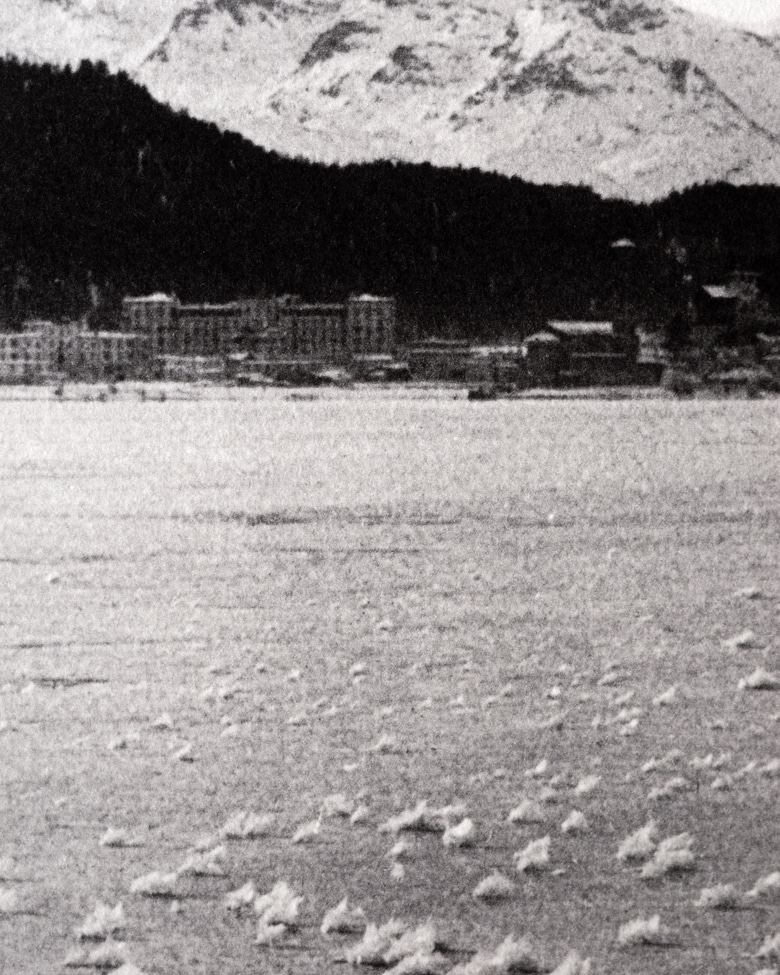
The camera was placed at ice level, close enough to the frost flowers for individual crystals to fill the foreground. The lake surface extends from the immediate foreground — where the flowers are most distinct, their branching forms casting small shadows on the grey ice — back to the middle distance, where they diminish in scale but remain visible as a continuous field. The town of St. Moritz occupies the far shore, its hotels and church spire legible against the snow-covered slopes of the Engadin. The image operates on two registers simultaneously: at the near scale, a scientific subject of the kind that made frost flowers sought after by lantern slide publishers; at the far scale, a landscape document of a resort town at the moment of its transformation into a winter destination. The catalogue’s parenthetical — “beautifully distinct” — signals both the rarity of the subject and the quality of the capture.
The plate
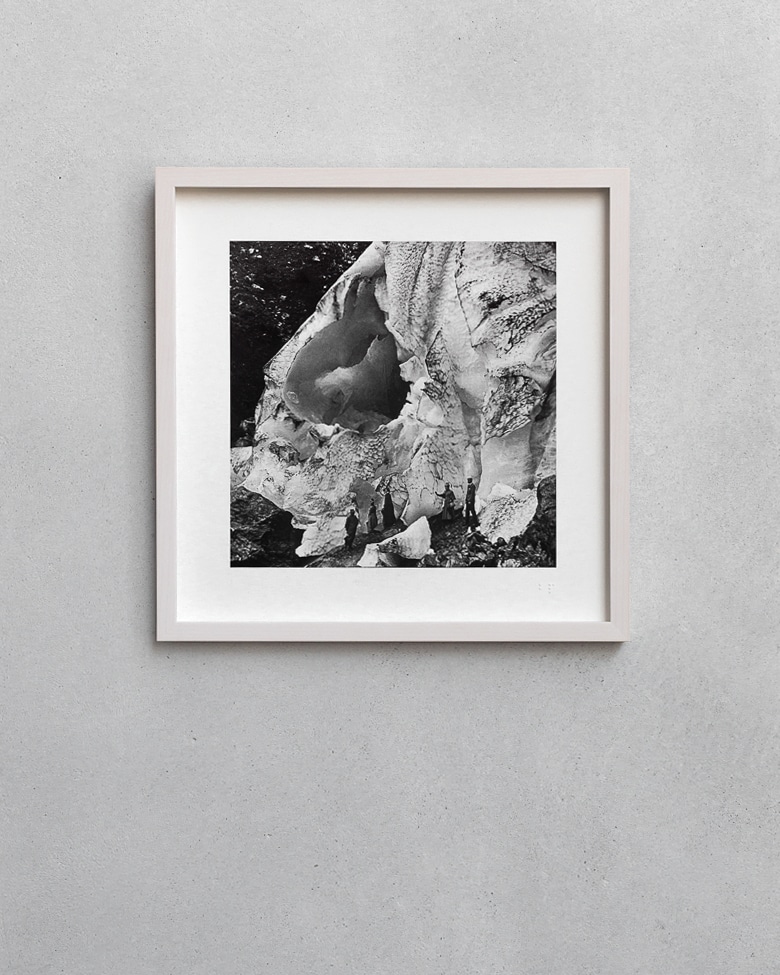
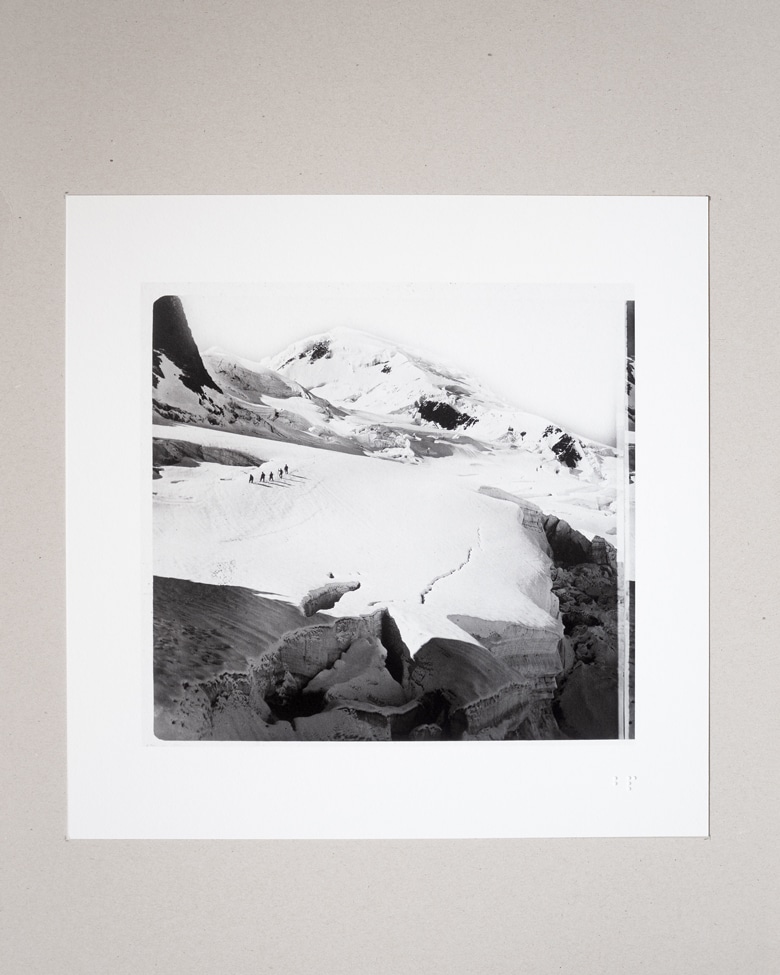
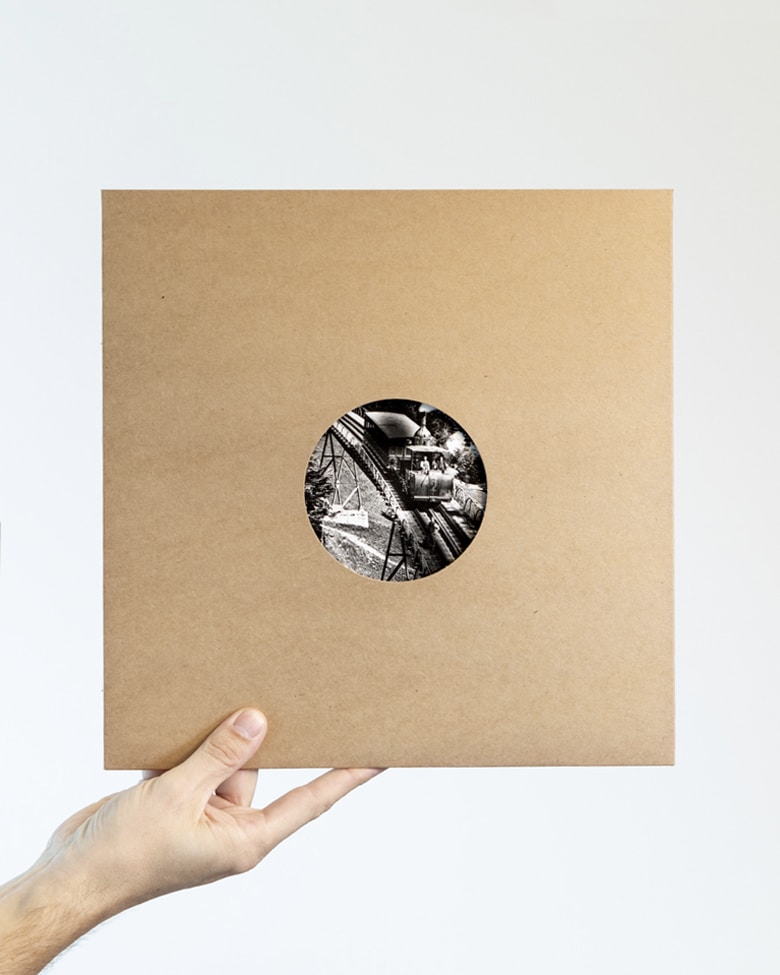
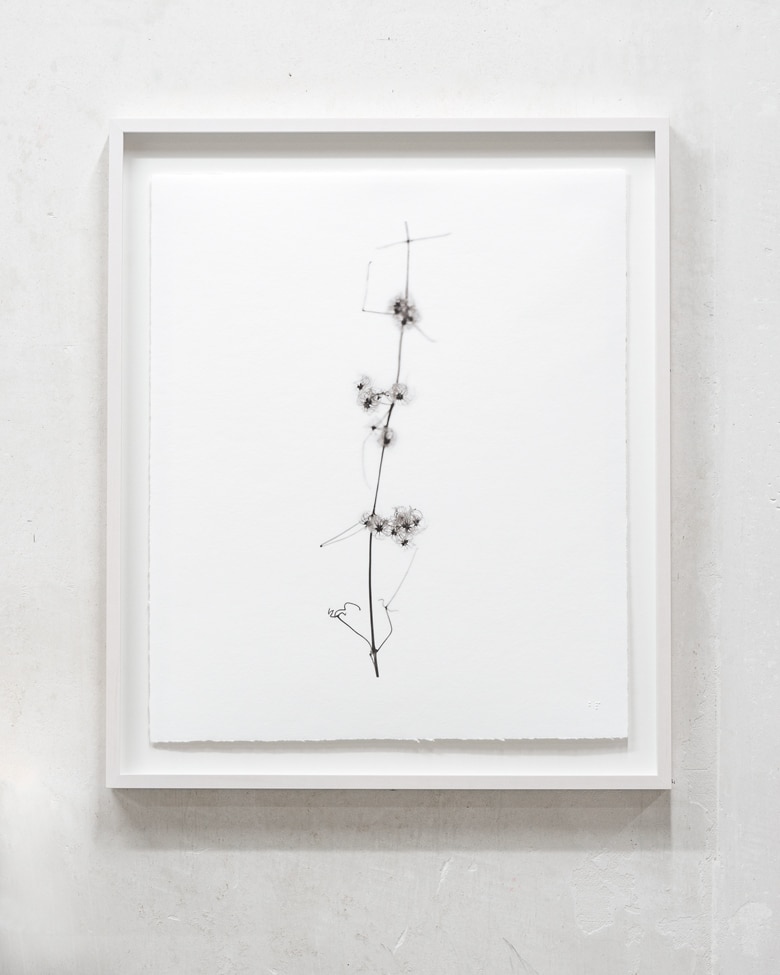
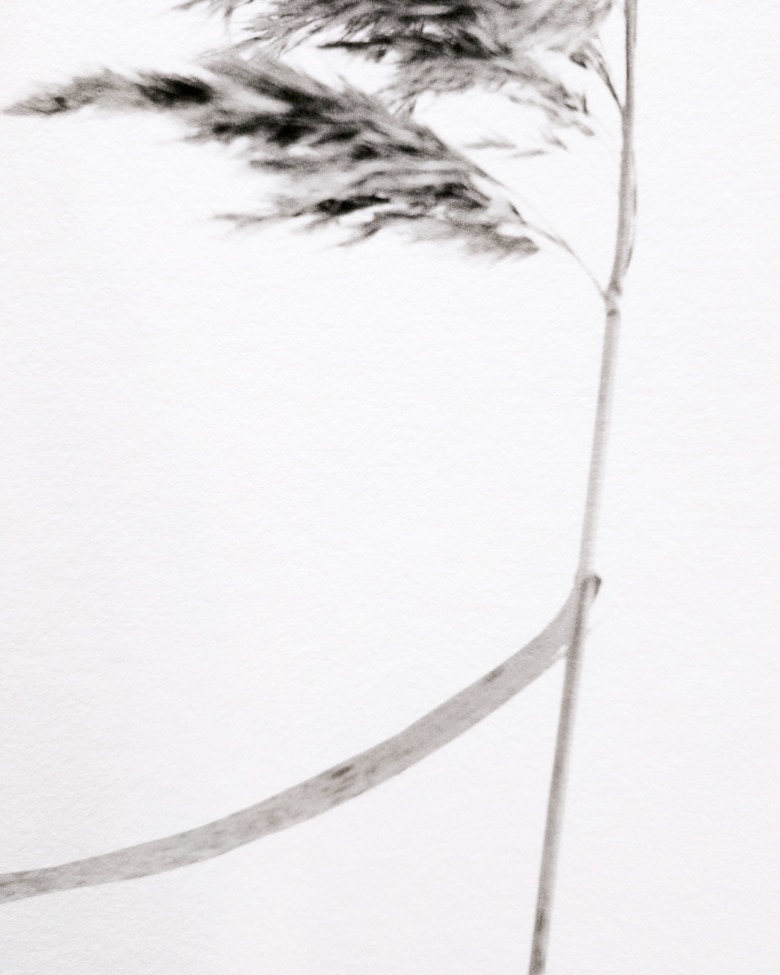
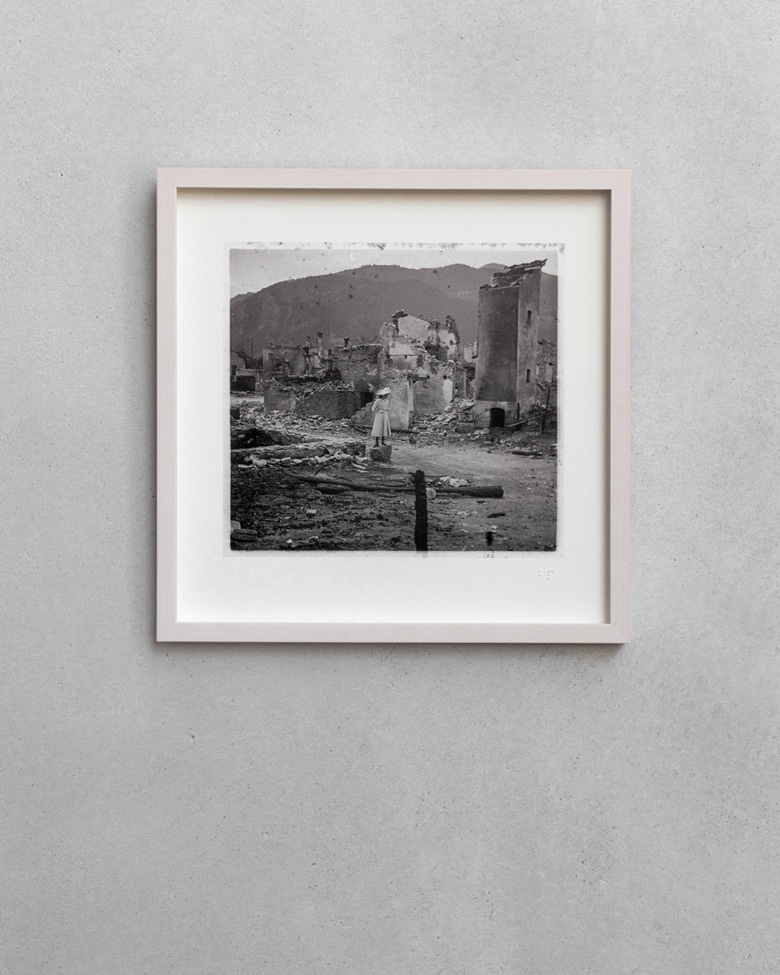
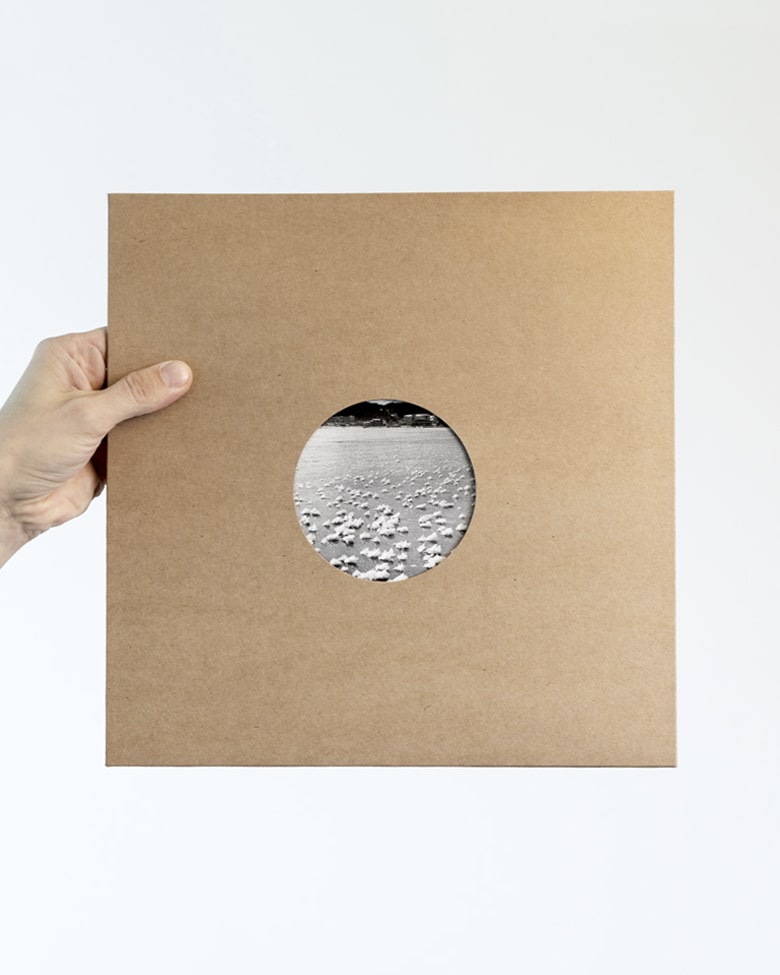
Glass slide, 8.3 × 17 cm, blackprint collection. Photographer: George Washington Wilson, Aberdeen. Plate title: “38. Ice-flowers on St. Moritz Lake (beautifully distinct).” Published by Newton & Co., London. Piezography00ae Pro print on Awagami Bamboo Washi, 250 g/m² — made by the Awagami Factory in Tokushima, Japan, directed by the Fujimori family for eight generations, within a washi tradition in the Awa region dating to the 7th century. 30 × 30 cm. Edition of 90, Zürich.