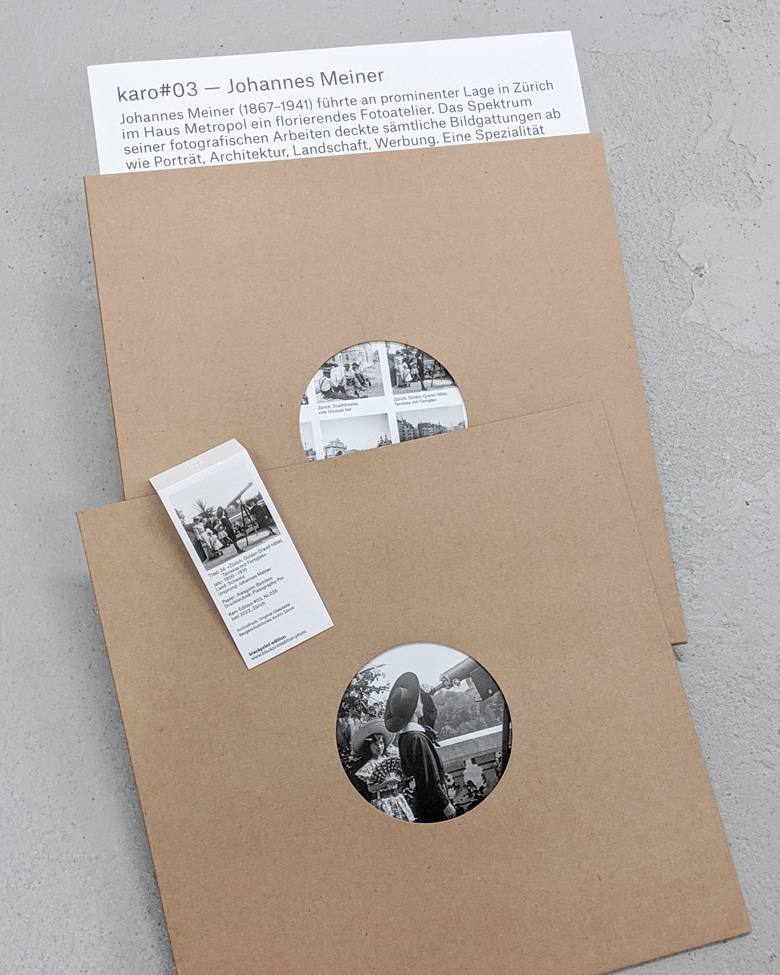
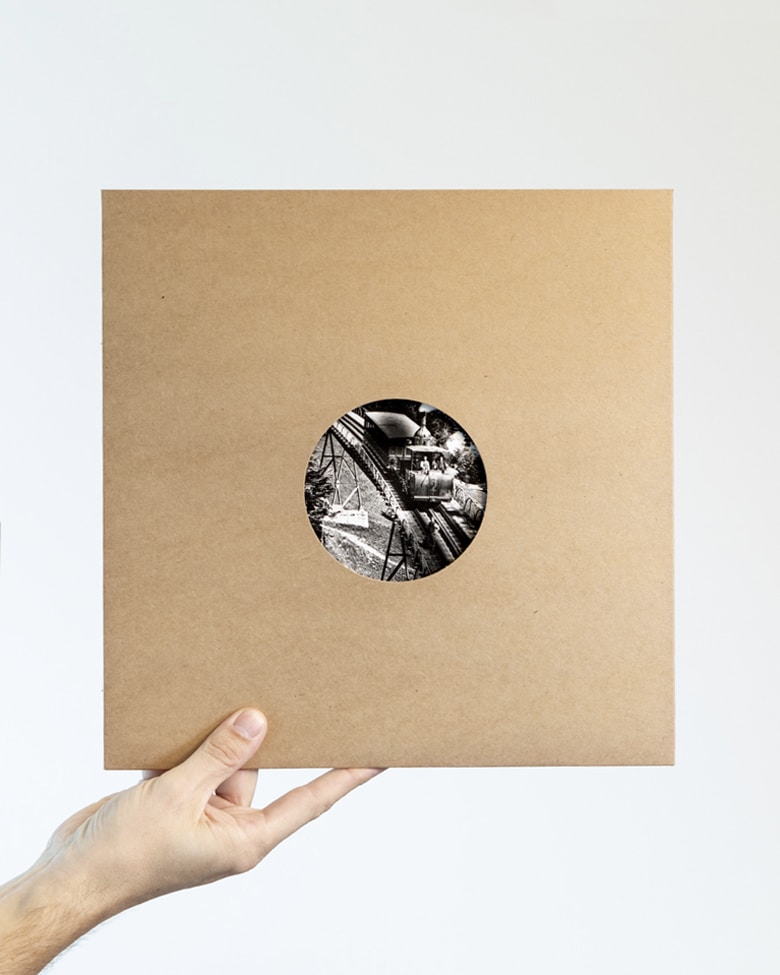
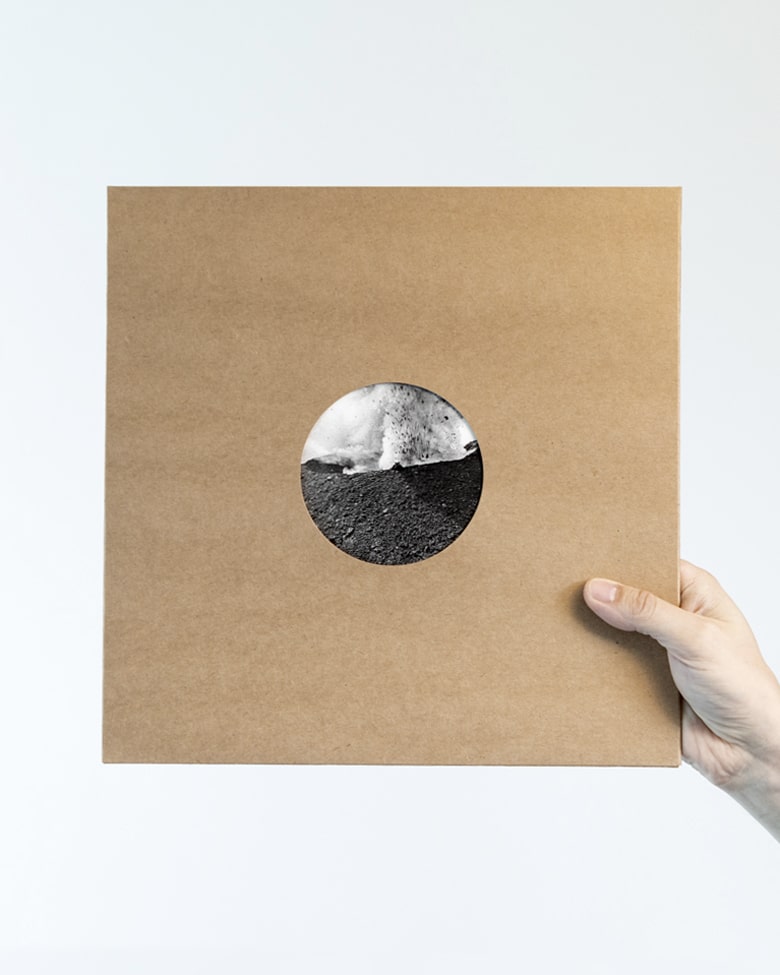
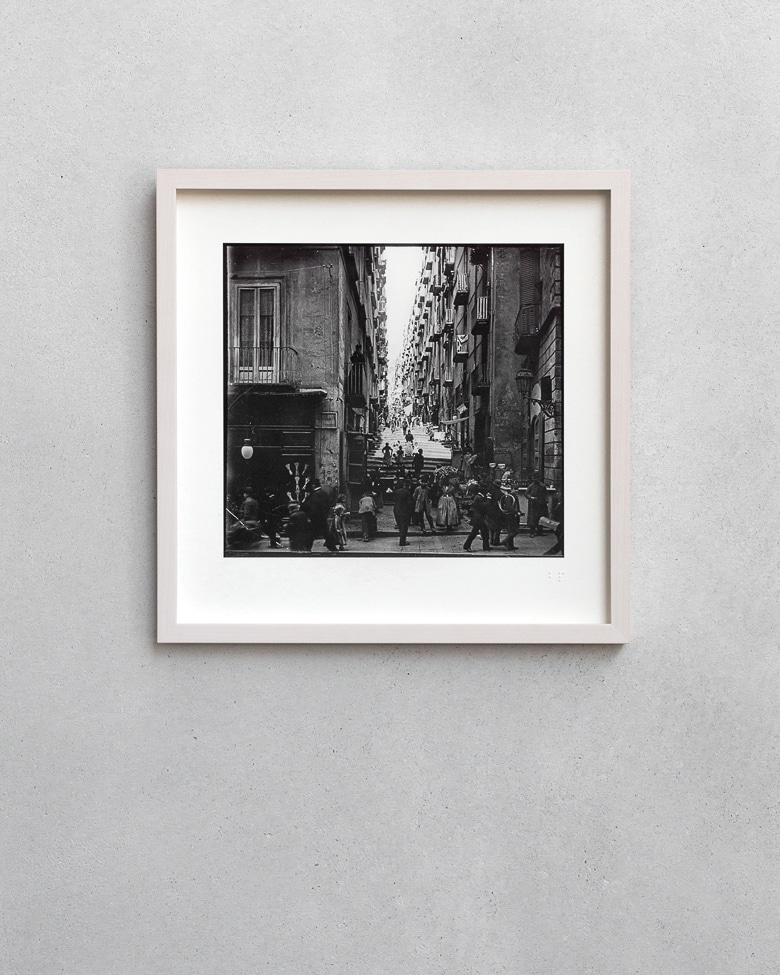
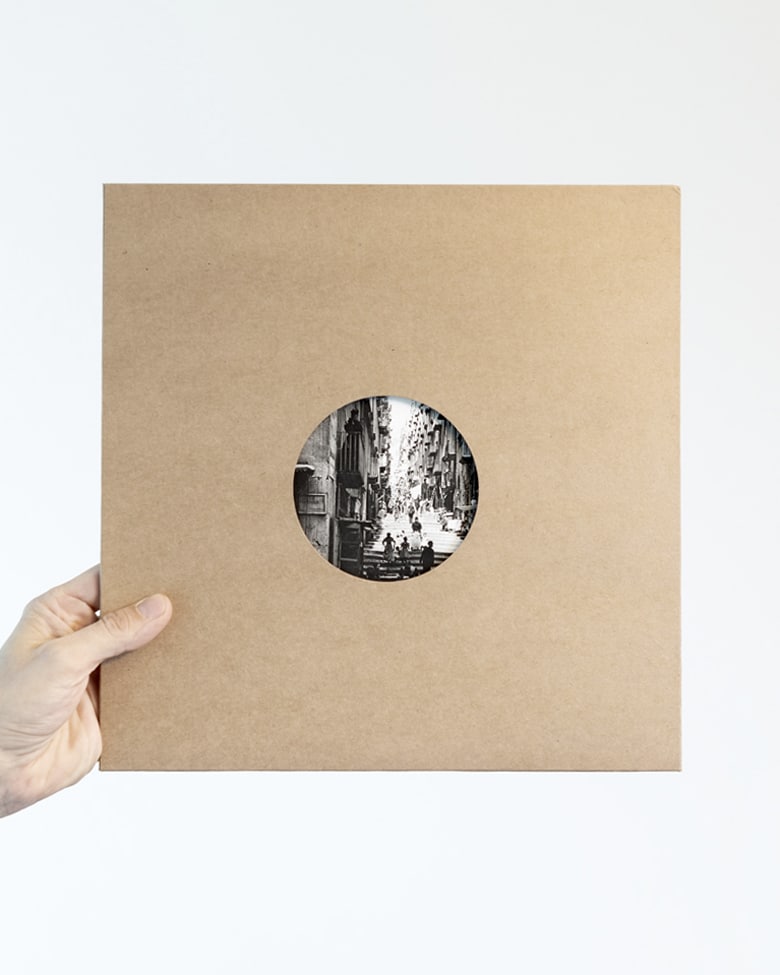
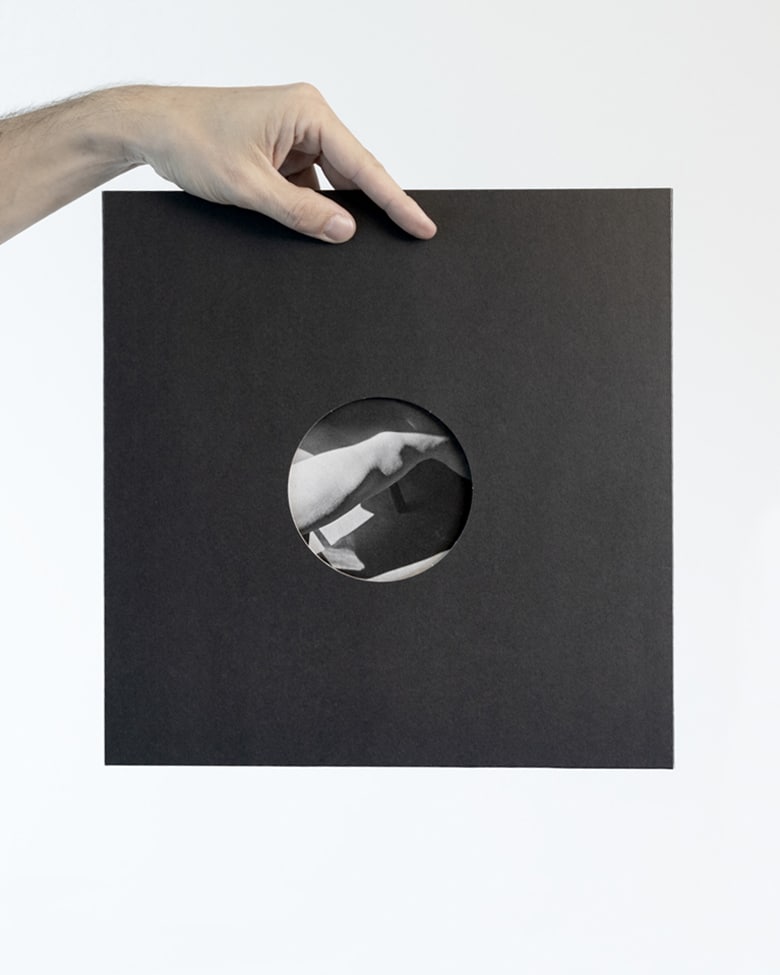
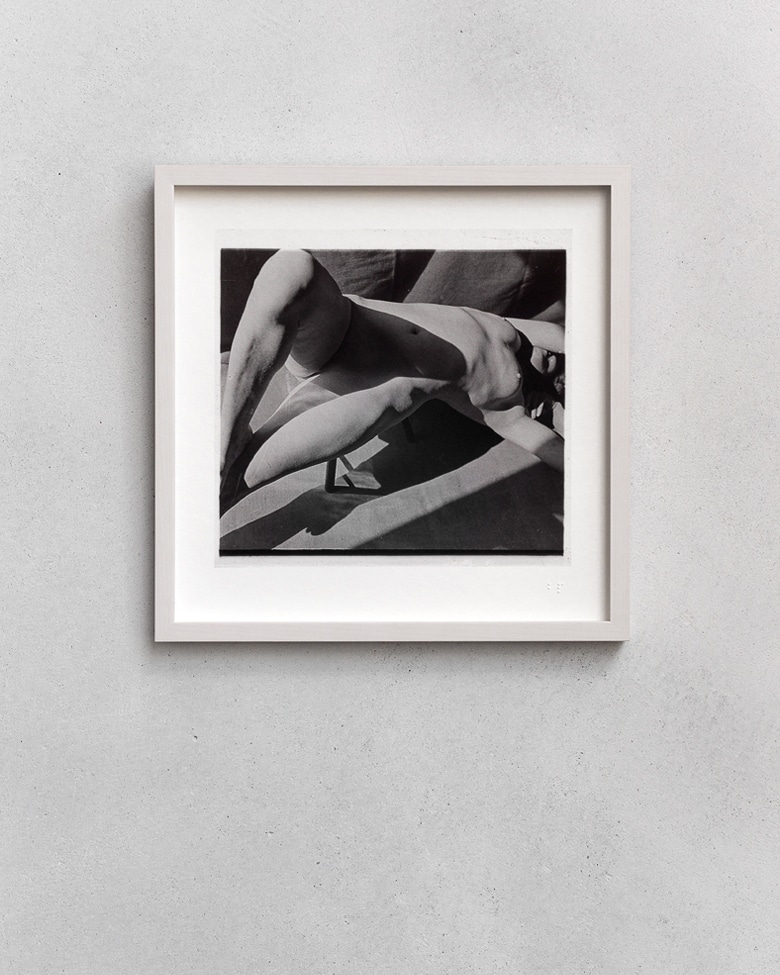
Johannes Meiner (1867–1941) ran a photographic studio in Zurich’s Metropol House, working across all genres: portraits, architecture, urban views, advertising. His speciality was stereoscopy — a format whose square constraint, once reframed, fits naturally into the Karo. His plates document Zurich between approximately 1890 and 1920, and are today held at the Baugeschichtliches Archiv der Stadt Zürich, the institution in collaboration with which this selection was assembled by Ylva Meyer.
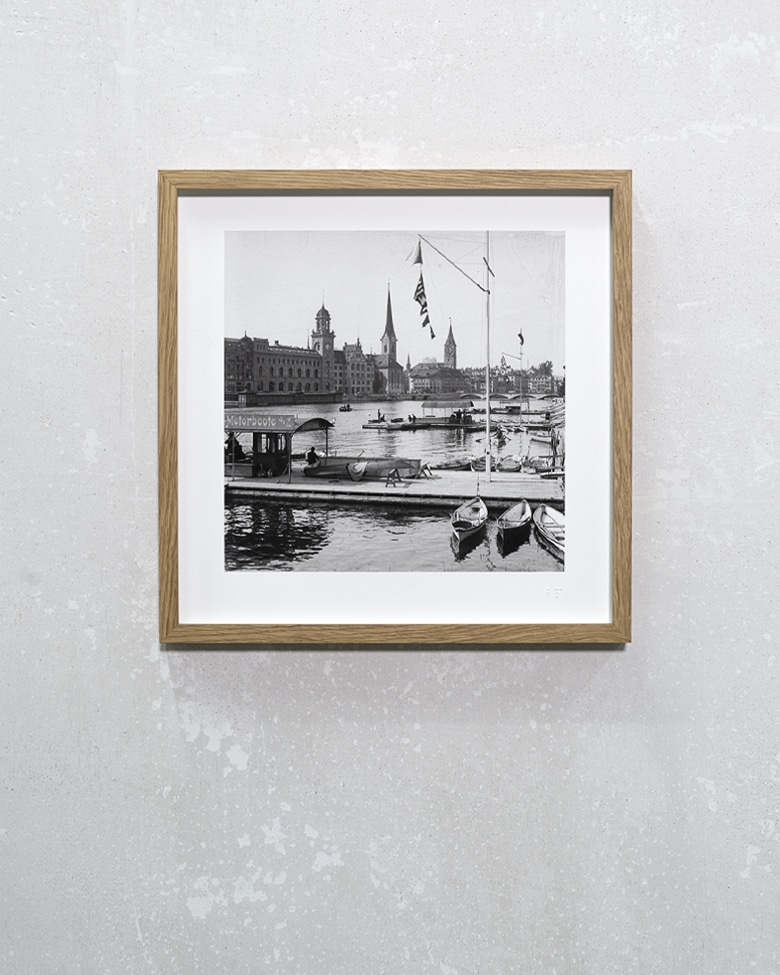
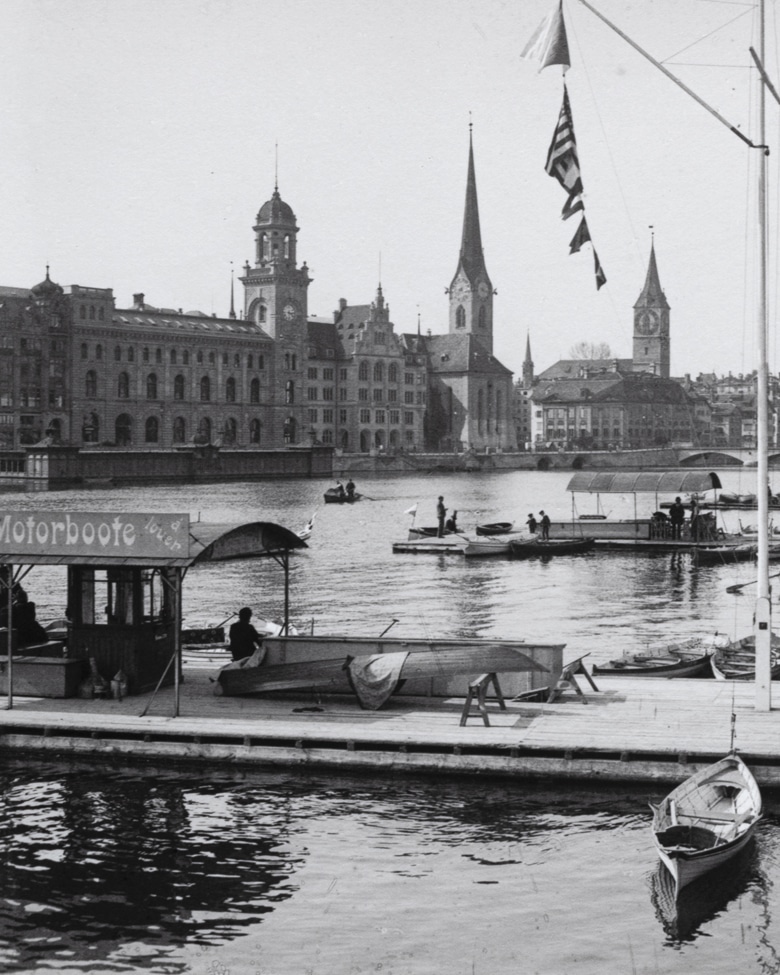
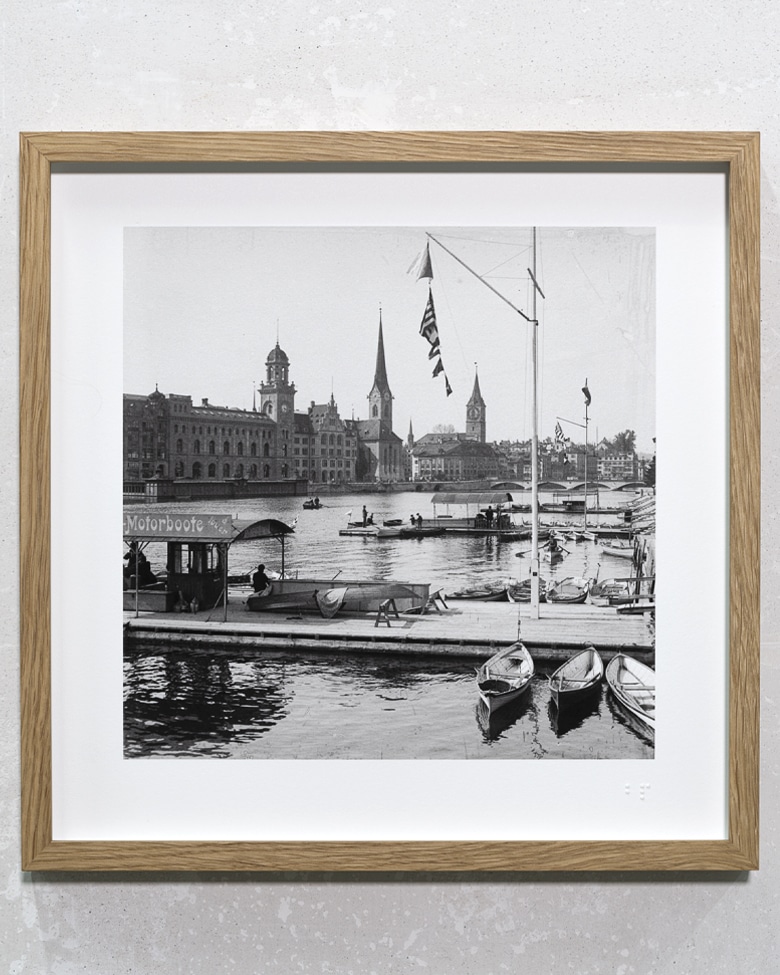
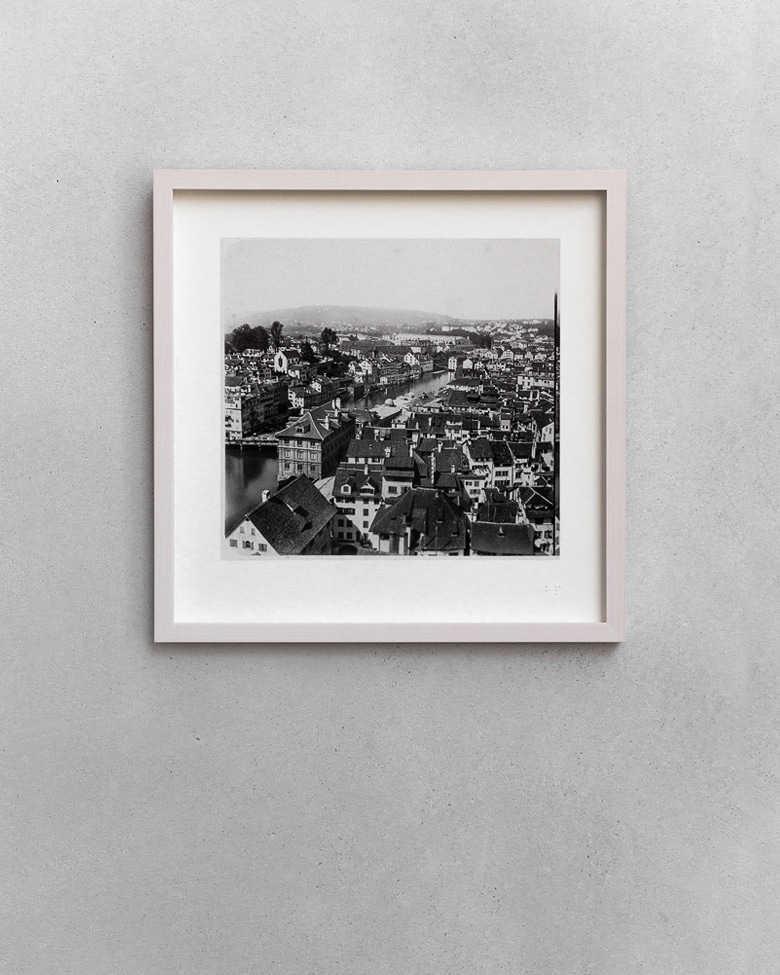
The view is from the Bellevue, looking north along the Limmat toward the old town. The floating dock in the foreground carries a rental kiosk with the sign Motorboote — a commercial motorboat hire operation at a moment when the internal combustion engine was barely a decade old in its practical applications. The Zürich region was among the leading centres of European boat construction around 1900, and the presence of motorboat hire on this stretch of water places the photograph at the intersection of a new leisure economy and a new technology arriving simultaneously on the same waterfront. Rowboats, a covered pontoon, and a second floating platform visible in the middle distance suggest an organised and already well-developed water-access infrastructure on the lake and river approach.
Behind the dock, the skyline of the Altstadt reads from left to right: the tower of the Stadthaus, the needle spire of the Fraumünster, and the broad tower of St. Peter with its large clock face. The flags flying from the mast at right are unidentified. The composition is characteristic of Meiner’s stereoscopic practice — the dock and moored boats as foreground plane, the water as depth, the city as backdrop — but the commercial signage gives this plate an unusually specific documentary character within the Karo #03 series.
The plate
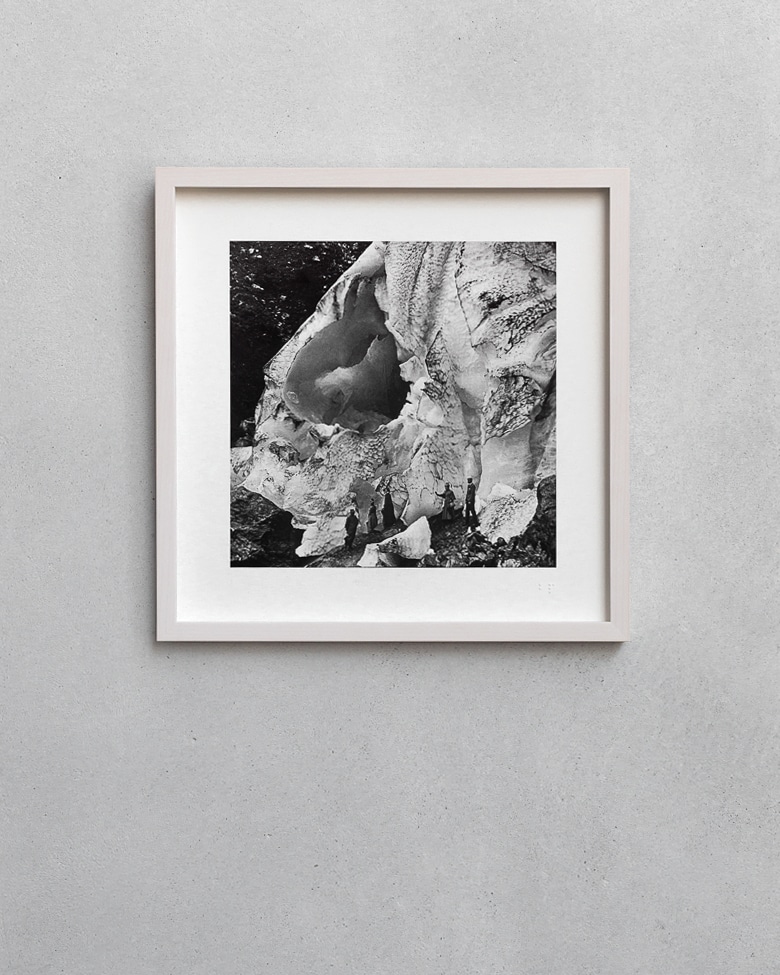
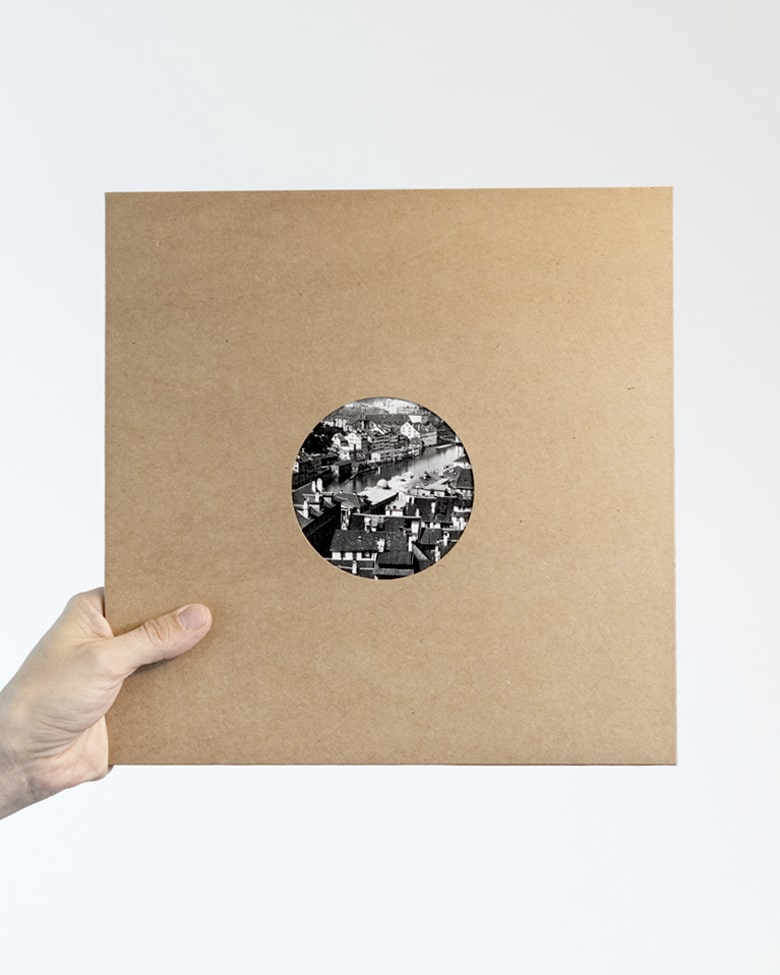
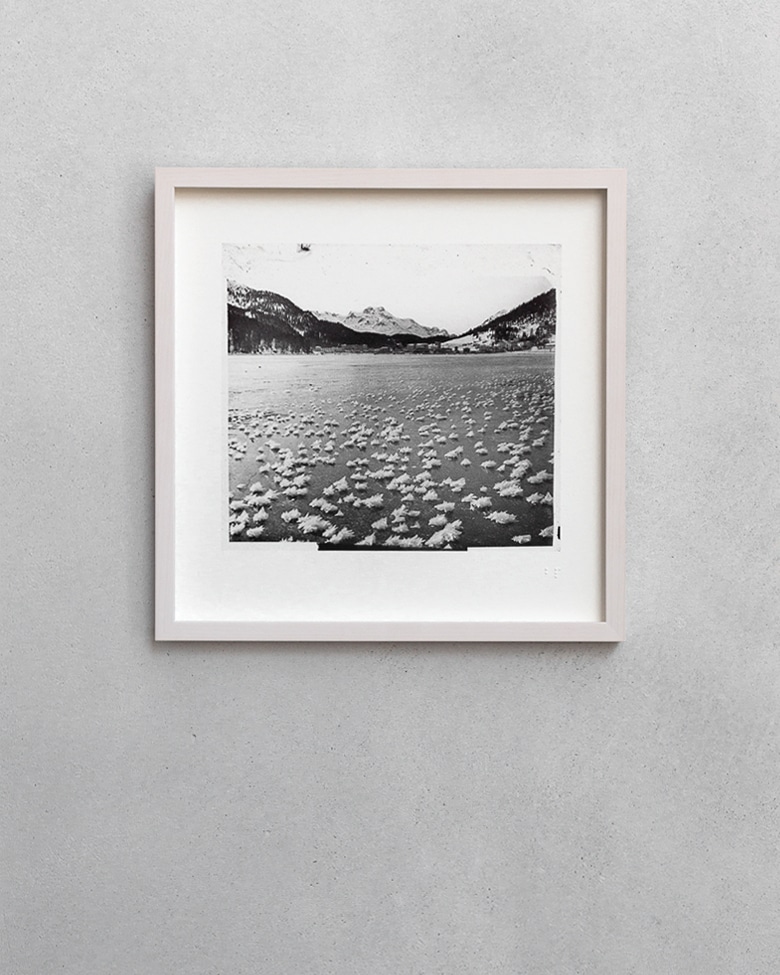
Stereoscopic glass slide. Selected from the Johannes Meiner holdings at the Baugeschichtliches Archiv der Stadt Zürich. Dated c. 1900–1910. Piezography® Pro print on Awagami Bamboo Washi, 250 g/m² — made by the Awagami Factory in Tokushima, Japan, directed by the Fujimori family for eight generations, within a washi tradition in the Awa region dating to the 7th century. 30 × 30 cm. Edition of 200, Zürich.