Auguste-Rosalie Bisson
Louis-Auguste (1814–1876) and Auguste-Rosalie Bisson (1826–1900) established their Paris studio in 1840, becoming official photographers to Napoleon III and producing large-format architectural and documentary work that placed them among the leading French studios of the Second Empire. In June 1861, Auguste-Rosalie attempted the first photographic ascent of Mont Blanc and was turned back by weather. He returned in July with twenty-five porters carrying glass plates, volatile chemicals, and a portable darkroom tent — the wet collodion process required development on site, within minutes of exposure. The resulting prints were the first photographs made at 4,807 metres. The studio was declared bankrupt in 1863; the archive was auctioned on 7 April 1864 and acquired by the civil engineer Émile Placet. The Bisson alpine negatives subsequently passed into the Léon & Lévy catalogue — which had itself acquired the Ferrier & Soulier business that same year — where they were re-indexed and published in stereoscopic format.
The 1868 series
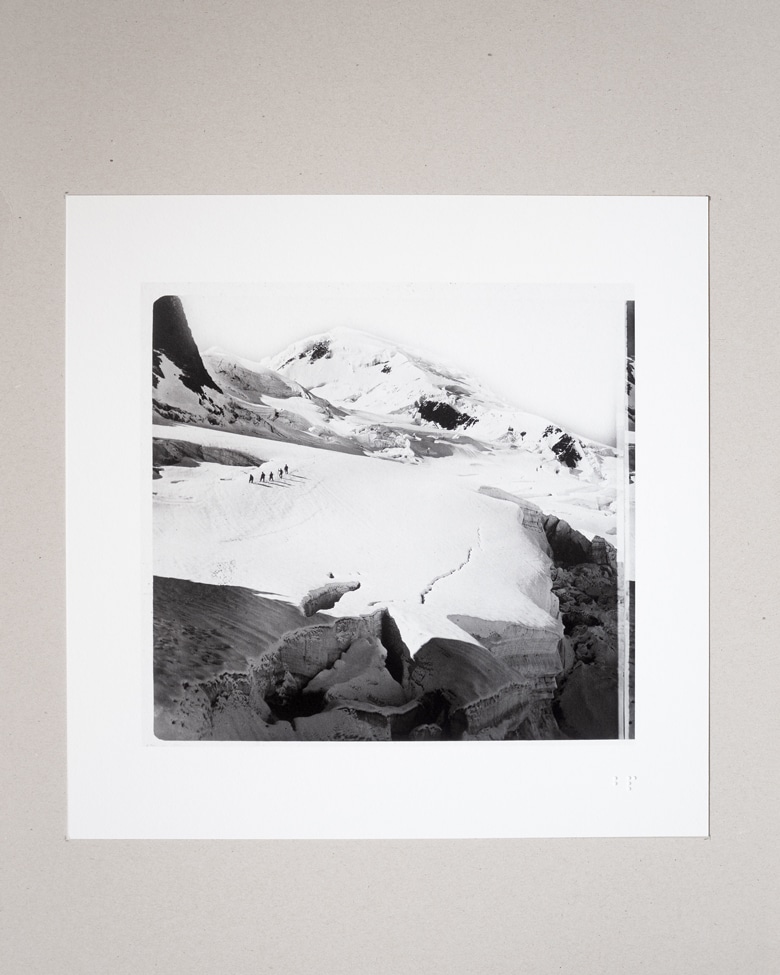
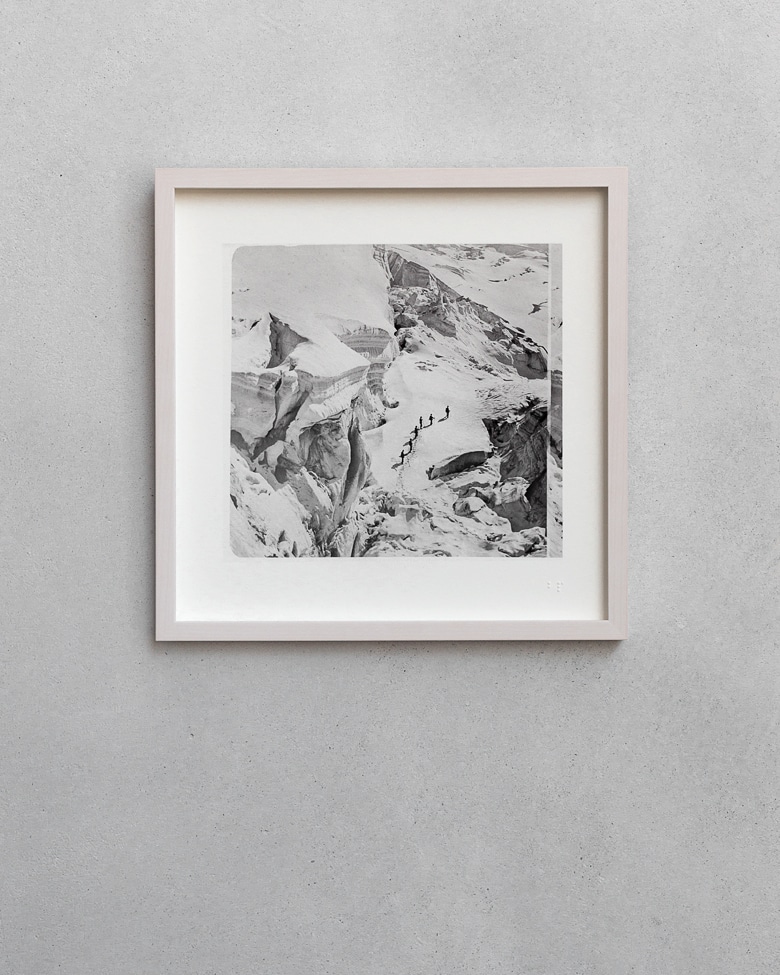
In 1868, Auguste-Rosalie Bisson returned to the Mont Blanc massif, this time to produce a purpose-made series of stereoscopic views for Léon & Lévy — a format and a market that had not existed at the time of the 1861 ascent. The stereoscopic glass slide, held to a viewer, produced an image in apparent three dimensions: the depth of a glacier, the drop of a crevasse, the scale of a snow face were effects the format was uniquely suited to convey. The series was published under the Léon & Lévy 9000 catalogue number sequence. This plate, “9021. Un passage dangereux. Ascension du Mont-Blanc”, belongs to that series.
The composition
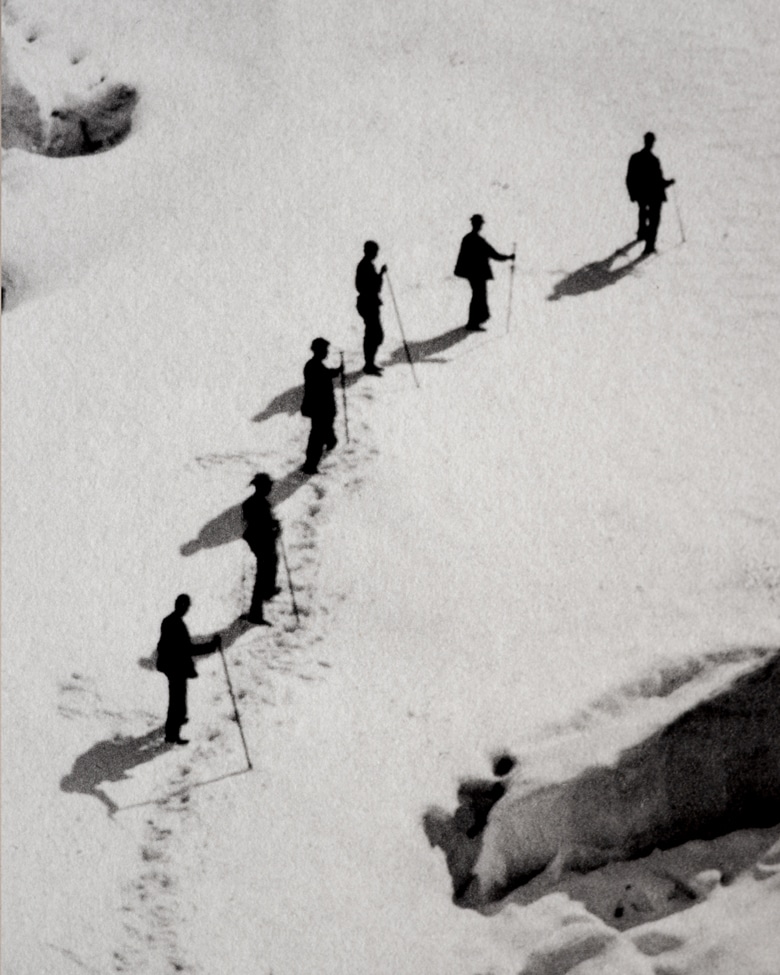
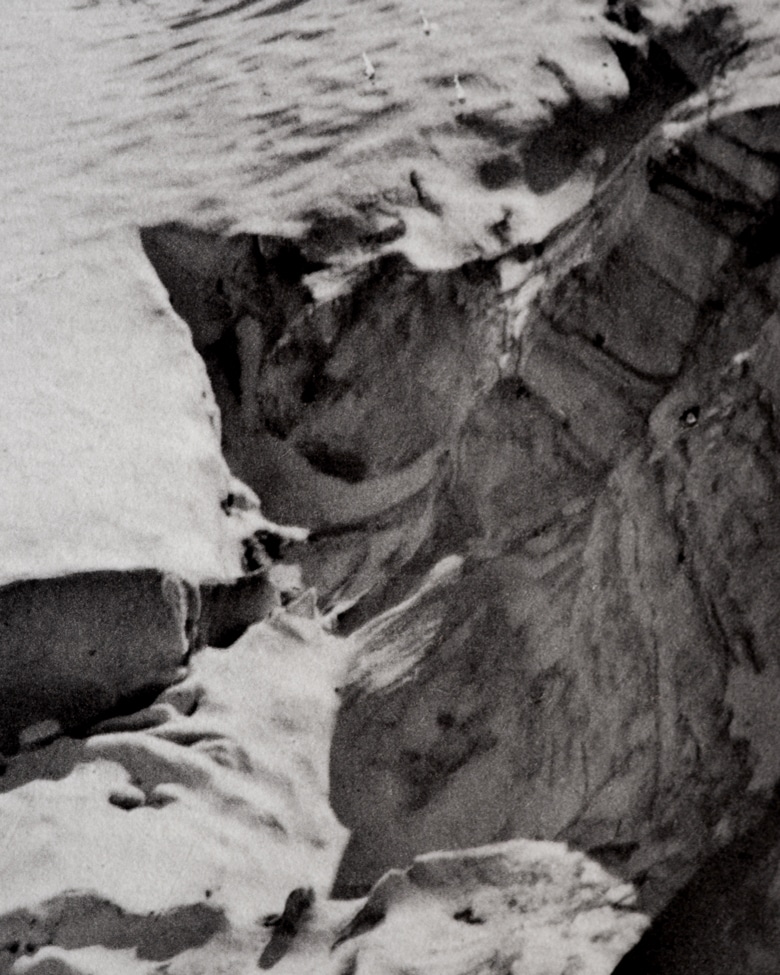
The camera was positioned above and to the side of the party, far enough to reduce the six figures to small dark forms against the snow — close enough that their alpenstocks, their footprints, and the individual shadows cast by each climber remain legible. The image is structured by diagonals: the line of climbers ascending from lower left, the rock face descending from upper left, the open crevasse at lower right. The title given in the catalogue — “un passage dangereux” — describes what the image shows without dramatising it: a party moving across a slope between two points of exposure. The wet collodion process, still in use in 1868, required the plate to be coated, exposed, and developed within roughly ten minutes. At altitude, in cold and wind, the margin was narrower still.
The plate
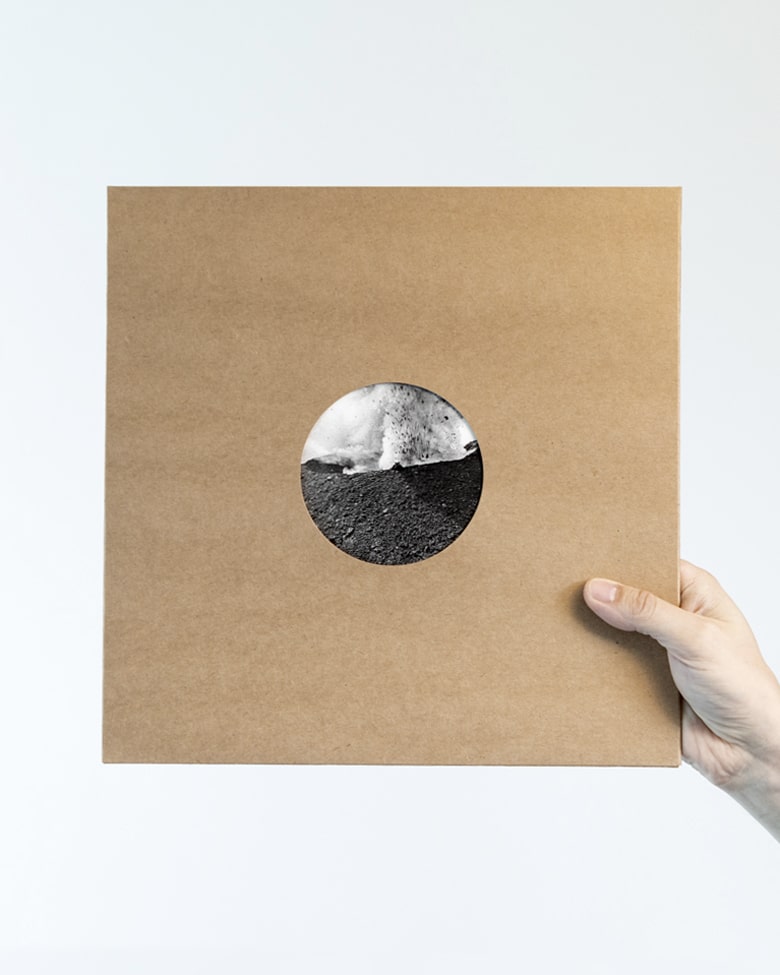
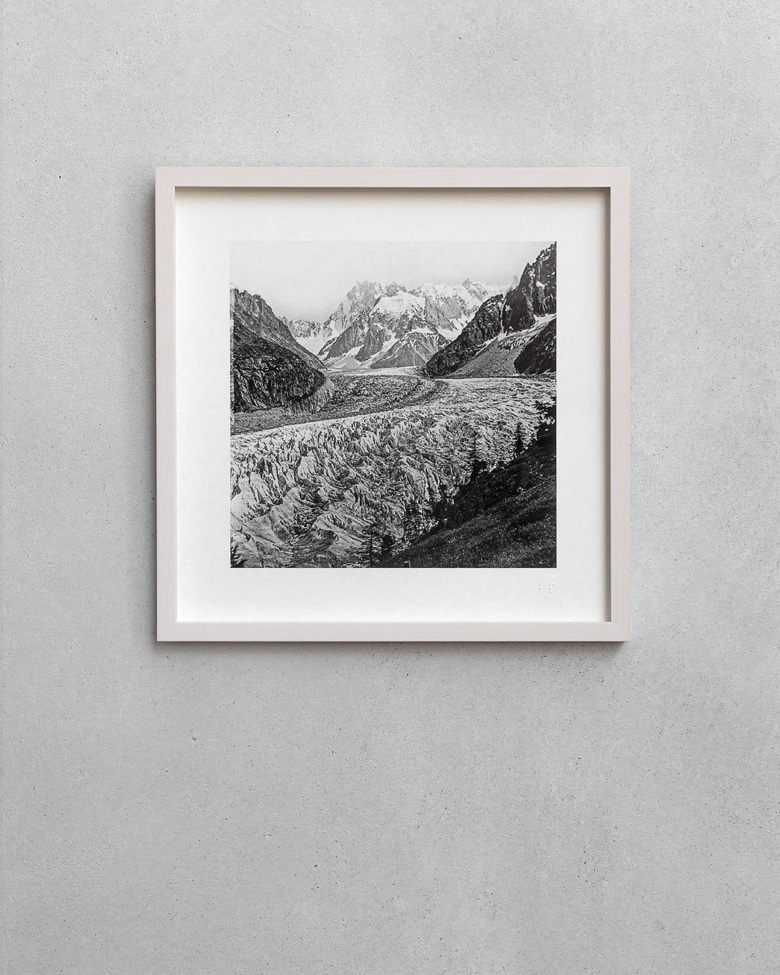
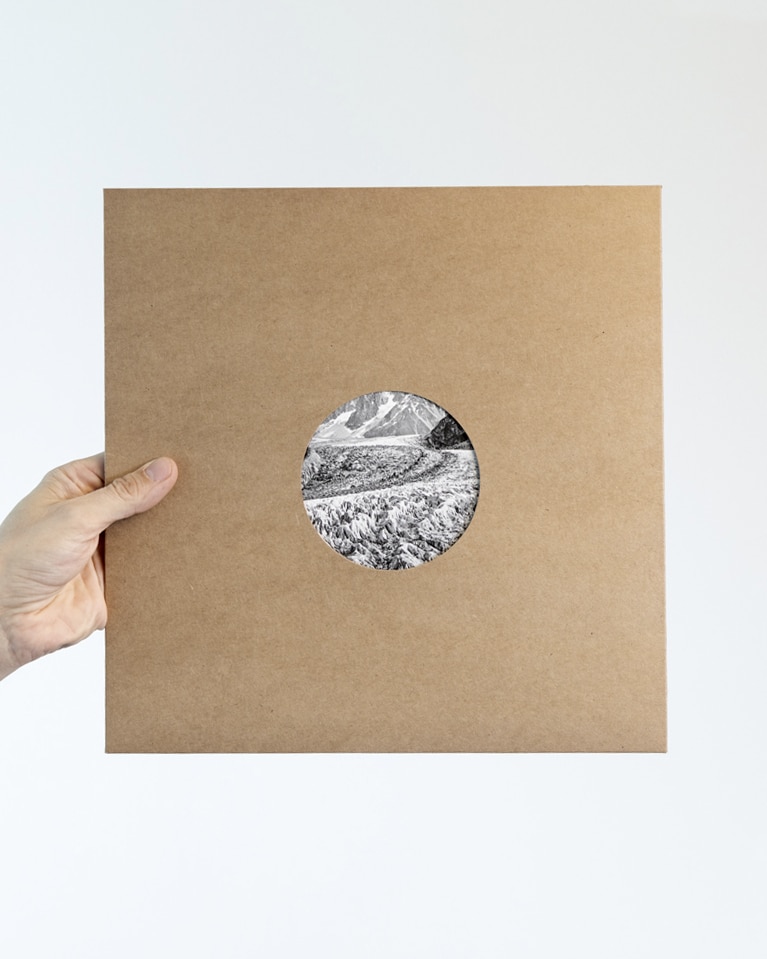
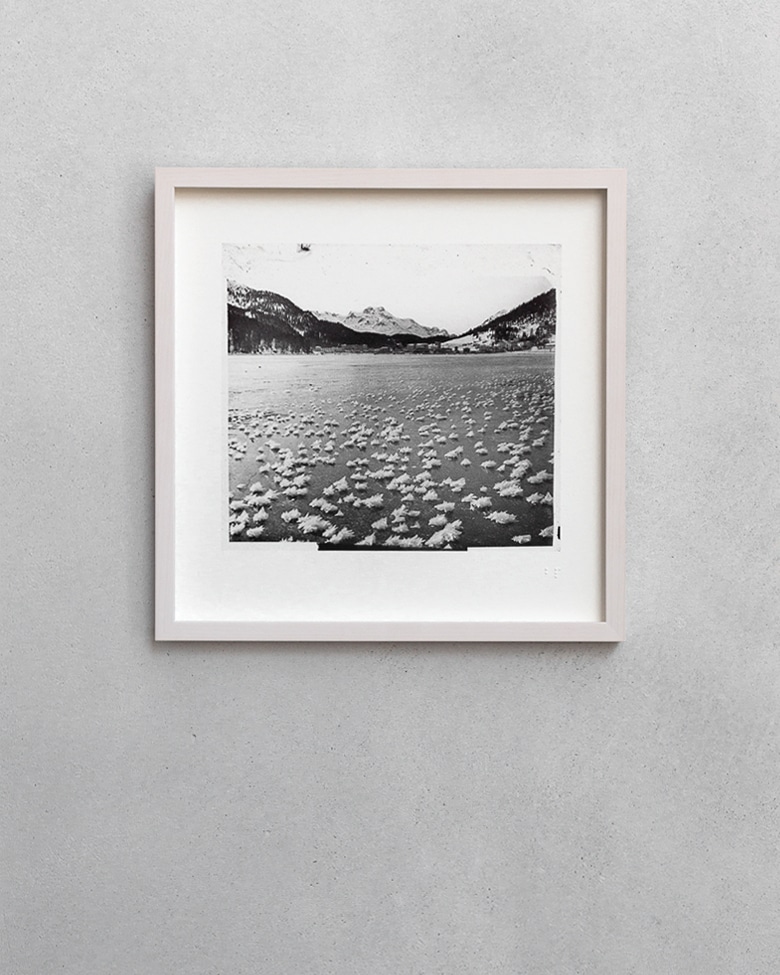
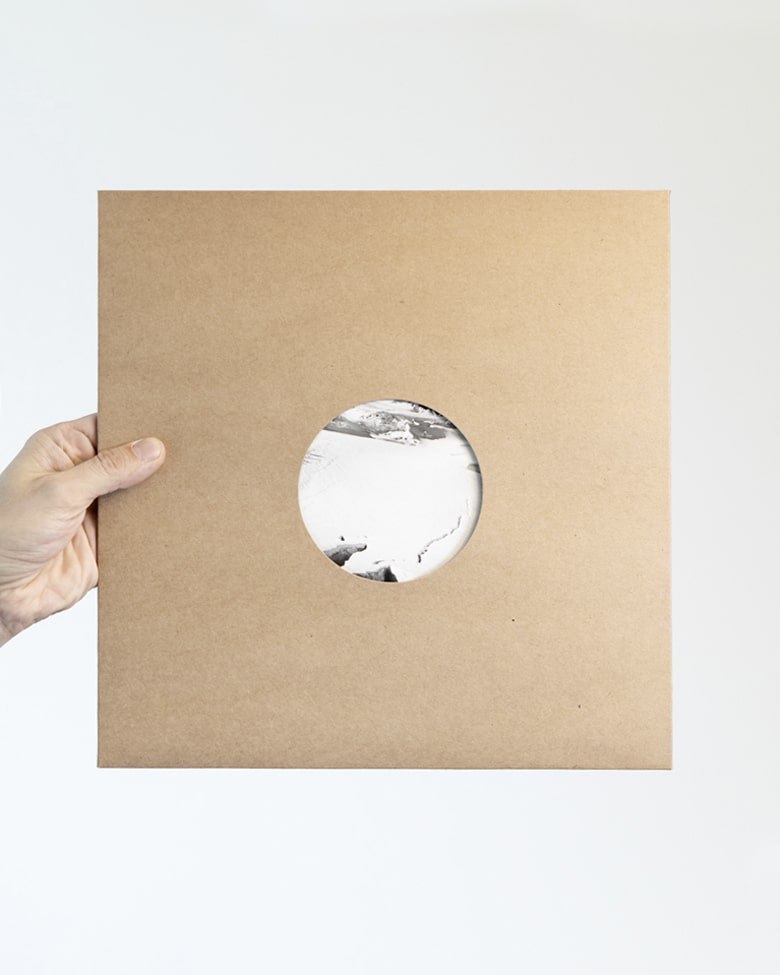
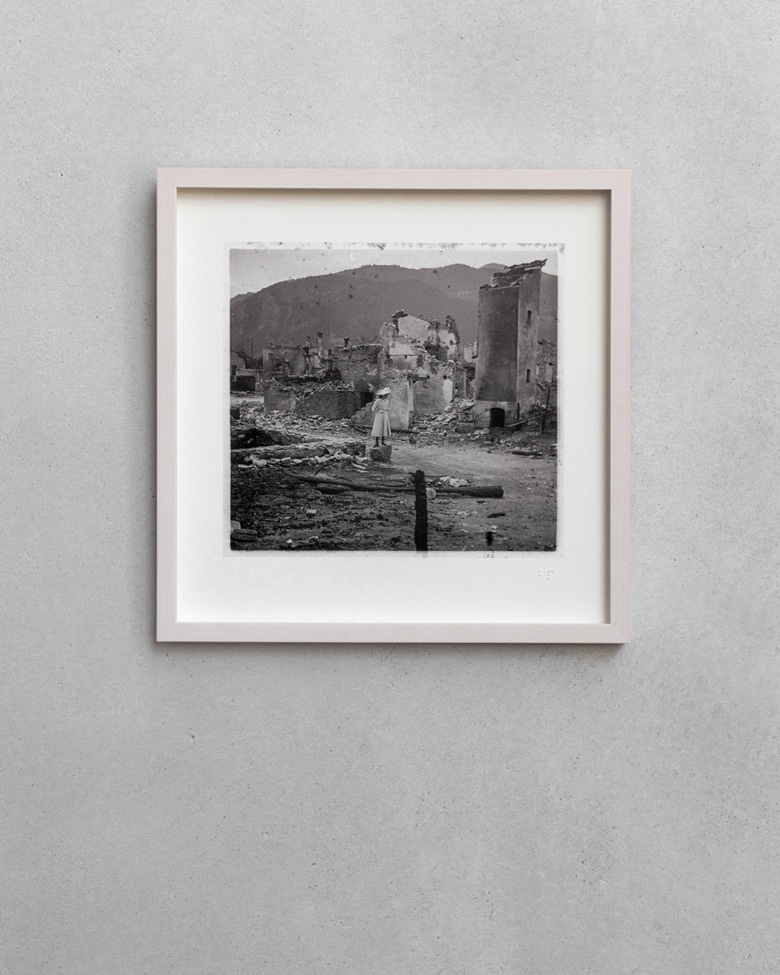
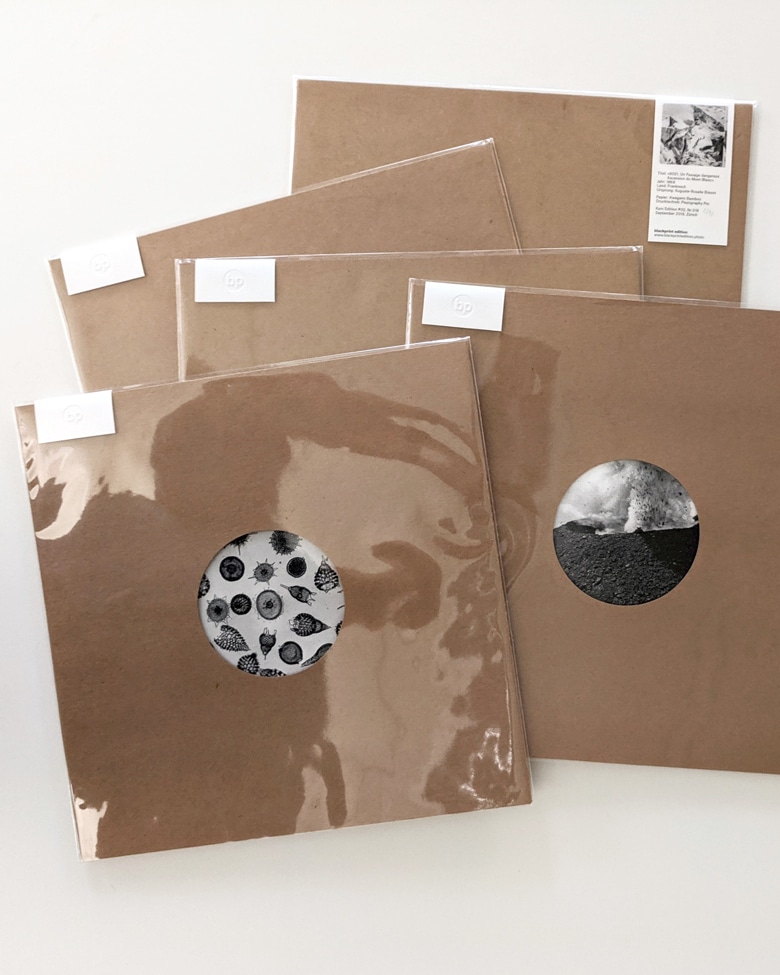
Stereoscopic glass slide, 8.3 × 17 cm, blackprint collection. Plate title: “9021. Un passage dangereux. Ascension du Mont-Blanc.” Photographer: Auguste-Rosalie Bisson. Published by Léon & Lévy, Paris, 1868 (series 9000). Piezography® Pro print on Awagami Bamboo Washi, 250 g/m² — made by the Awagami Factory in Tokushima, Japan, directed by the Fujimori family for eight generations, within a washi tradition in the Awa region dating to the 7th century. 30 × 30 cm. Edition of 90, Zürich.