The publishers
Moïse Léon and Isaac Lévy had worked within the Ferrier & Soulier studio before acquiring the business in 1864, continuing to publish under the Ferrier & Soulier name while developing their own catalogue under the imprint J. Lévy & Cie. By the 1880s, the firm had become one of the principal photographic publishers in France, with a catalogue spanning Europe, North Africa, and the Near East. T.H. McAllister, established in New York, was one of the leading American manufacturers of optical instruments and distributors of lantern slides; the partnership between the two houses placed European photographic material into scientific and institutional collections across North America.
Geological context
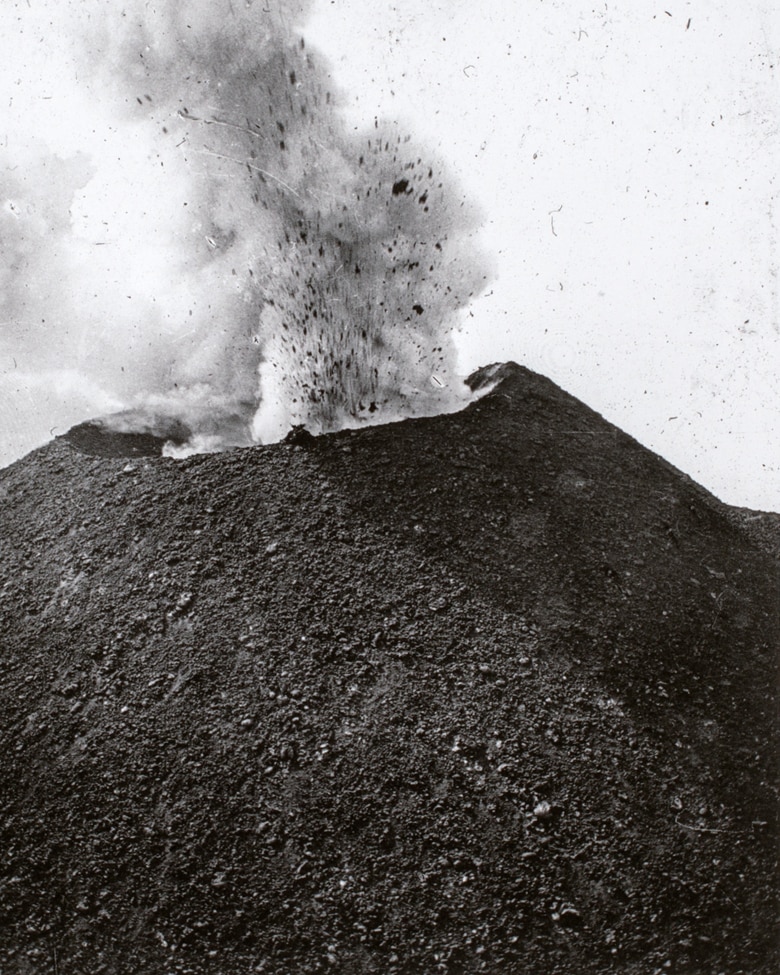
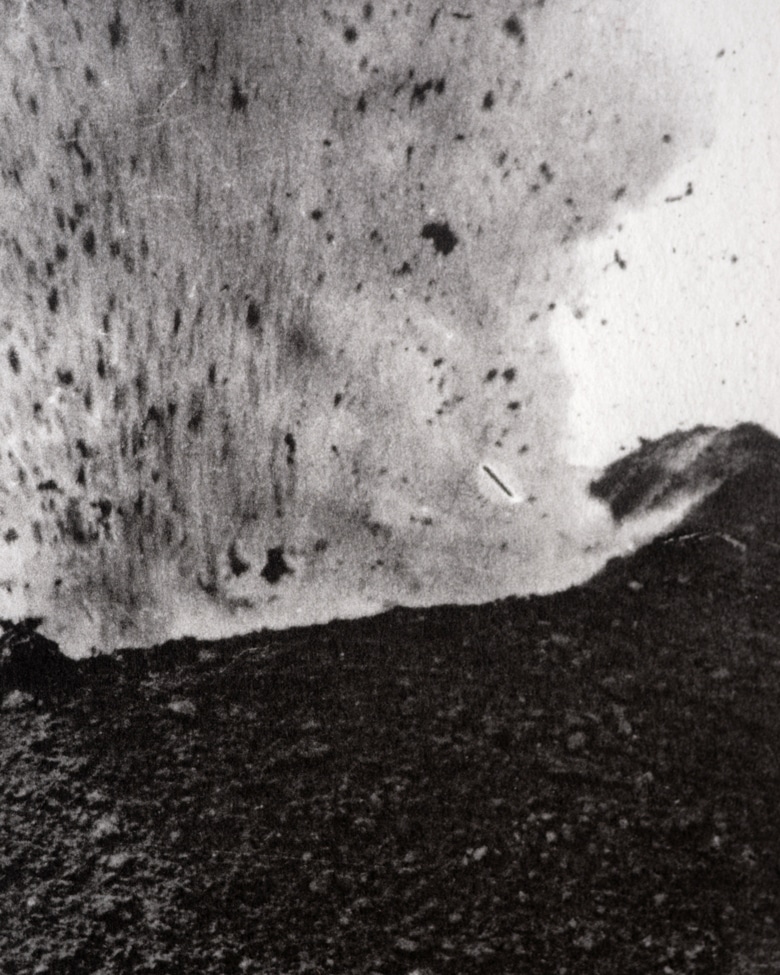
In 1880, Vesuvius was in the midst of a long period of continuous eruptive activity that had begun in 1875. A new intracrateric cone had been forming since 1878, growing through lava effusion and strombolian explosions — the structure visible in this plate. This accumulation continued until 1905, when the cone reached its highest point. The eruption of April 1906 brought this cycle to an abrupt end: the summit cone was decapitated by explosive activity during the night of 7 to 8 April. The silhouette documented here ceased to exist.
The composition
To reach this vantage point, the photographer descended into the inner crater — the Atrio del Cavallo — to the base of the central cone itself, close enough that the lava surface fills the lower two-thirds of the frame and the sky is reduced to a pale band at the top of the image. Smoke and ejected material are caught mid-ascent from the vent. The square 8.5 × 8.5 cm format of this plate corresponds to the lantern slide standard of the period, distinct from the rectangular format used for stereoscopic views.
The plate
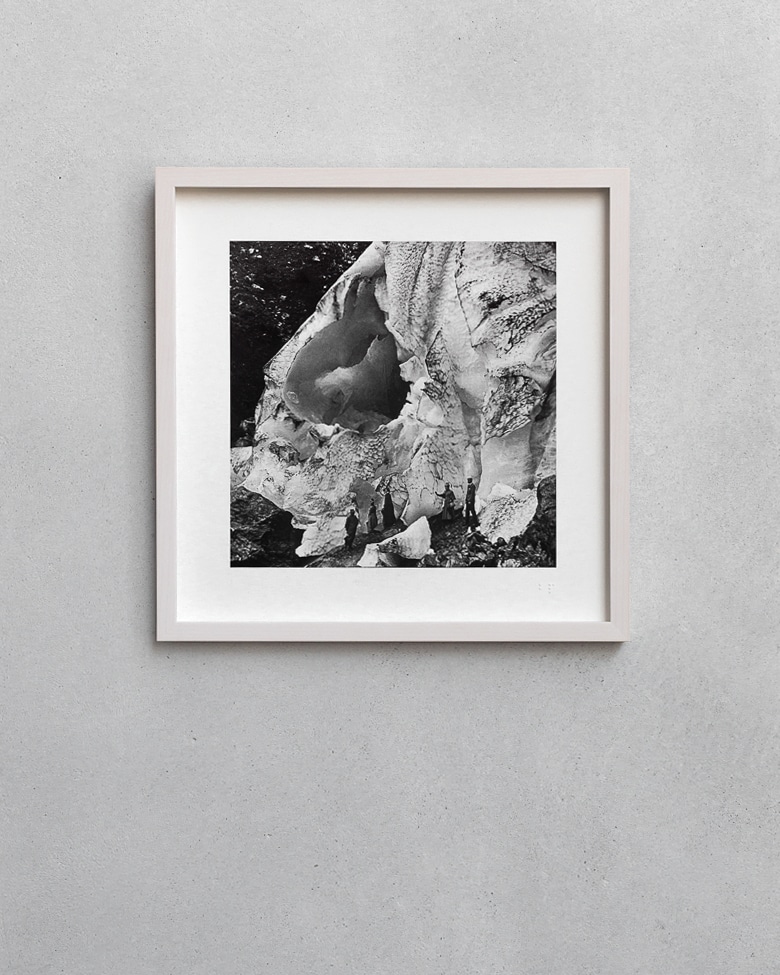
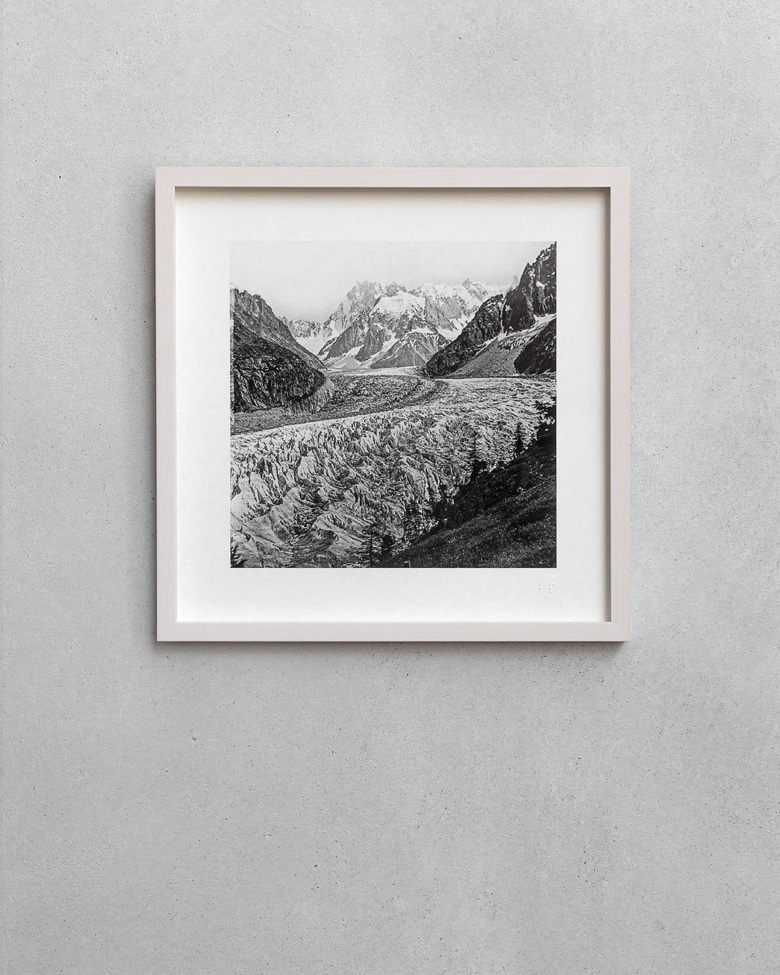
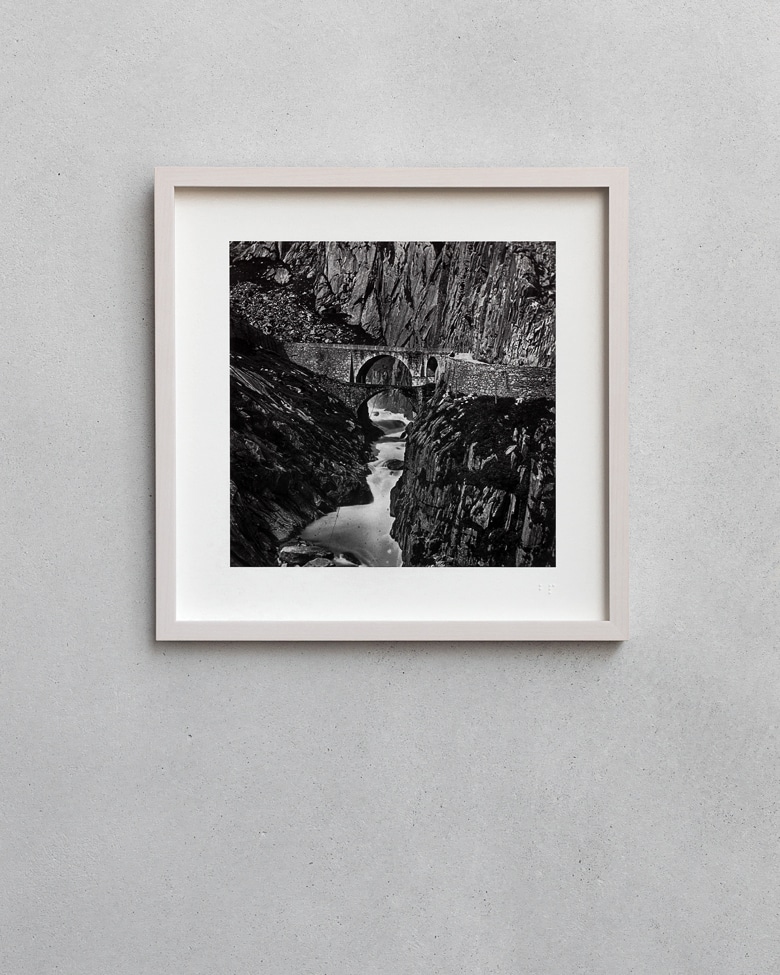
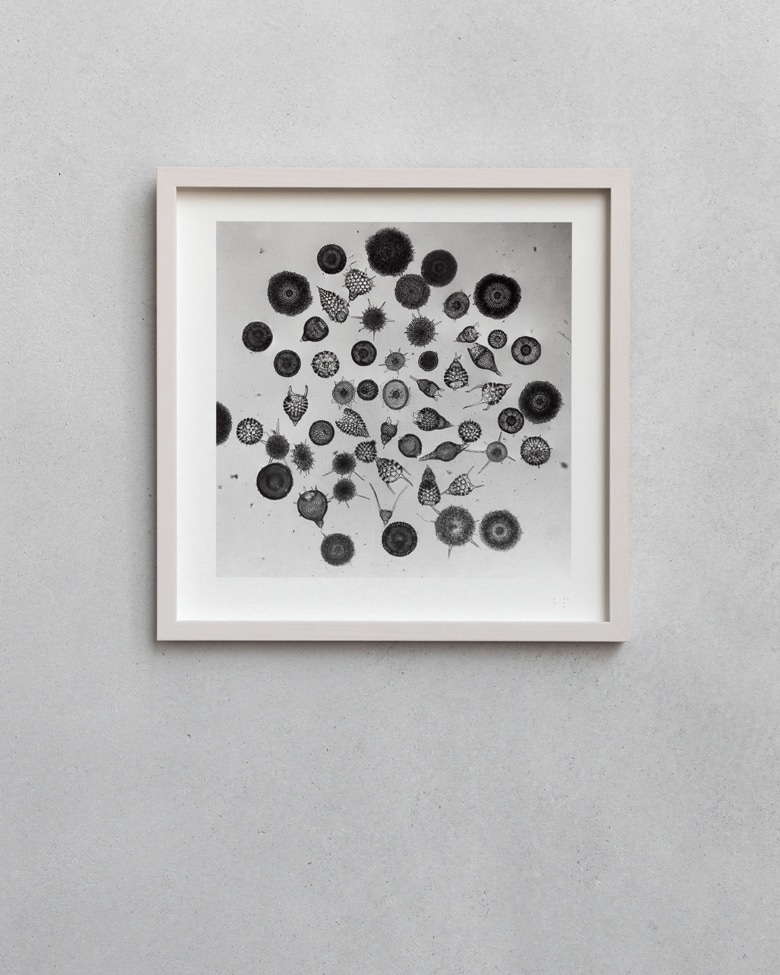
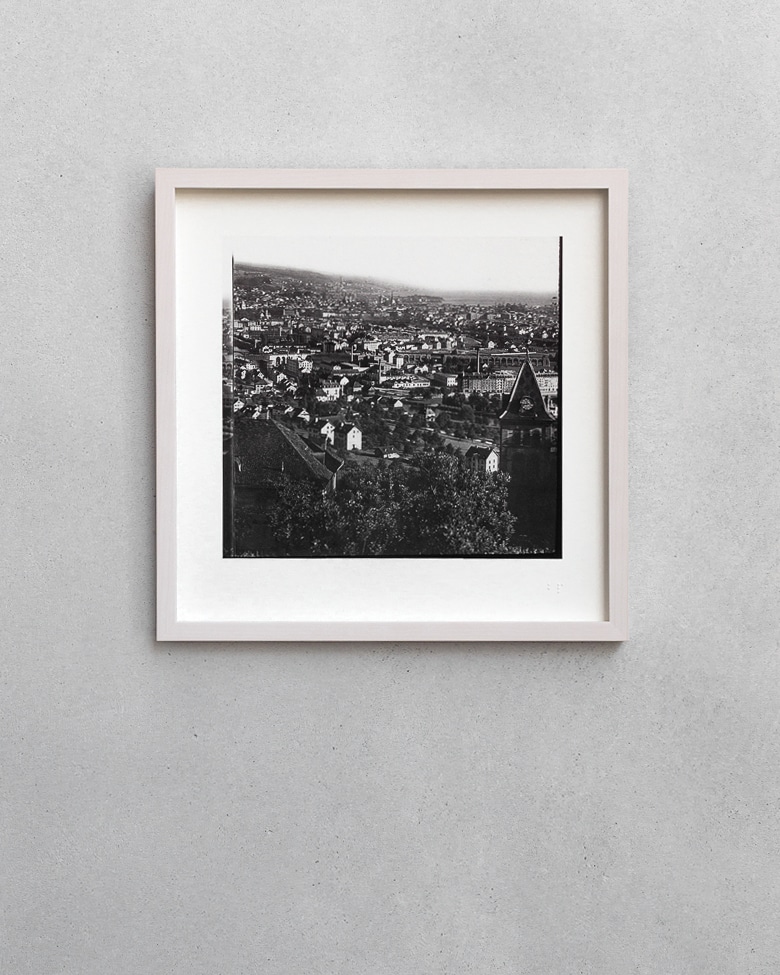
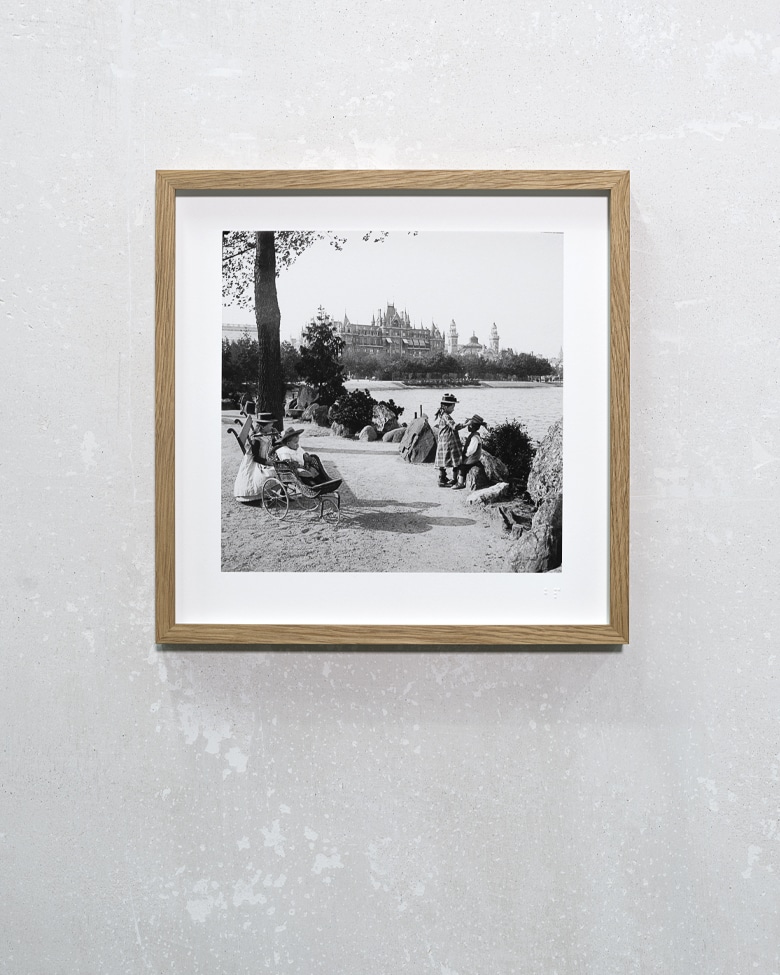
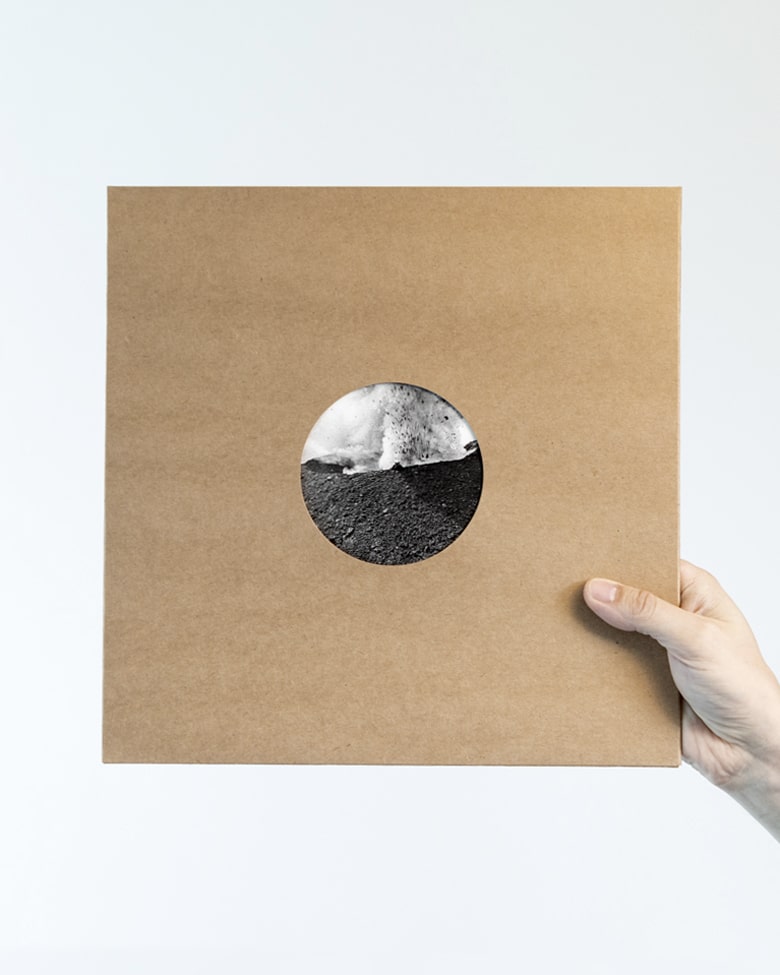
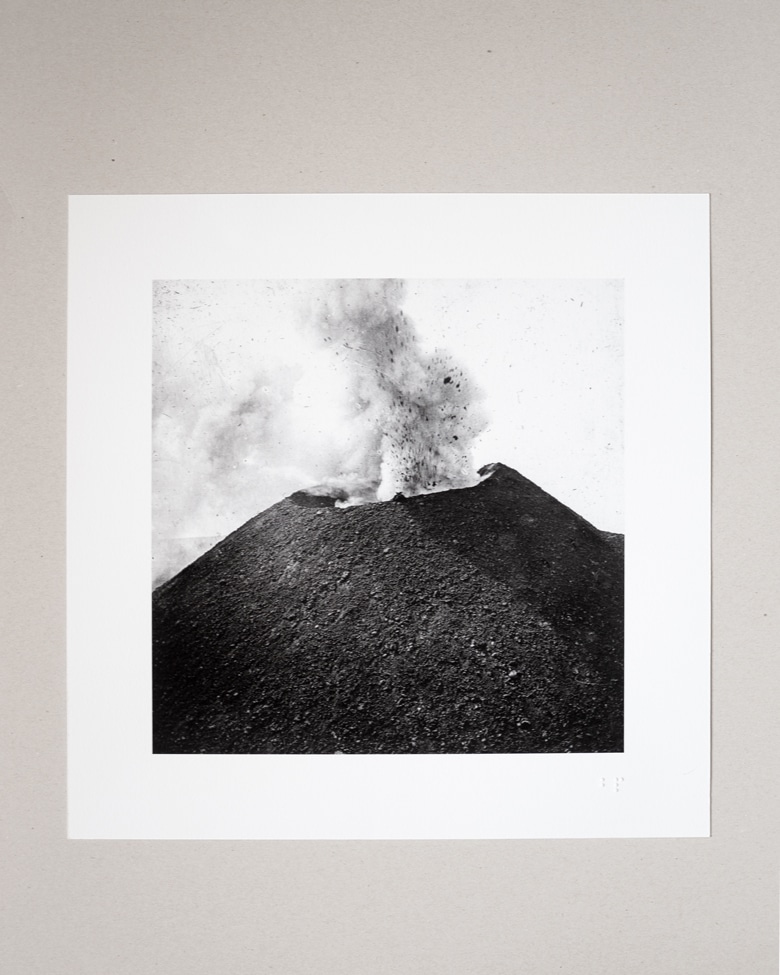
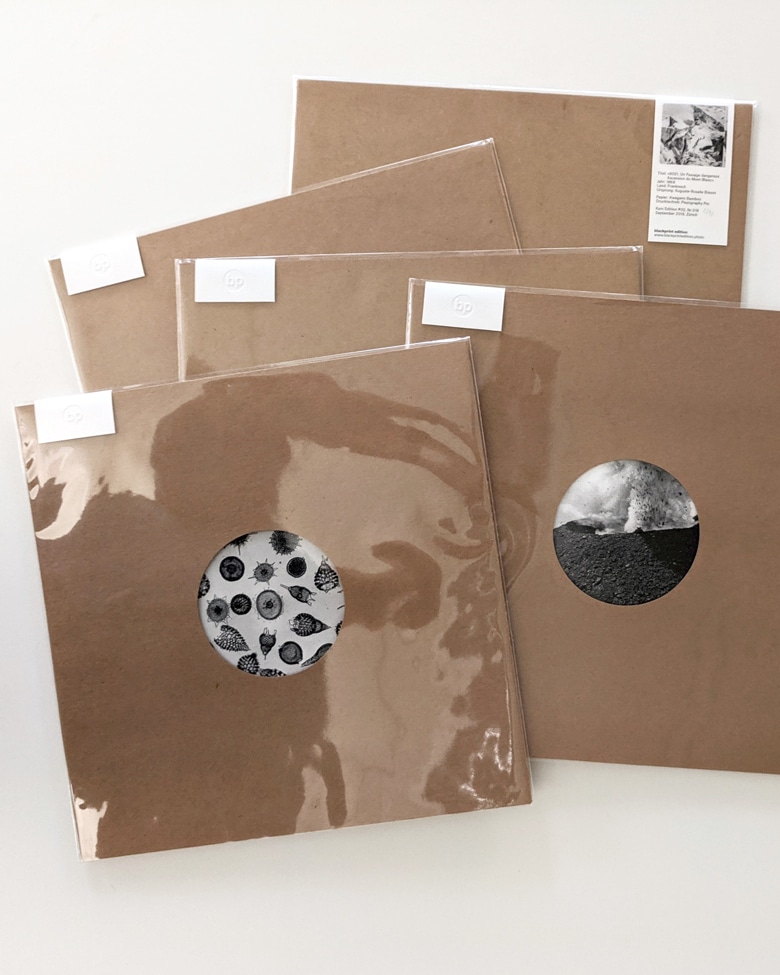
Glass slide, 8.5 × 8.5 cm, blackprint collection. Published by J. Lévy & Cie, Paris, in collaboration with T.H. McAllister, New York Piezography® Pro print on Arches Velin BFK Rives White, 250 g/m² — a 100% cotton paper made by cylinder mould at the Moulin d’Arches in the Vosges (founded 1492), sole production site of the BFK Rives since 1982, when production was transferred from the Isère mills to the Moulin d’Arches, a tradition rooted in Rives since 1573, carrying the ∞ watermark of archival permanence. Edition of 365, Zürich.