Claude-Marie Ferrier and Charles Soulier operated one of the most technically advanced stereoscopic photography studios in Paris in the mid-nineteenth century, producing albumenized-on-glass positives that offered a sharpness and luminosity unavailable on paper. The business was acquired in 1864 by Léon & Lévy, who continued to sell the catalogue under those names. The Schöllenen Gorge — narrow, dark, subject to mist and spray from the Reuss — was among the more demanding conditions the process could be asked to handle. The catalogue number places this plate among the firm’s early Swiss documentation.
The Schöllenen is the most constrained passage of the Gotthard route — the gorge through which the Reuss cuts between Andermatt and Göschenen, granite walls rising near-vertically on both sides. The route through it was first made passable around 1230 by Walser settlers from the Urserental, who built a precarious walkway of timber beams anchored into the rock face. In 1595 this was replaced by a stone bridge — the first Teufelsbrücke — which stood until 25 September 1799, when the gorge became the site of a battle between French troops under General Claude-Jacques Lecourbe and the Russian army of Field Marshal Alexander Suvorov, retreating across the Alps from Italy. The bridge was severely damaged and rendered impassable. The canton of Uri, impoverished after the Napoleonic wars, could not immediately rebuild; traffic shifted to the Splügen pass, and the gorge remained closed for years.
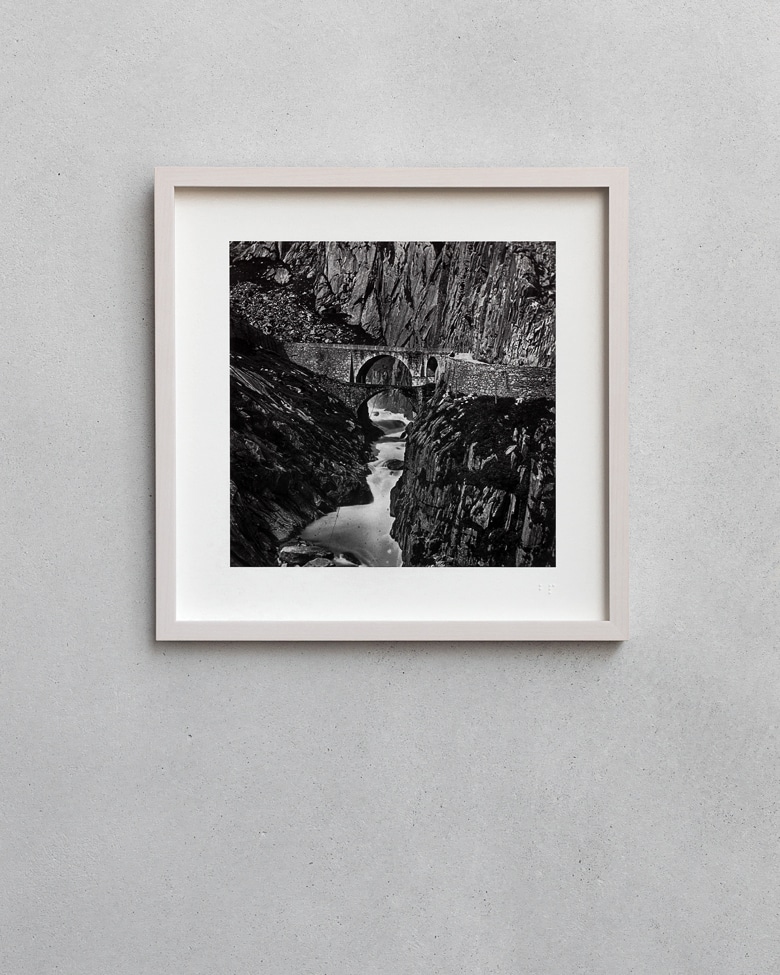
Construction of the Neue Teufelsbrücke — the lower of the two bridges visible in this photograph — began in 1820 and was completed in 1830, built to carry the new Gotthard road. The ruins of the 1595 bridge remained standing alongside it, visible as a pointed arch above the new semicircular one, until 2 August 1888, when a flood finally brought them down. A replica of the first stone bridge was erected in 1837 in the Park Klein-Glienicke in Berlin. The Suvorov monument near the site was inaugurated in 1898.
The image places the camera at the base of the gorge, looking directly up at both bridges simultaneously. The composition is not an accident of position — the photographer has set up at the one point where the two arches are stacked in the frame, the lower one’s round vault framing the upper one’s pointed ruin, and both framing the rock face behind. What the stereoscopic process adds is the depth of the gorge itself: the distance between the camera, the near bridge, the far bridge, and the cliff is what the format was built to render.
The plate
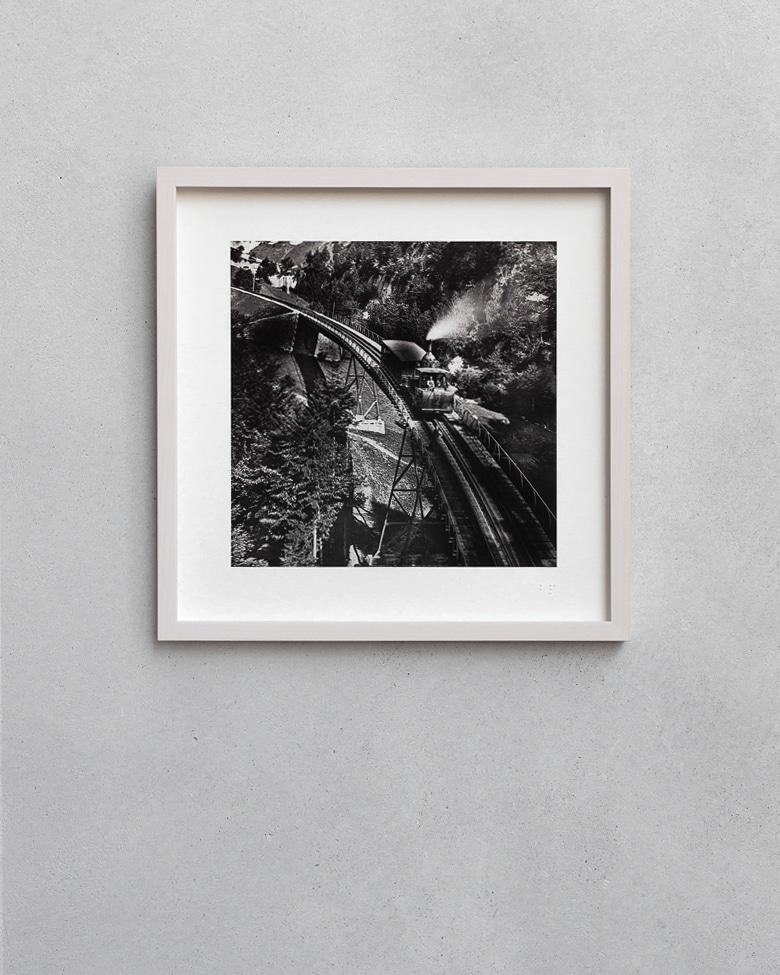
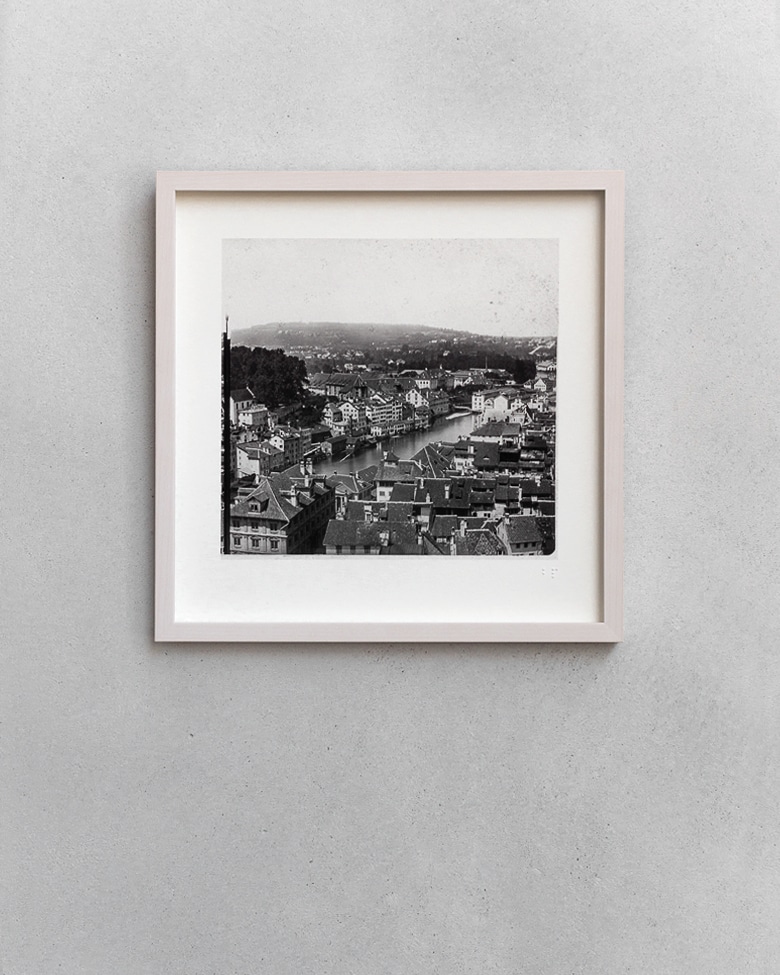
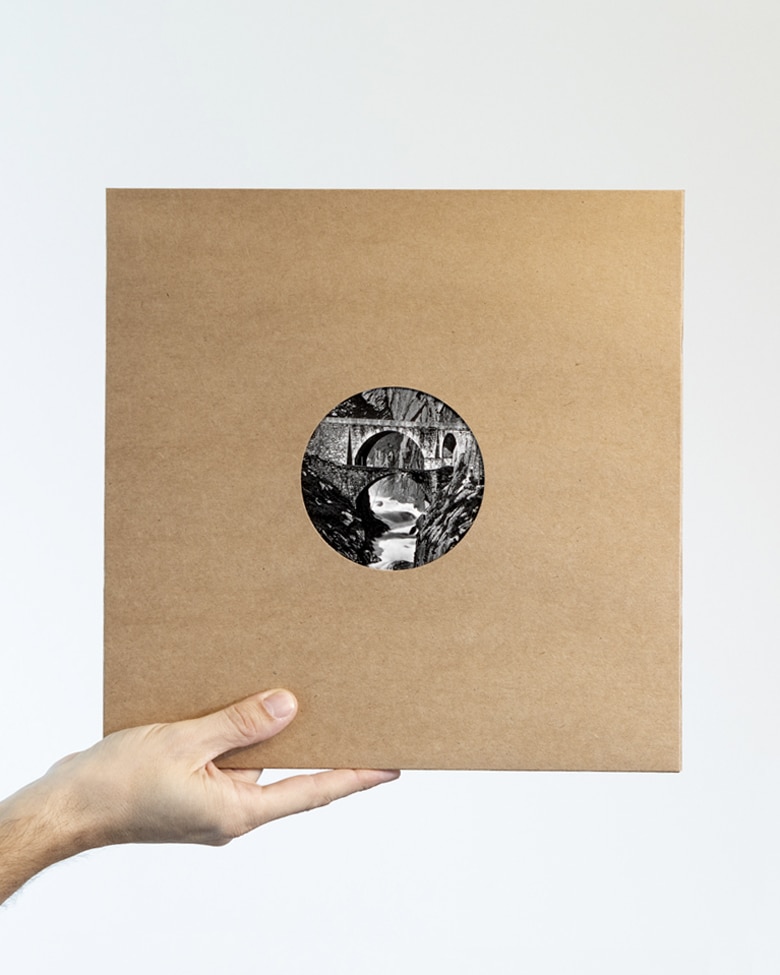
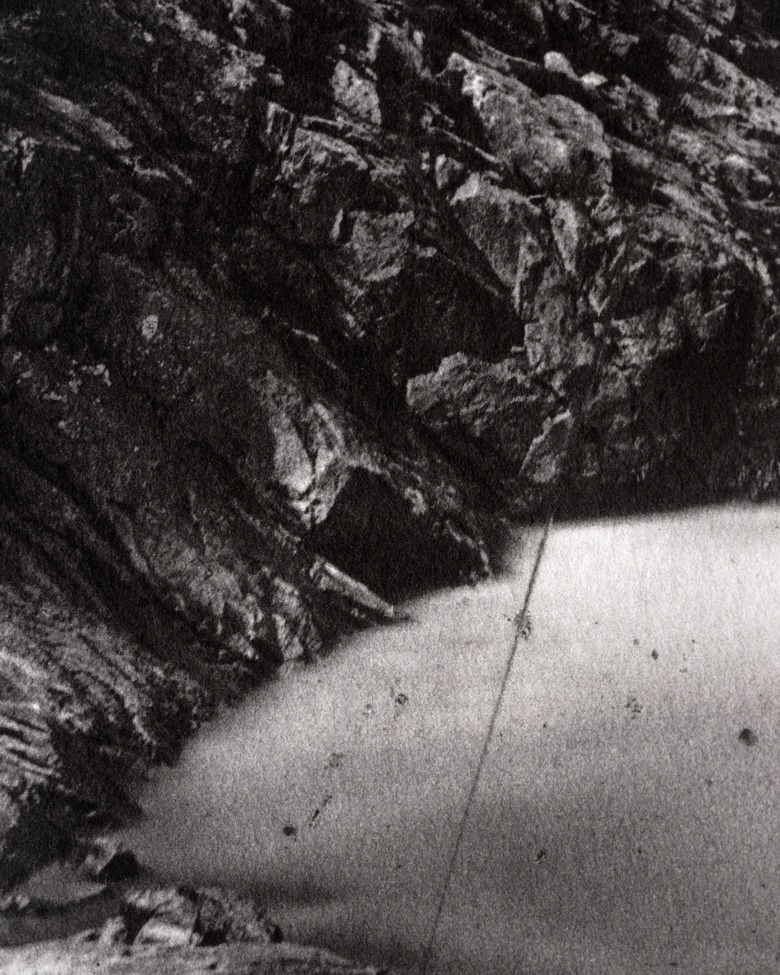
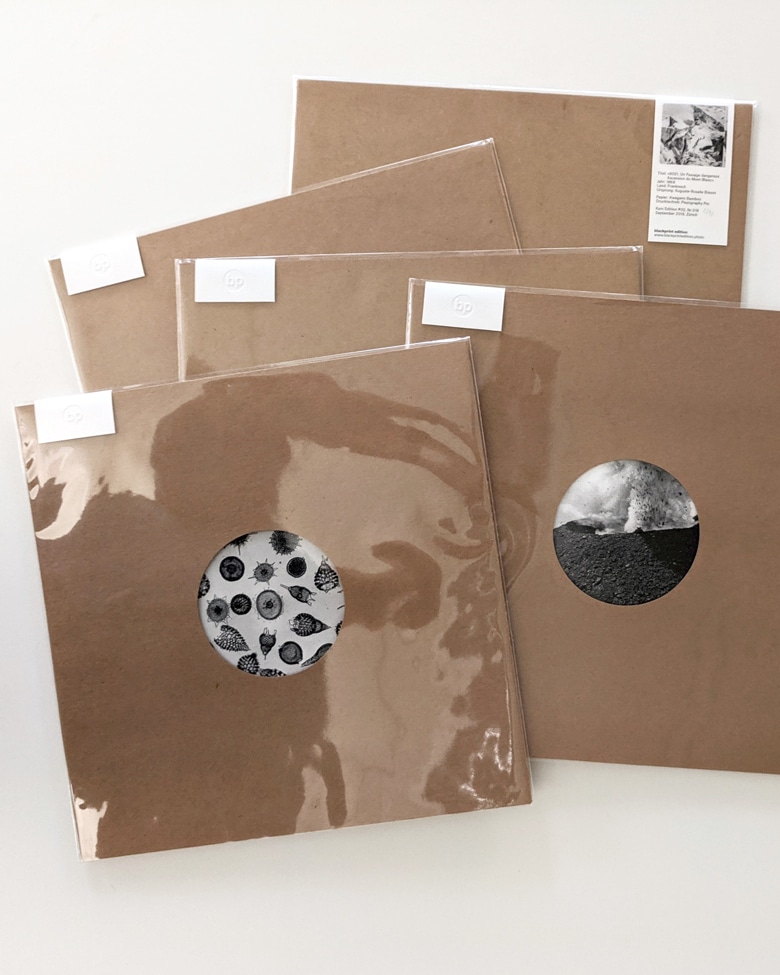
Stereoscopic glass slide. Ferrier père, fils et Soulier, 1864. Schöllenen Gorge, St. Gotthard, Switzerland. From the blackprint collection. Piezography® Pro print on Arches Velin BFK Rives White, 250 g/m² — a 100% cotton paper made by cylinder mould at the Moulin d’Arches in the Vosges (founded 1492), sole production site of the BFK Rives since 1982, when production was transferred from the Isère mills, a tradition rooted in Rives since 1573, carrying the ∞ watermark of archival permanence. Edition of 365, Zürich.