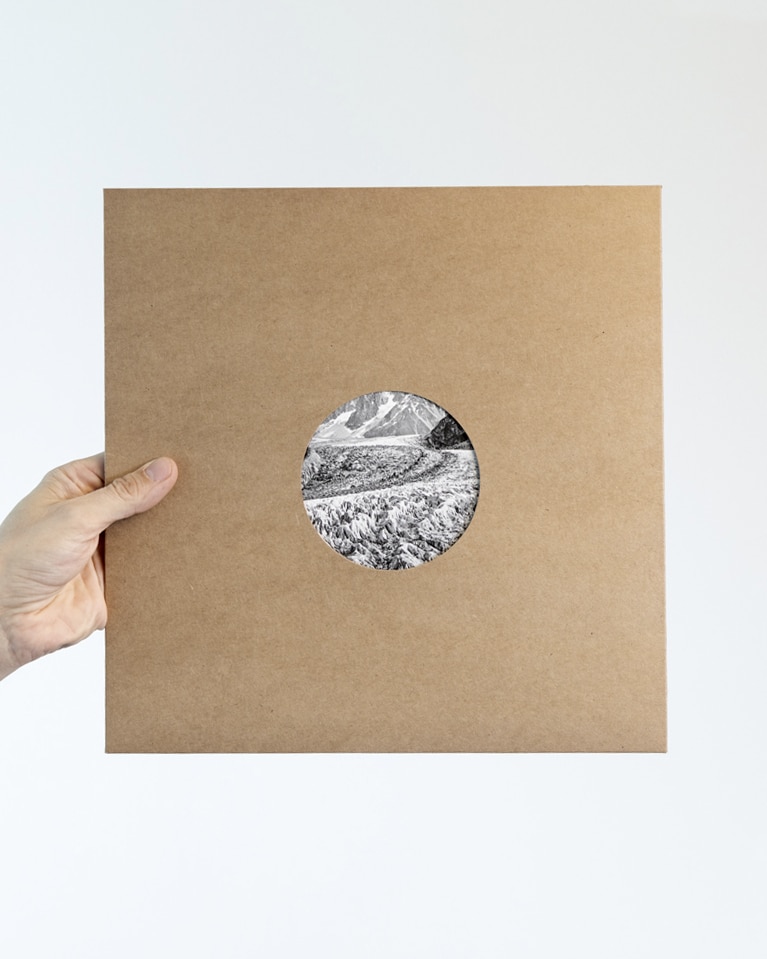
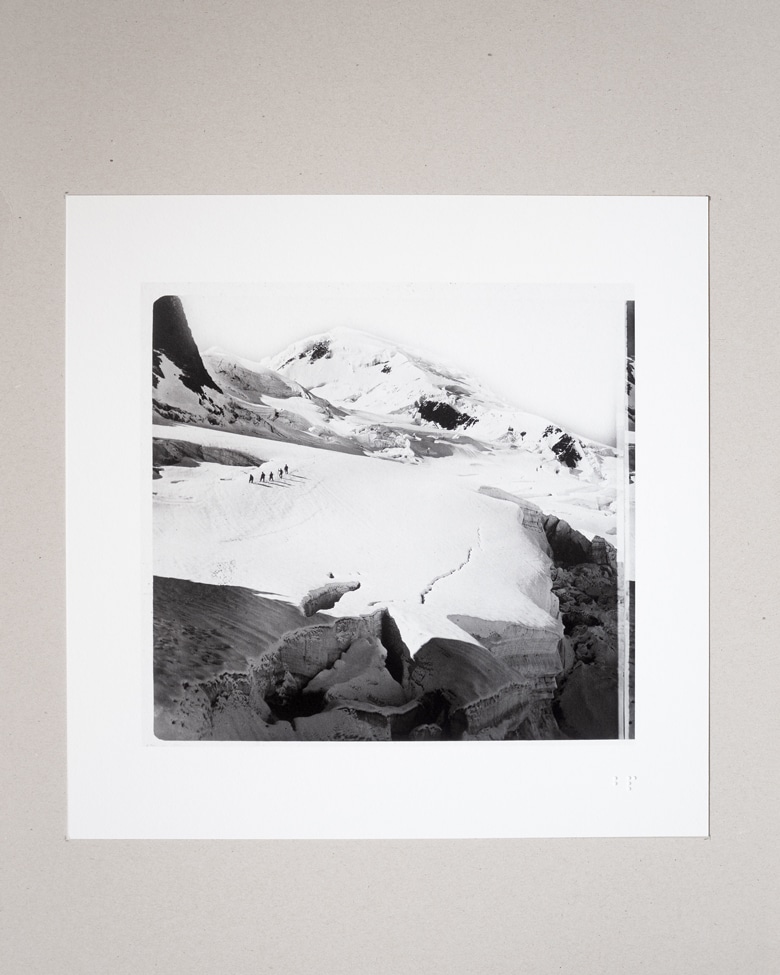
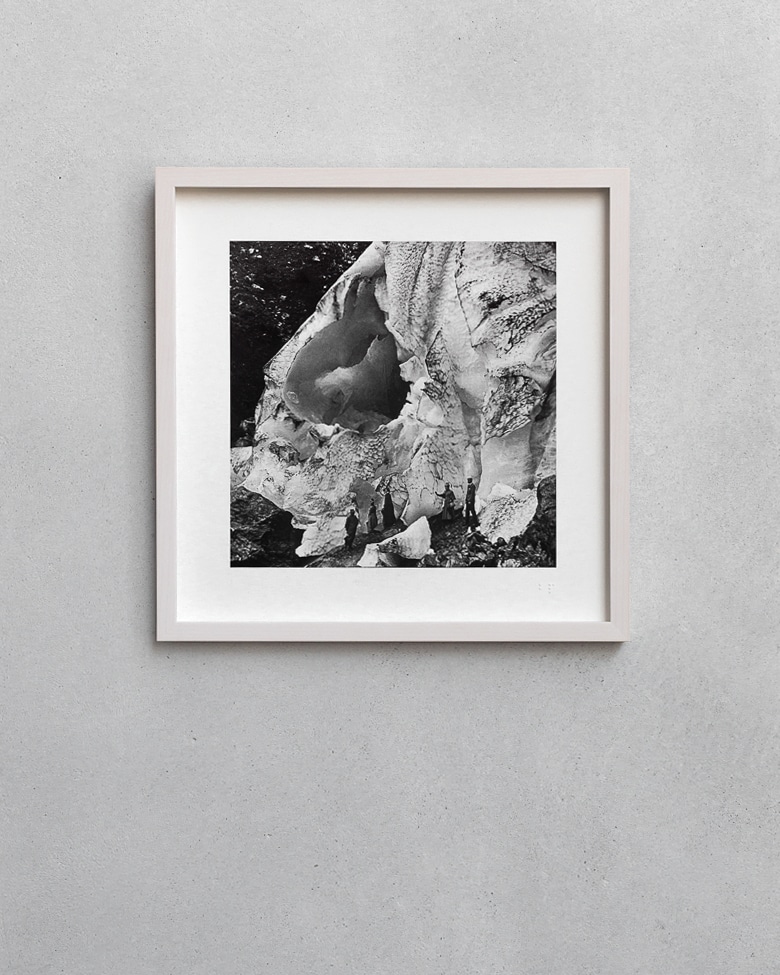
Auguste-Rosalie Bisson: The Obsession with the Summit
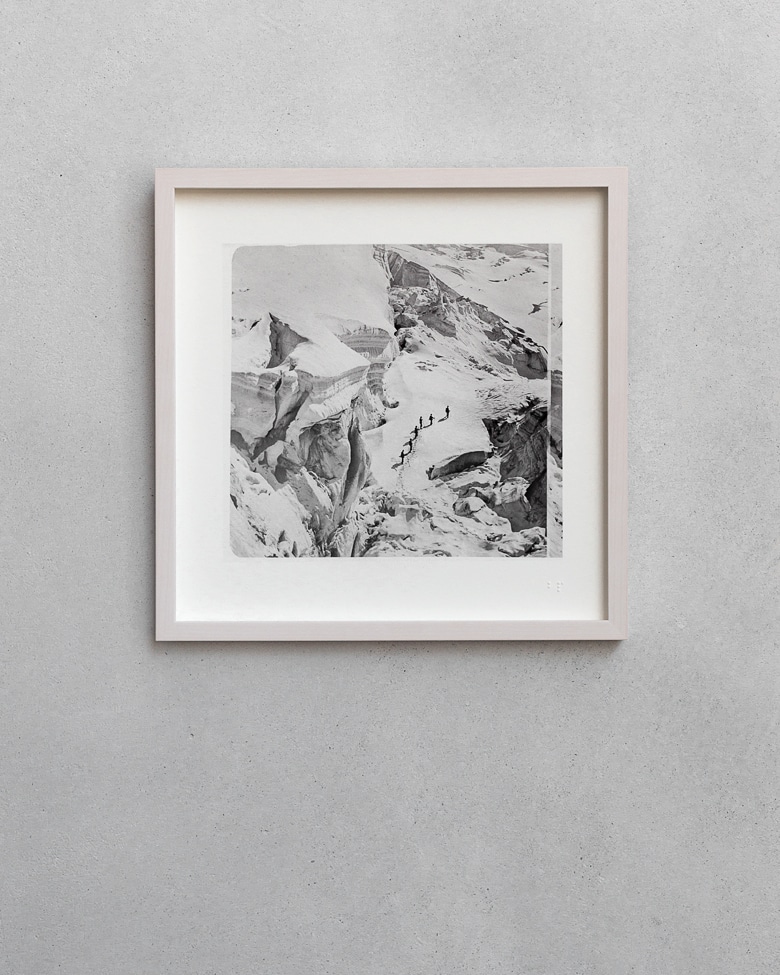
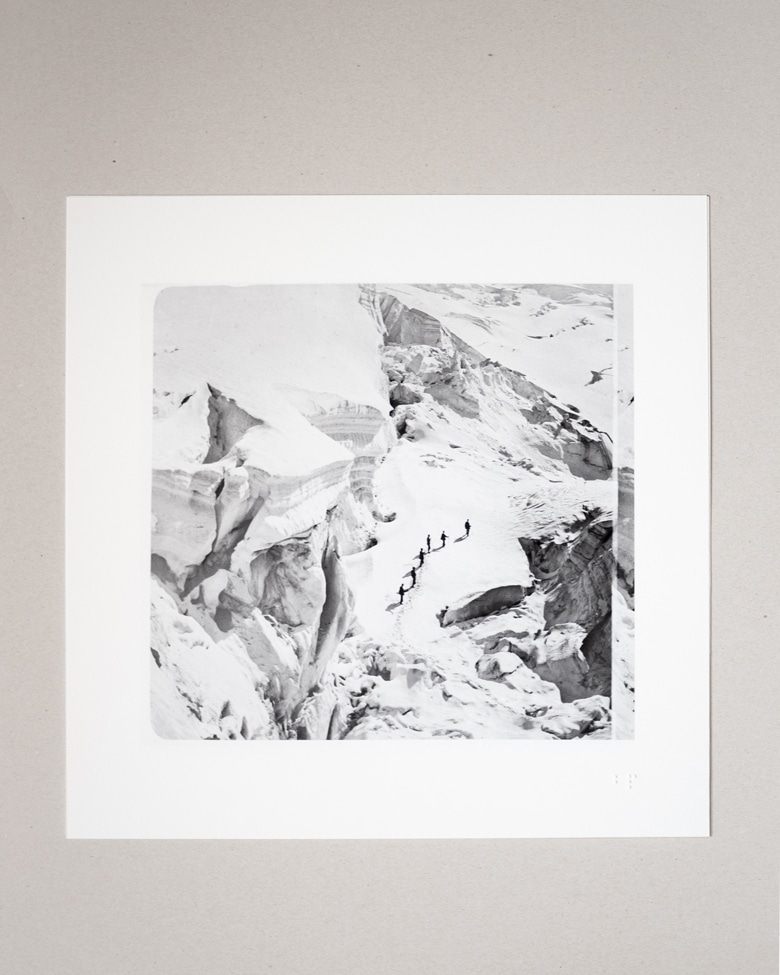
The story of the Bisson Frères (Louis-Auguste and Auguste-Rosalie) marks a decisive turning point in mountain photography. As official photographers to Emperor Napoleon III, they distinguished themselves by using very large-format glass plates, achieving an image quality that was unprecedented for the era.
The Mont Blanc Feat (1861)
The name Auguste-Rosalie Bisson is forever linked to the first documented photograph taken from the summit of Mont Blanc. After an initial unsuccessful attempt in June 1861, thwarted by severe weather, he renewed the expedition in July. The logistics were staggering: 25 guides were hired to transport heavy glass plates, volatile chemicals, and a portable darkroom tent up to an altitude of 4,807 meters for on-site development.
The Financial Decline (1863)
Despite their immense fame, the high cost of these heroic expeditions and the complex production of large-format prints weighed heavily on the studio’s profitability. In 1863, the Bisson Frères company was declared bankrupt, leading to the judicial liquidation of its prestigious archives.
The Acquisition by Ferrier & Soulier and Léon & Lévy (1864)
The liquidation of the Bisson estate led to the dispersal of their assets. It was at this time that Charles Soulier, a partner at the Ferrier agency, acquired a significant portion of the original negatives, including the iconic alpine series. By 1864, the Ferrier & Soulier agency was acquired by Léon & Lévy, who continued to develop the archive under their own label while maintaining the prestige of the original brand.
Catalog Integration and the 1868 Return
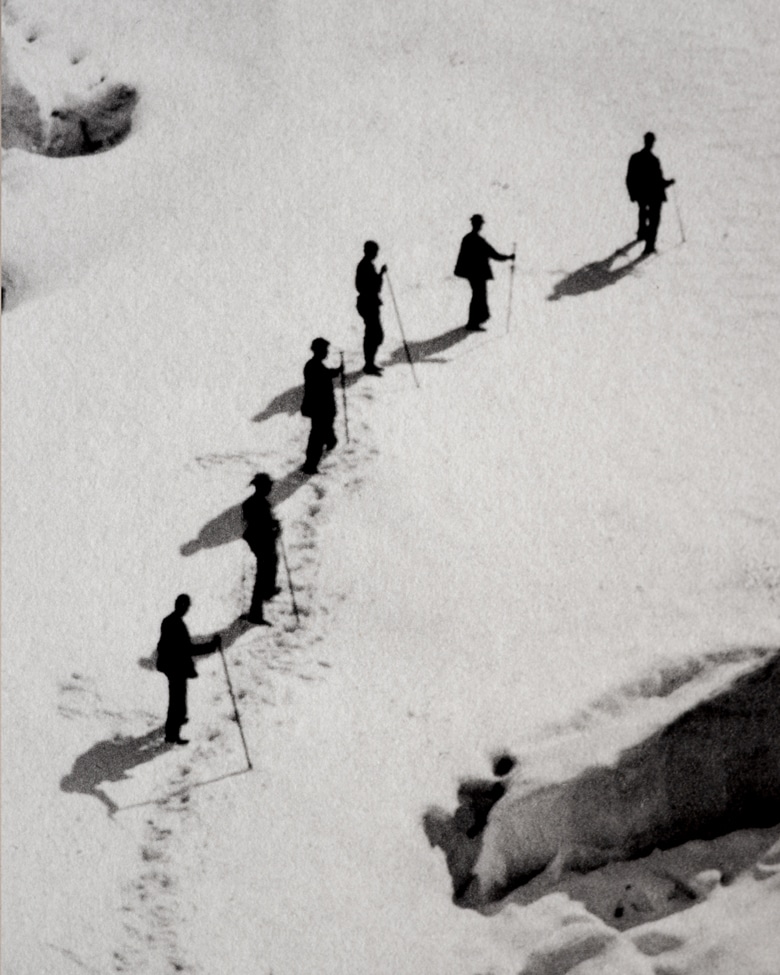
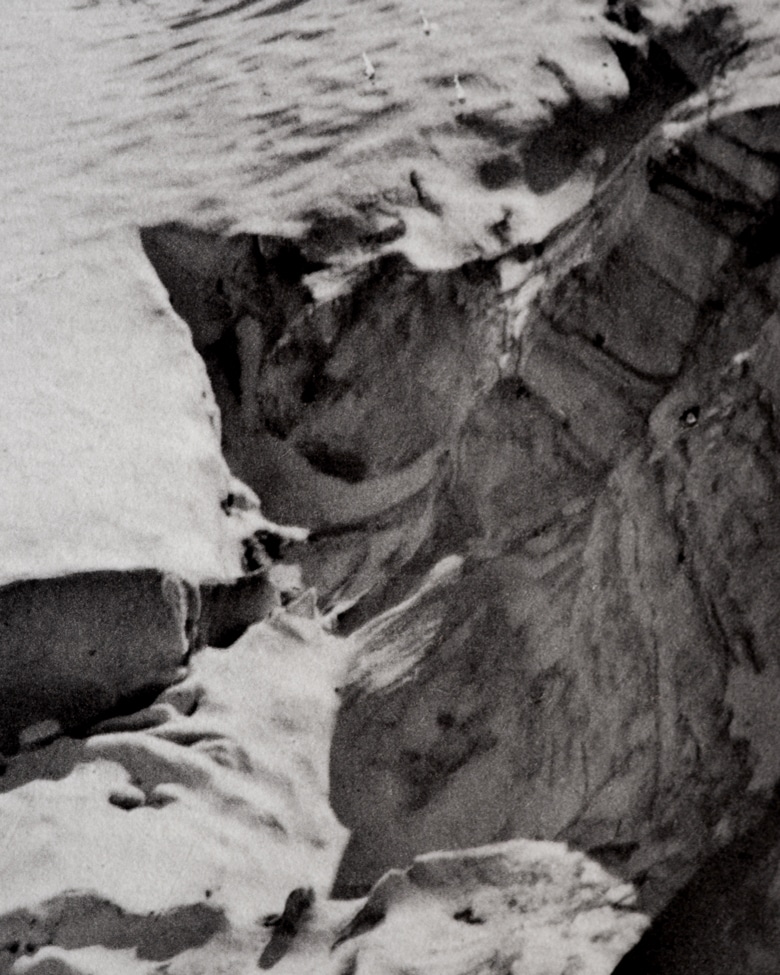
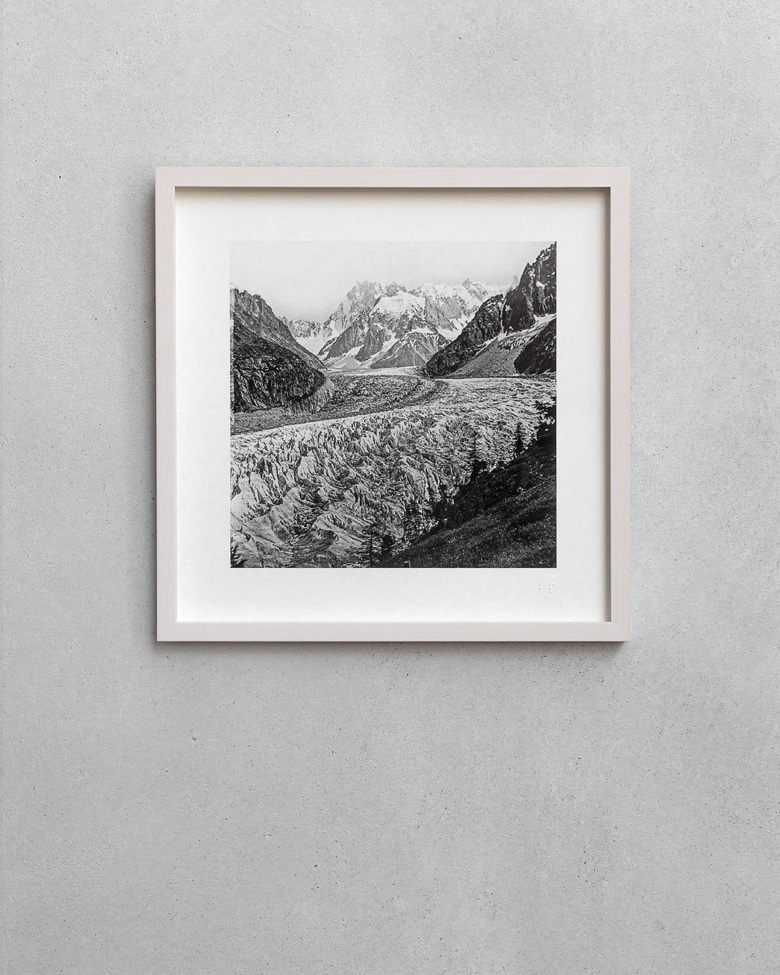
While the Bisson brothers originally favored monumental formats, the new agency adapted these images for the booming stereoscopy market (3D relief views). This collaboration reached its peak in 1868, when Auguste-Rosalie Bisson returned to the Mont Blanc massif to produce an entirely new series of stereoscopic views. Published by Léon & Lévy (9000 series).