Ferrier & Soulier
Claude-Marie Ferrier (1811–1889) is credited with producing the first glass stereoview in 1852, working from the Paris atelier of optician Louis-Jules Duboscq. In 1859 he formed a partnership with his son Jacques-Alexandre and with Charles Soulier (1816–1886), establishing the firm known as Ferrier père, fils et Soulier. The business was acquired in 1864 by Léon & Lévy, who continued to sell the catalogue under those names. Their albumenized-on-glass process was technically unmatched among French studios of the period. Catalogue number 4032 places this plate within their Swiss series, which documented the country’s cities, landscapes, and infrastructure in the years immediately following the opening of the first Swiss railway lines.
The lake at Bellevue
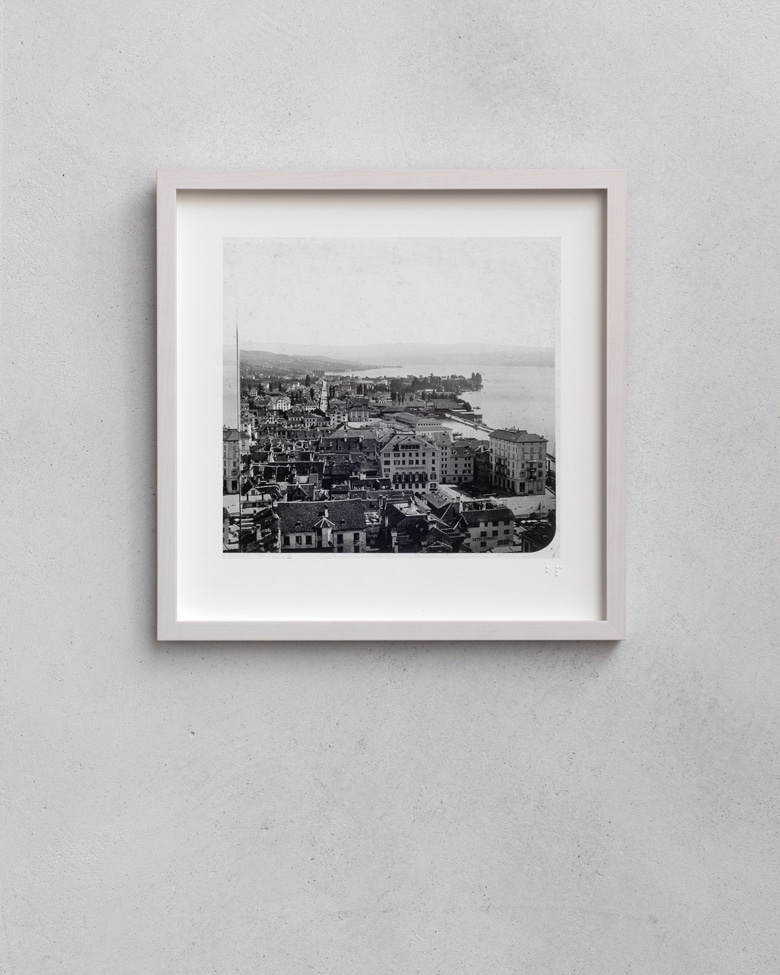
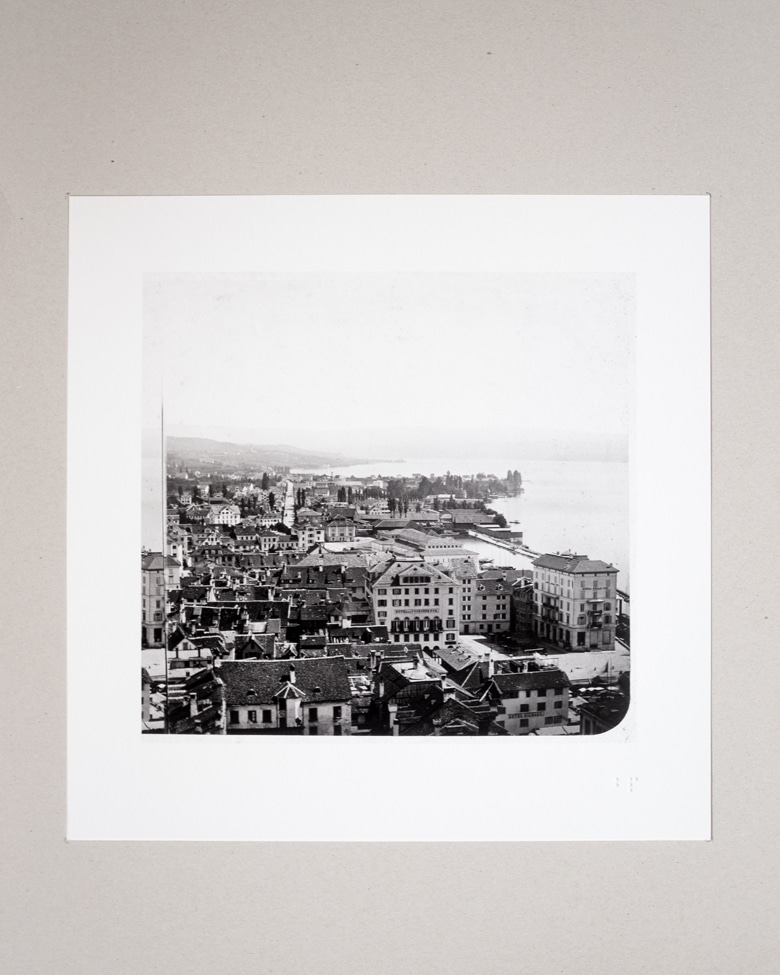
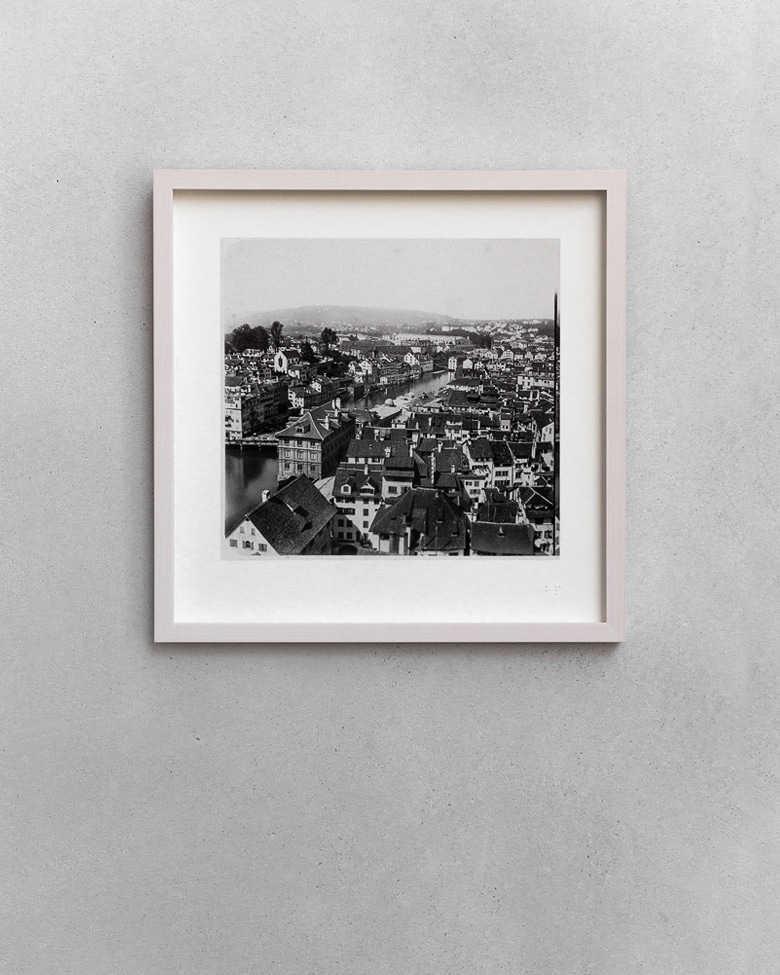
The Bellevueplatz stands on artificial landfill, introduced mostly during the nineteenth century. The lake extended into this territory during the medieval period and was progressively pushed back as demand for solid ground increased. In 1862 — the year of this plate — the transformation was well underway but far from complete. The Quaianlagen, the system of embankments and promenades that would define the shape of the lakeshore from the Quaibrücke to Zürichhorn, were not built until 1881–1887, under the direction of Arnold Bürkli. The Quaibrücke itself, spanning the outflow of the lake into the Limmat, did not yet exist. The Stadttheater — later the Opernhaus — was built in 1891 on ground that was, in 1862, still at or near the waterline. What the photograph shows in the background is not an absence of development but its precondition: the unformed edge of the city where the lake ended and the land began.
The composition
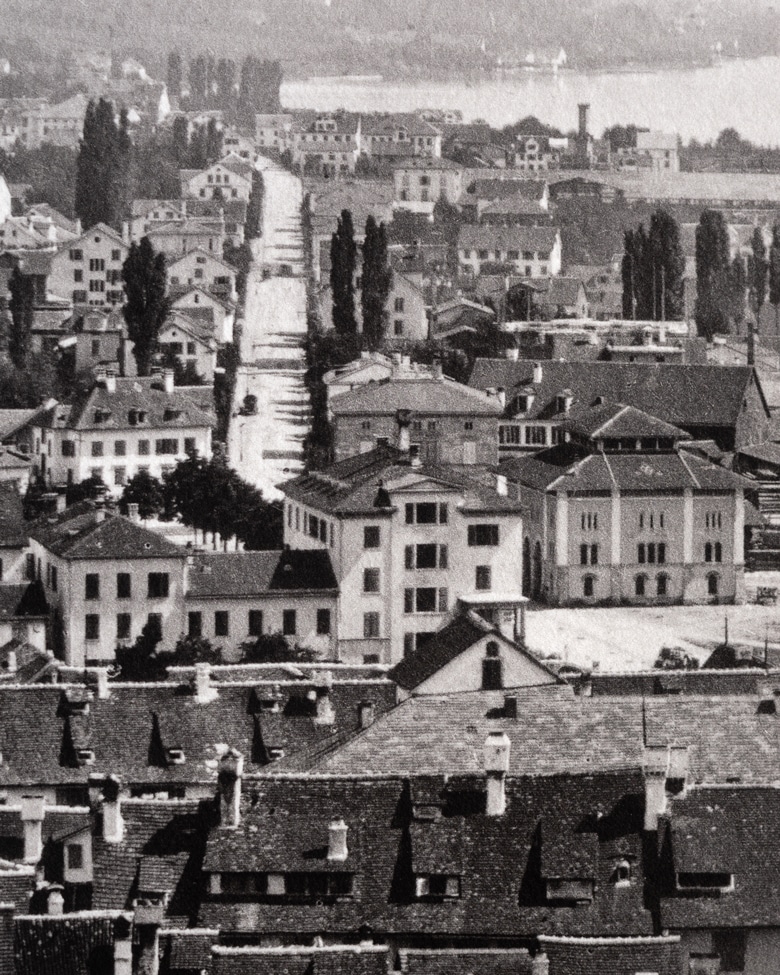
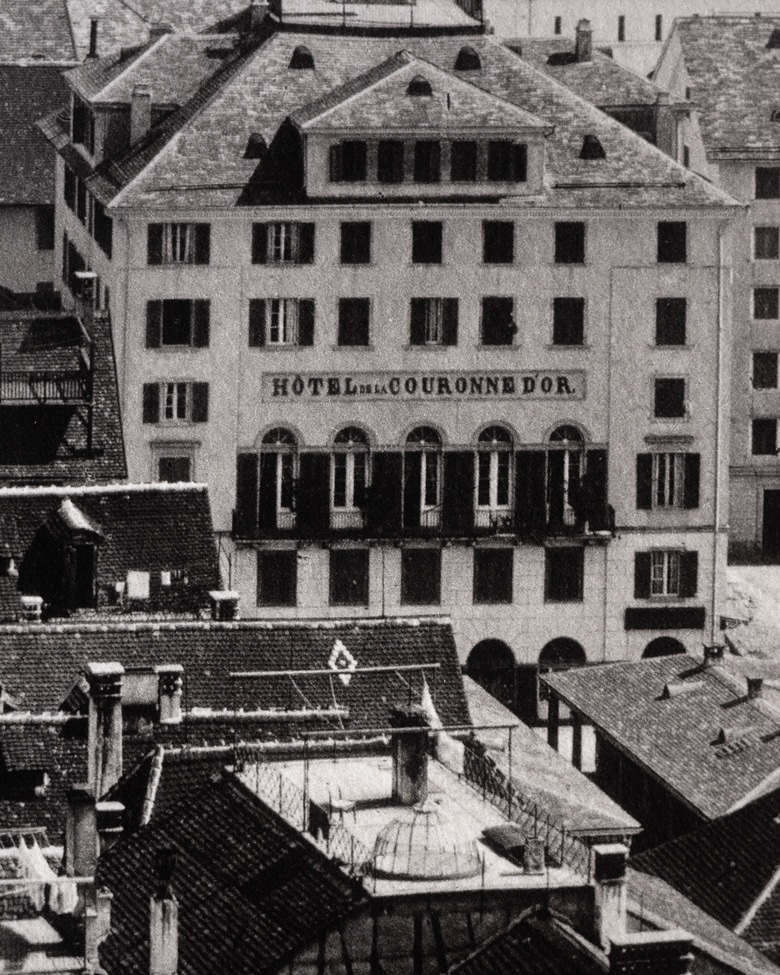
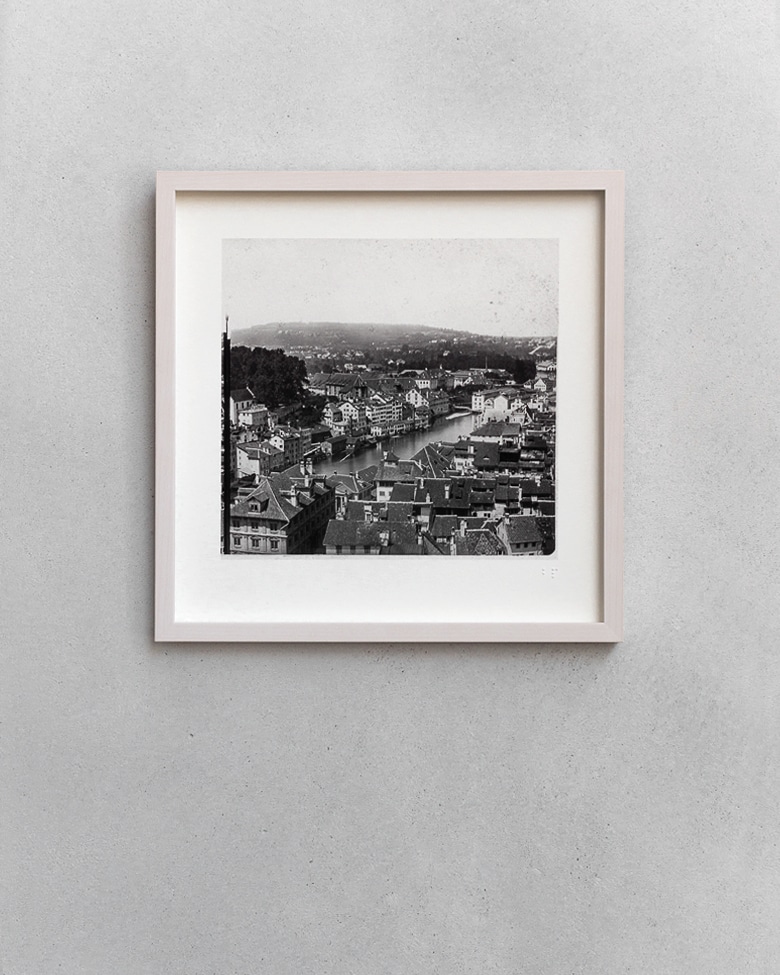
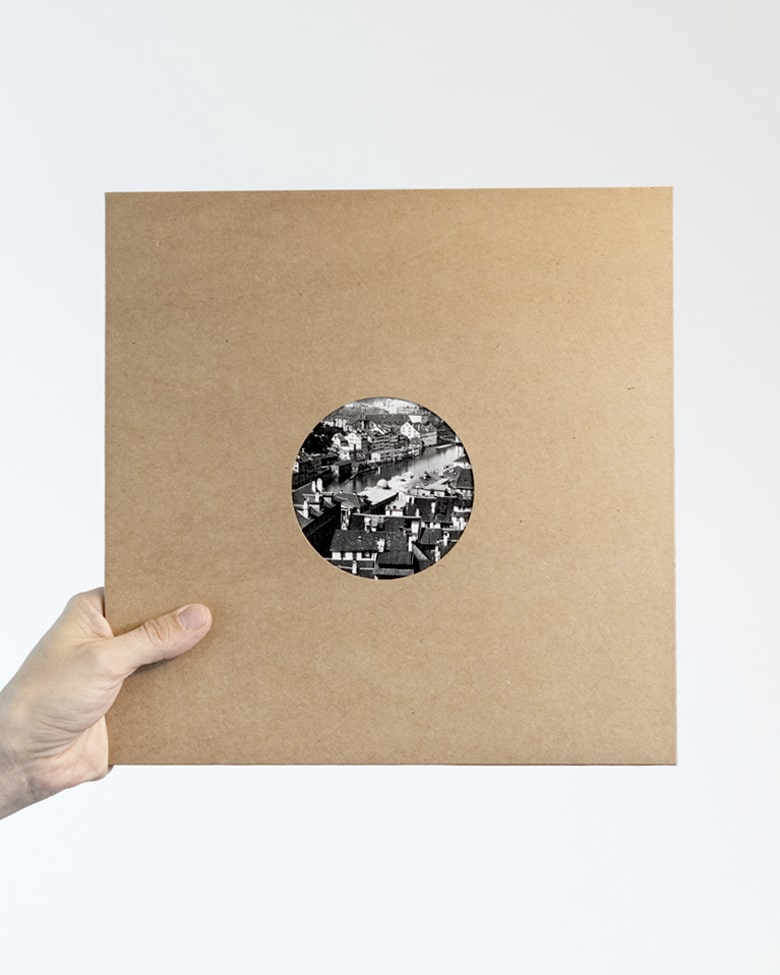
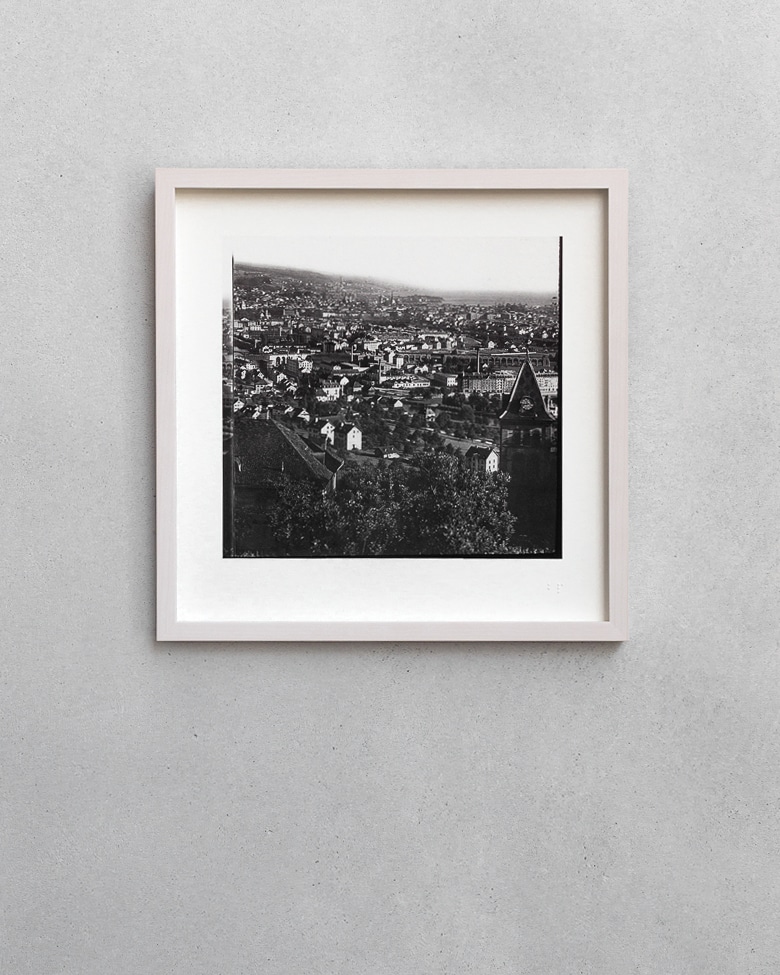
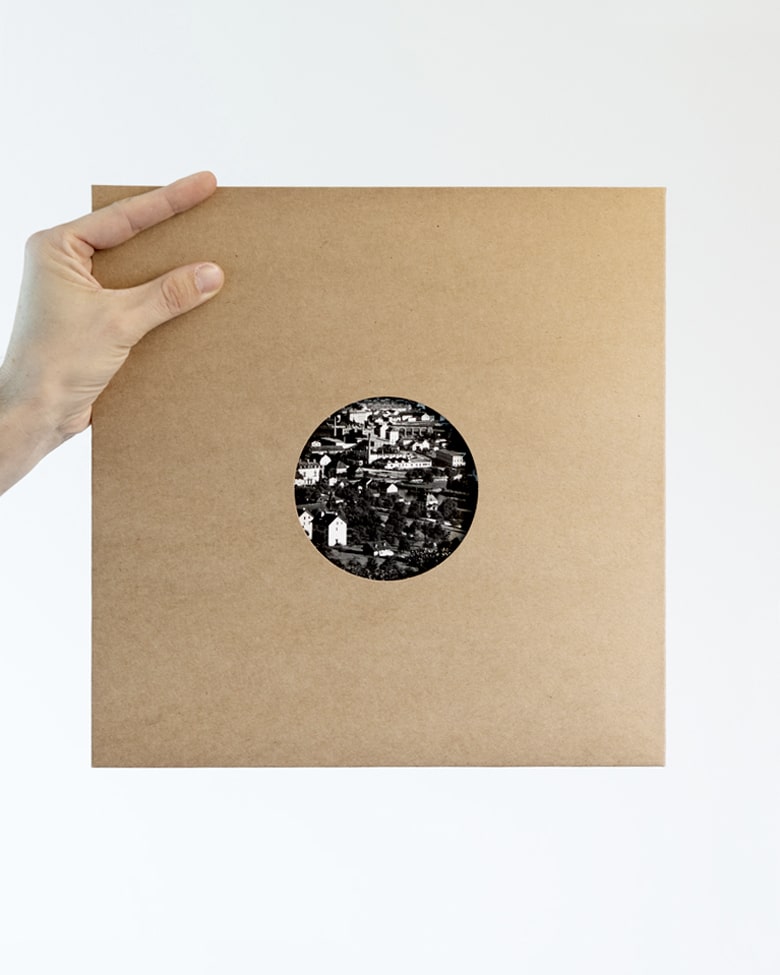
The camera was placed at the top of the Grossmünster’s south tower, this time directed south-east rather than north: away from the railway station, toward the lake outflow and the Riesbach shore. The foreground is the same compressed tiled roofscape visible in the northward view of the same year — Nr.013 — but the background opens onto water rather than a roofline. The open expanse of the lake outflow occupies the right side of the background, with the undeveloped shore of what would become Bellevue and the Sechseläutenplatz running along the middle distance. The two plates from the same tower, the same year, facing opposite directions, record the two faces of a city in transition: one toward its railway infrastructure to the north, the other toward the unbuilt lakeshore to the south.
The plate
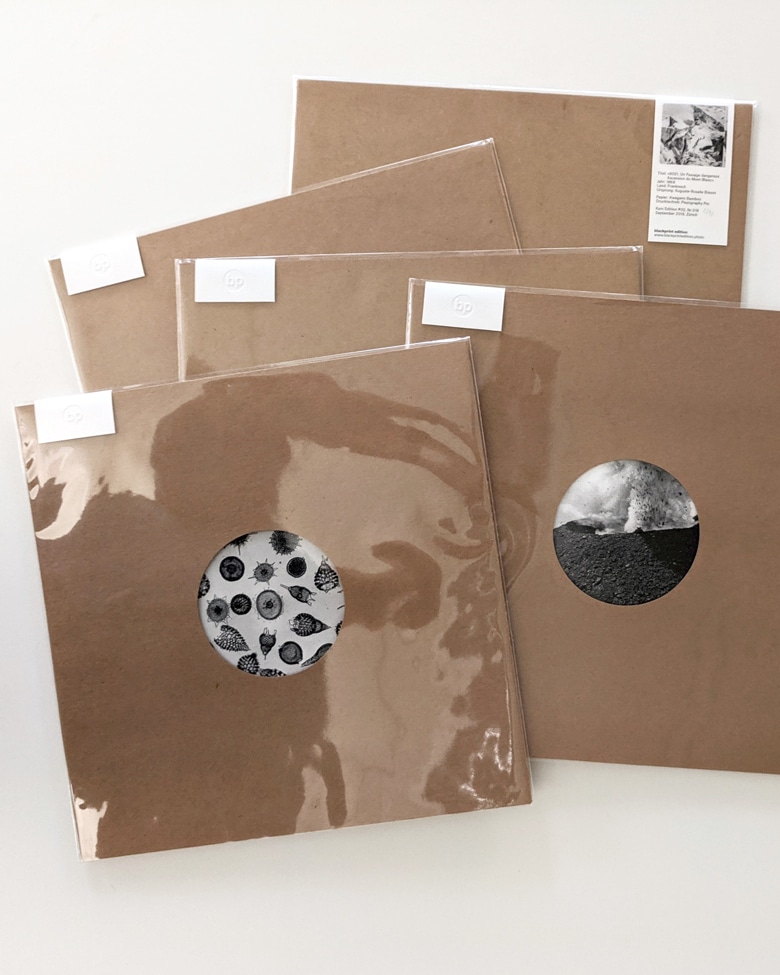
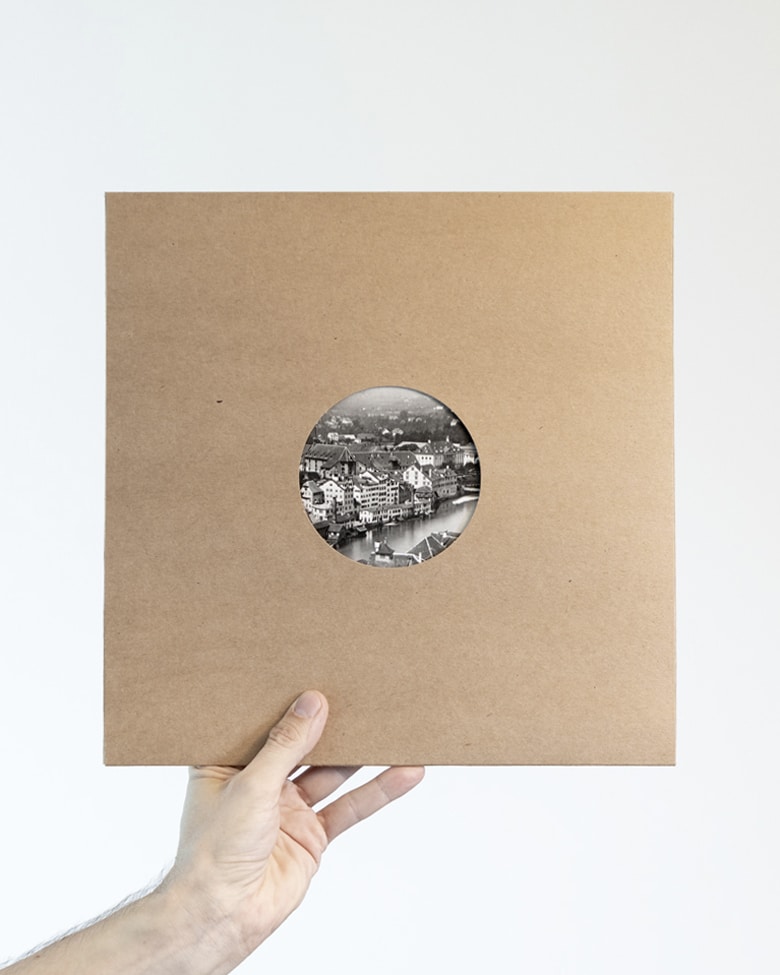
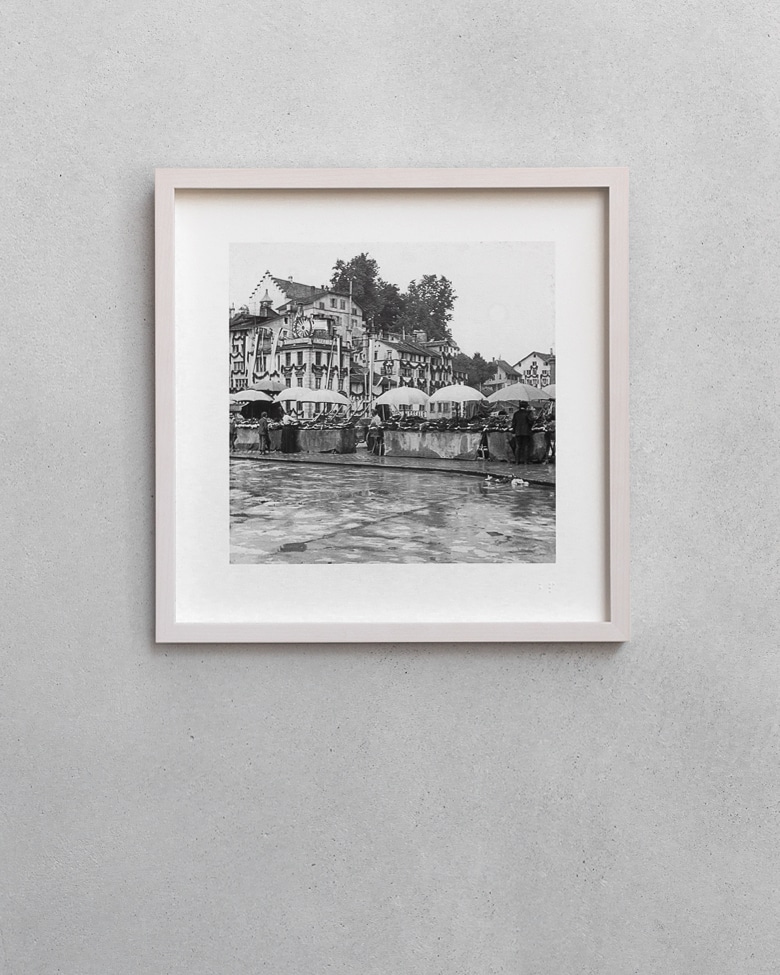
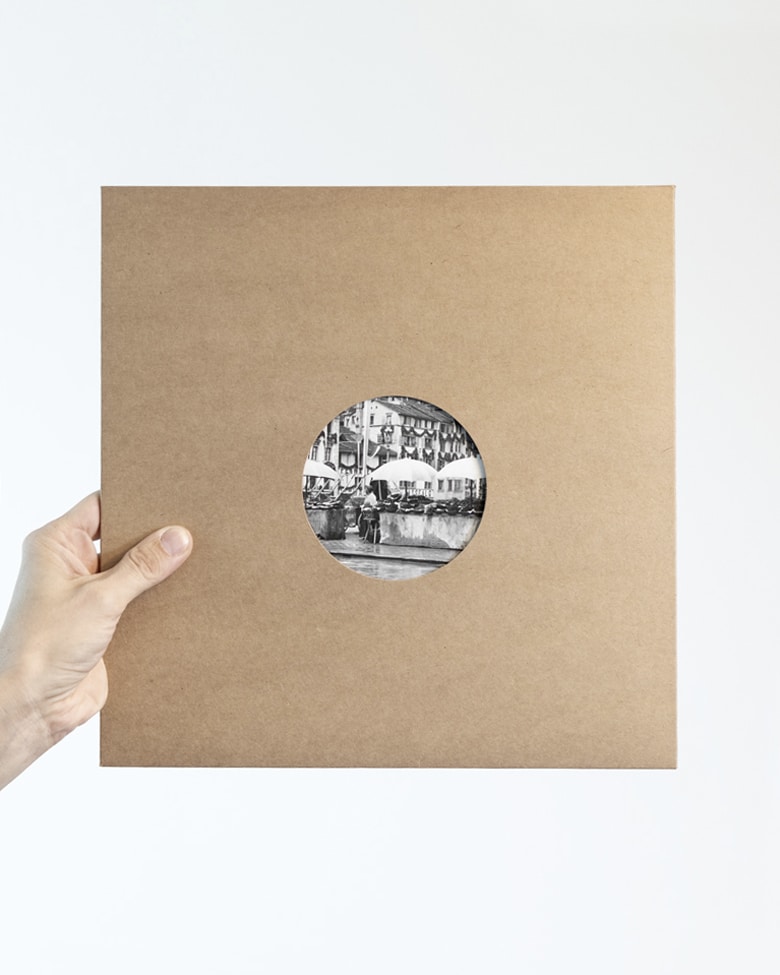
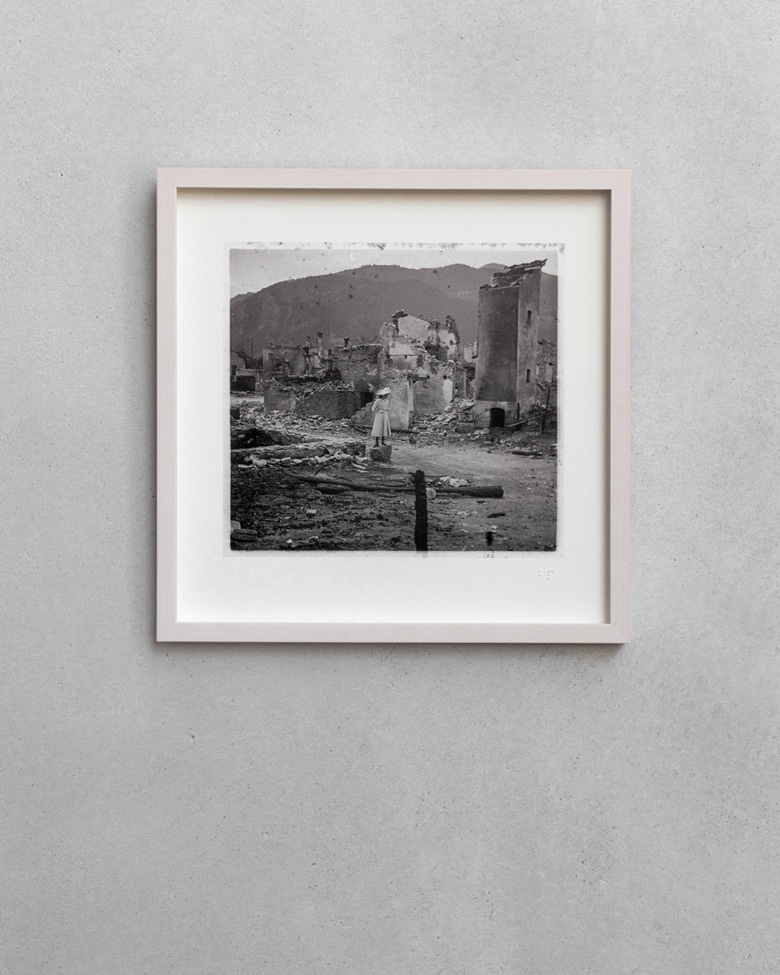
Stereoscopic glass slide, 8.3 × 17 cm, blackprint collection. Photographer: Ferrier & Soulier, Paris. Plate title not confirmed. Piezography® Pro print on Awagami Bamboo Washi, 250 g/m² — made by the Awagami Factory in Tokushima, Japan, directed by the Fujimori family for eight generations, within a washi tradition in the Awa region dating to the 7th century. 30 × 30 cm. Edition of 90, Zürich.