The photographers
The format — stereoscopic glass slide, 8.3 × 17 cm — is consistent with Swiss documentary production of the 1890s.
The viaduct
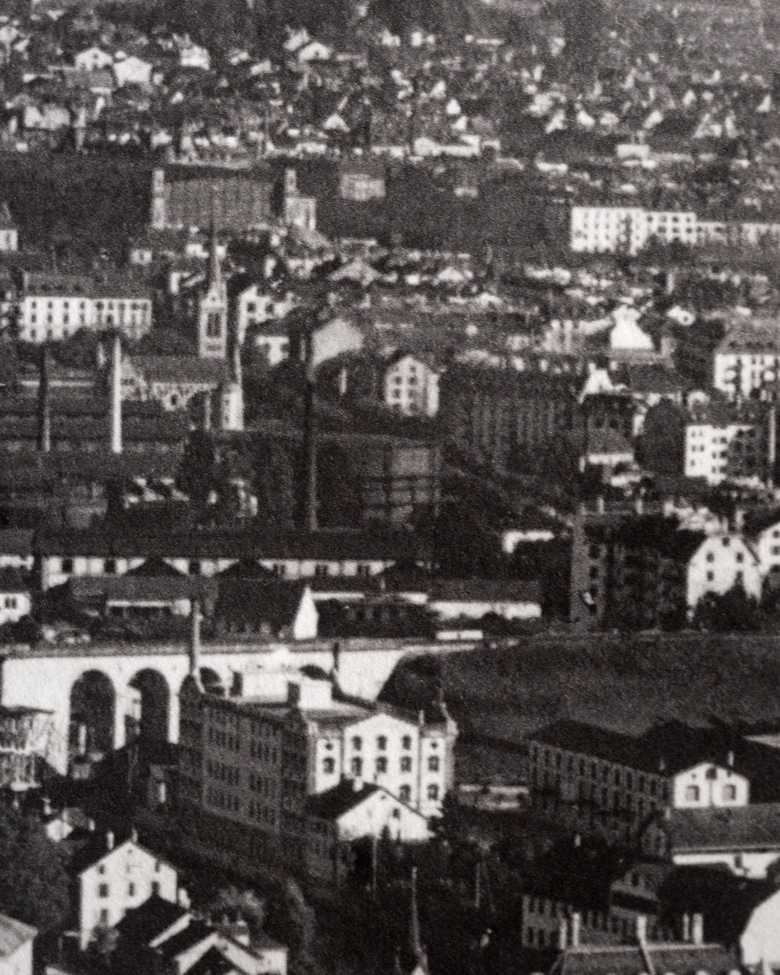
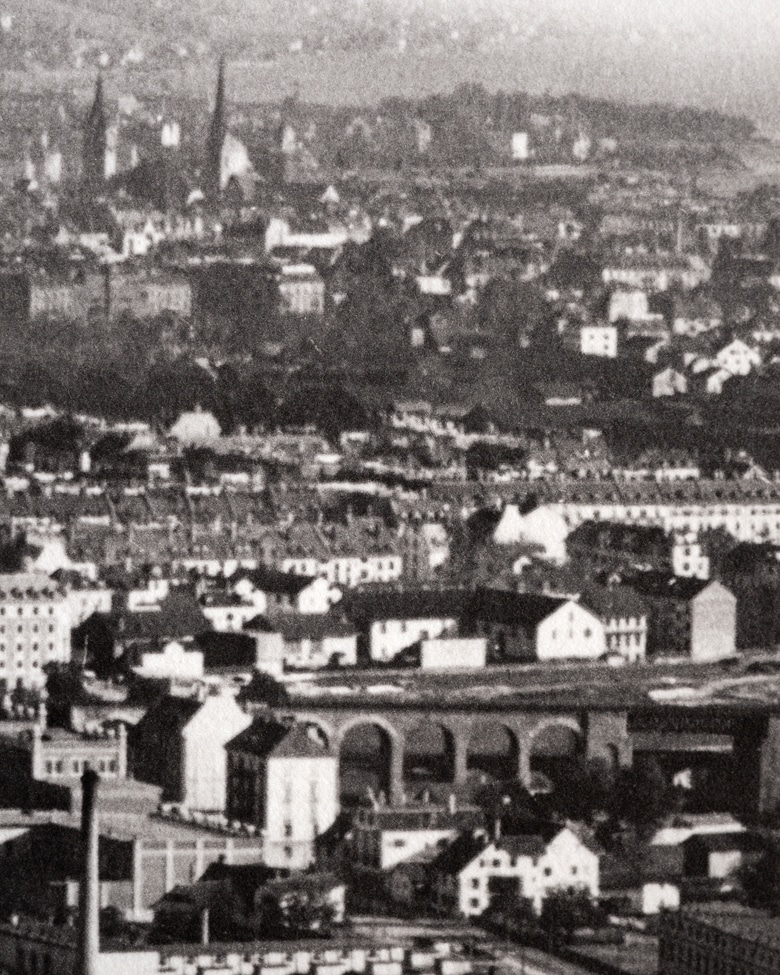
The Aussersihler Viadukt was planned from 1875 by the Schweizerische Nordostbahn (NOB) and built between 1891 and 1894 under the direction of chief engineer Robert Moser, opening on 18 August 1894. The Wipkinger Viadukt, at 834 metres, was at the time the longest bridge structure in Switzerland. The viaduct was built to resolve a longstanding operational problem: the existing railway approach to the Hauptbahnhof from the west ran over a steep earthwork embankment along what is now Röntgenstrasse, requiring auxiliary locomotives to assist trains on the gradient. The viaduct replaced this embankment and eliminated the need for banking engines on the steep approach. It is built from dressed natural stone with 63 main arches, the largest spanning 22.72 metres. At the time of this photograph, Aussersihl had only recently been incorporated into the city of Zürich — in 1893, a year before the viaduct’s completion.
The composition
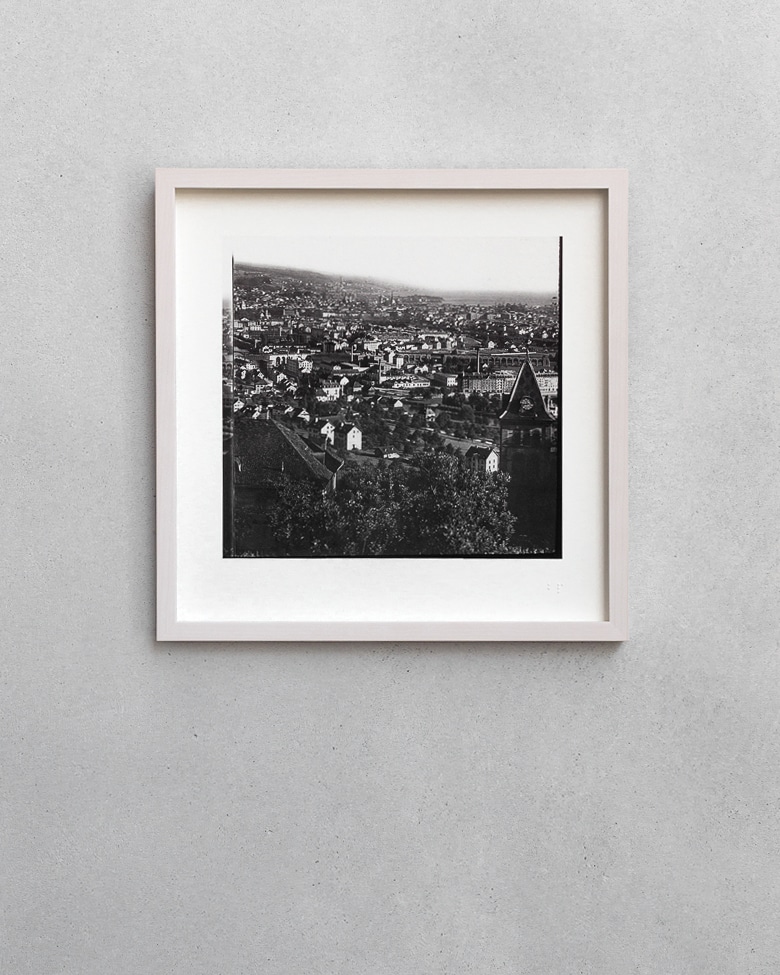
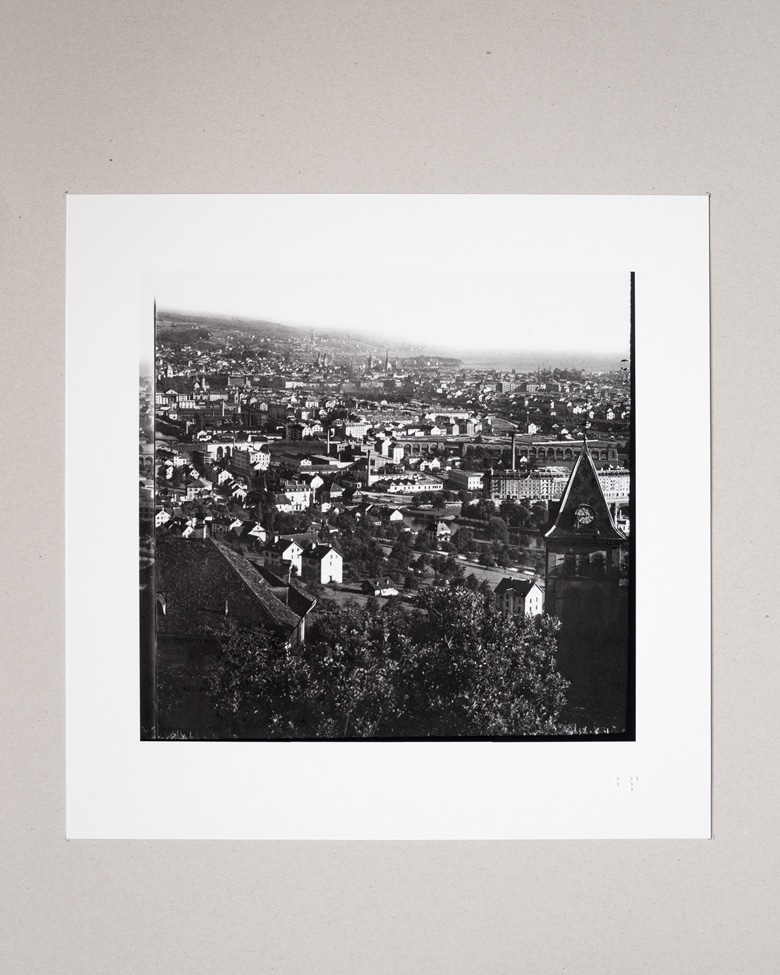
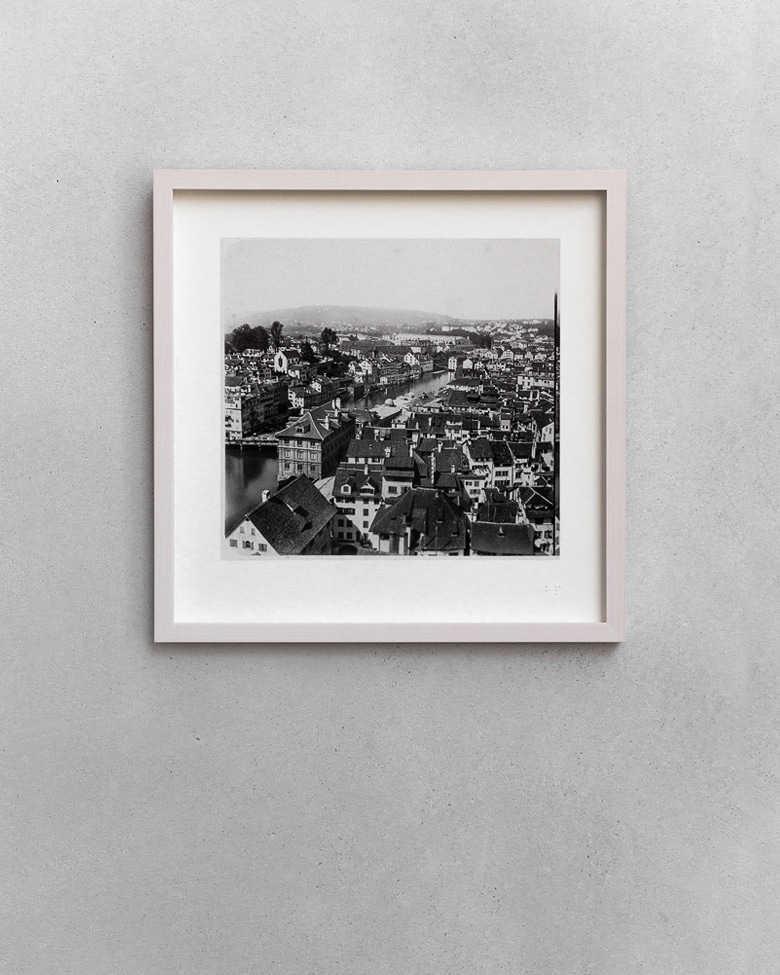
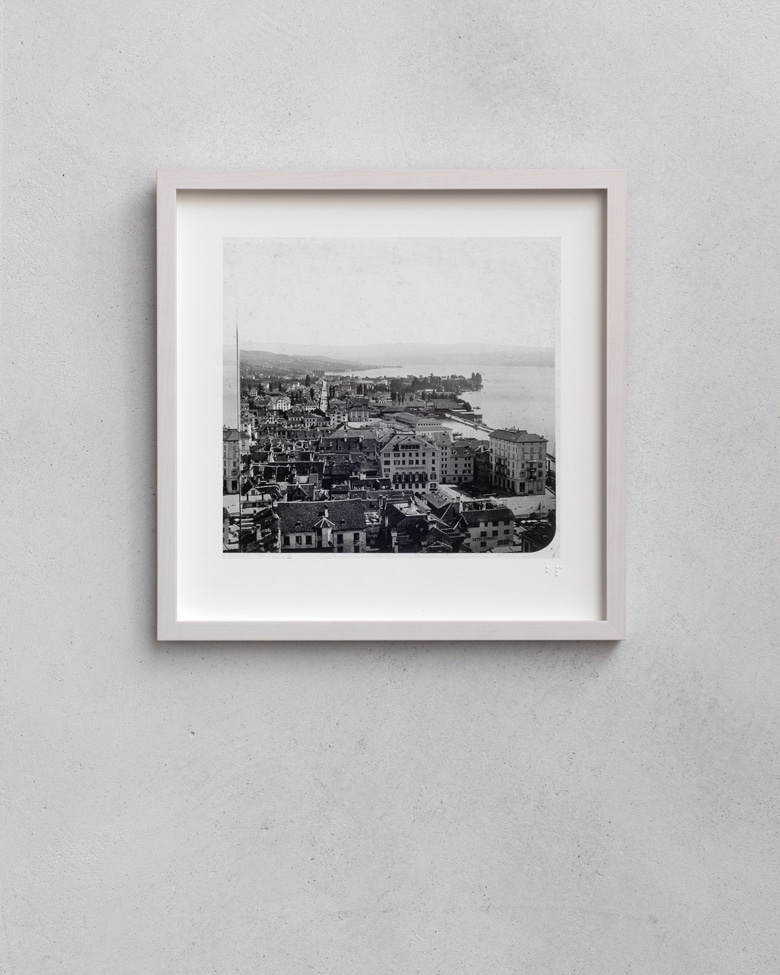
The camera was positioned on the heights above Aussersihl — likely along the Limmatstrasse or Hönggerstrasse ridge — looking east-northeast toward the lake. A church tower with a pointed spire and clock face occupies the right foreground. The viaduct’s arches run horizontally across the middle ground, the railway infrastructure it served spreading across the centre of the frame. Beyond it, the city extends to the Zürichsee, visible as a pale band on the horizon. The image documents the western quarter at the moment of its transformation: the viaduct newly completed, Aussersihl newly incorporated, the industrial zone between the Sihl and Limmat still in formation.
The plate
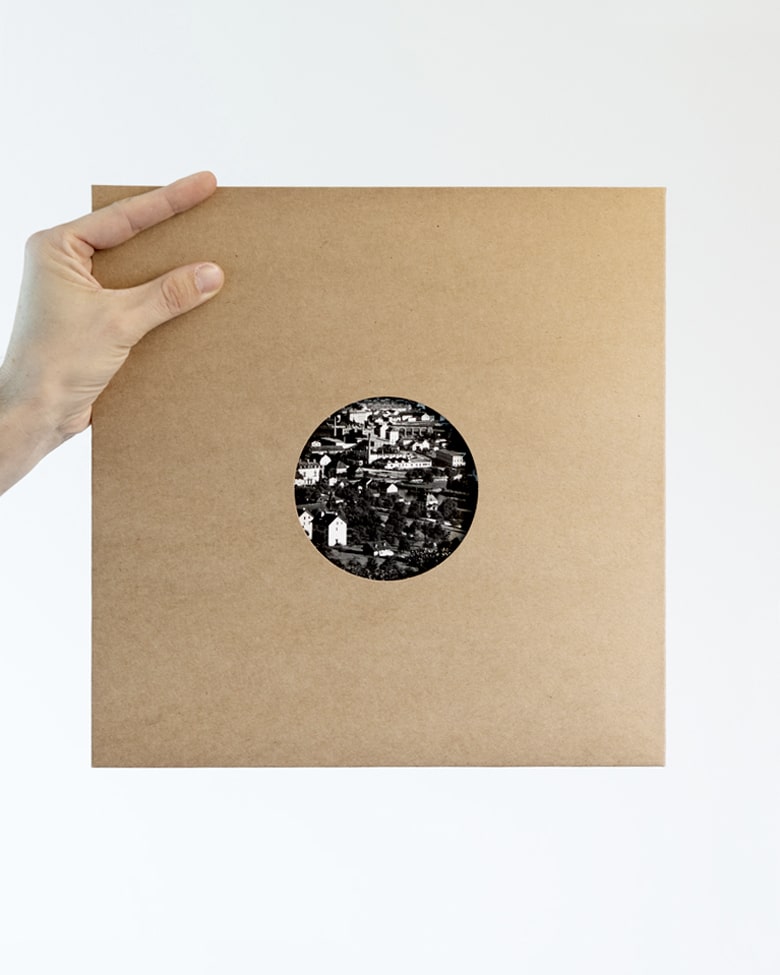
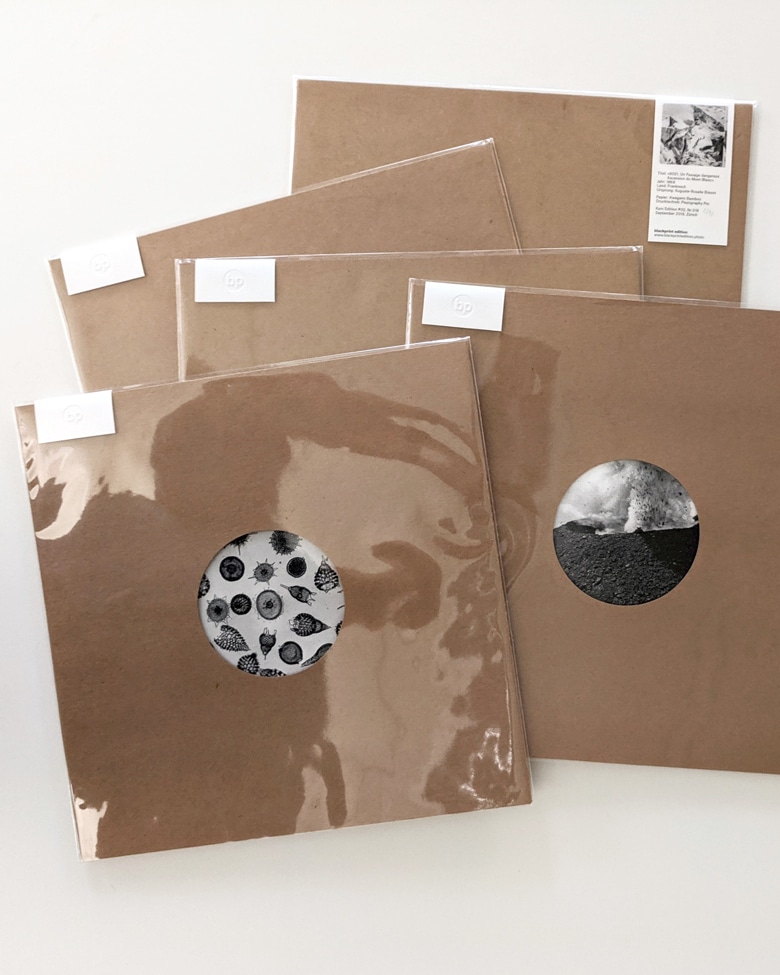
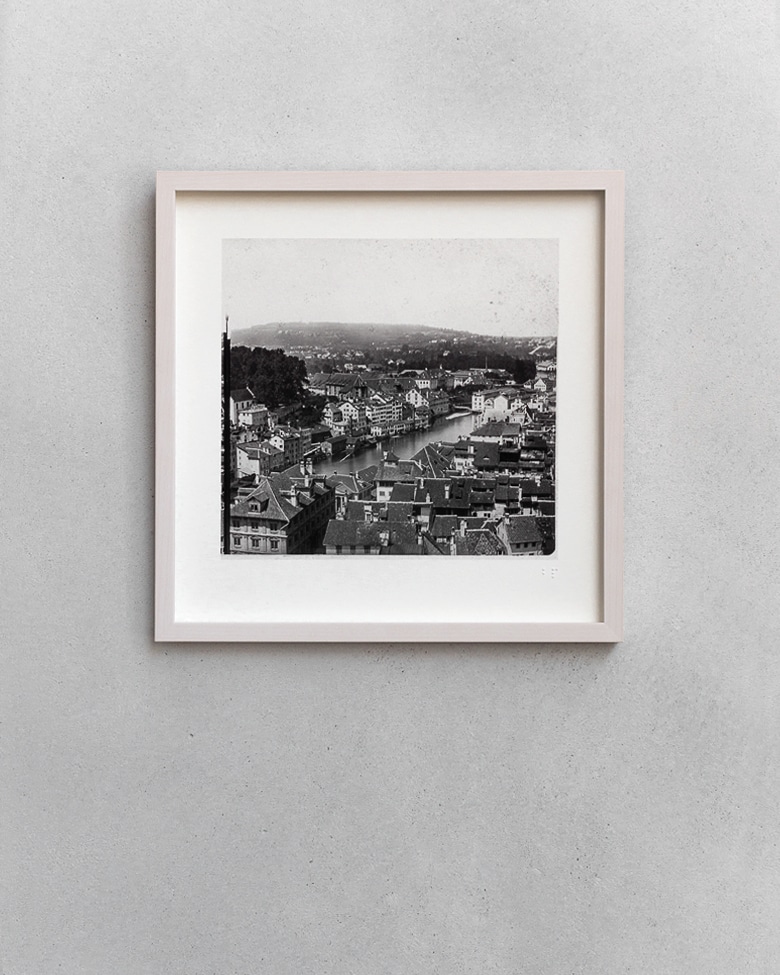
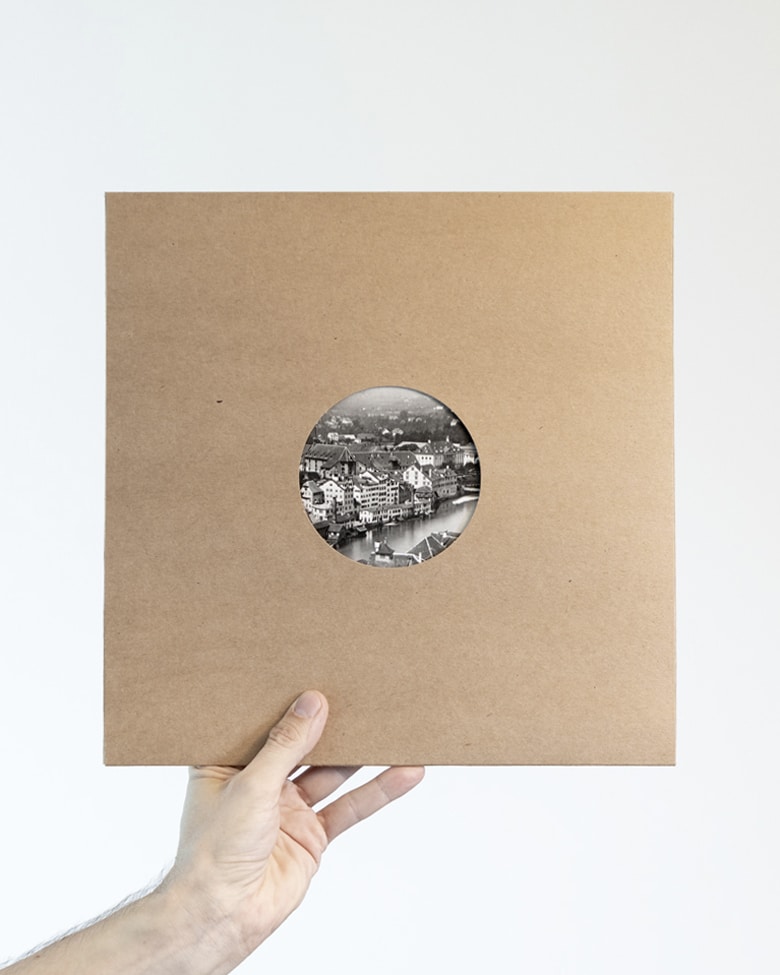
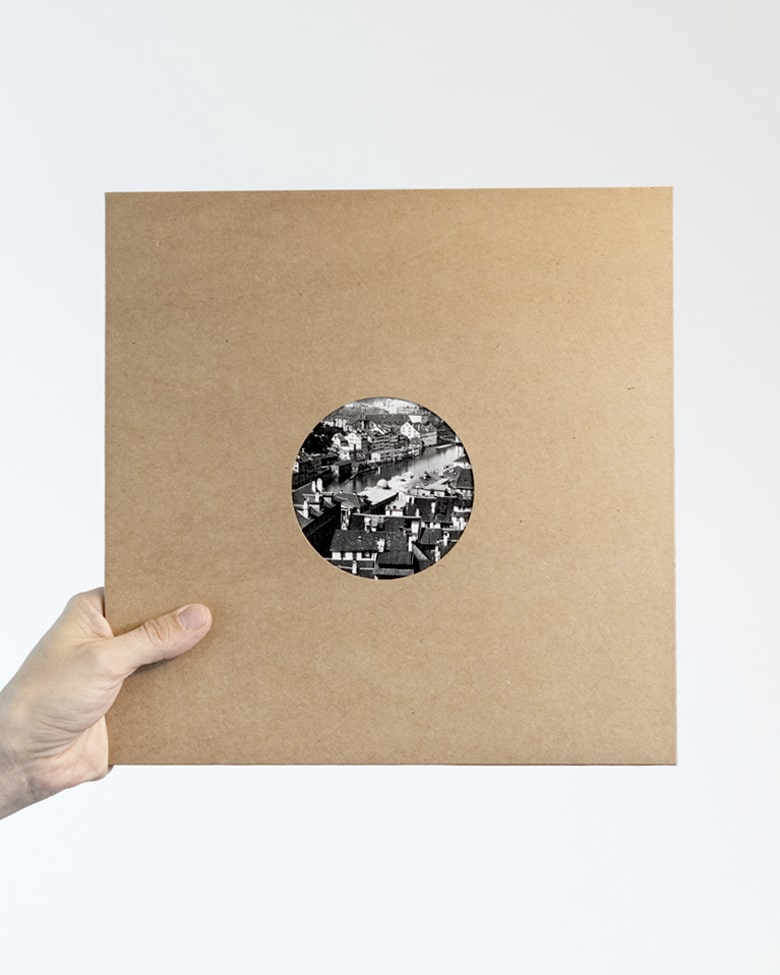
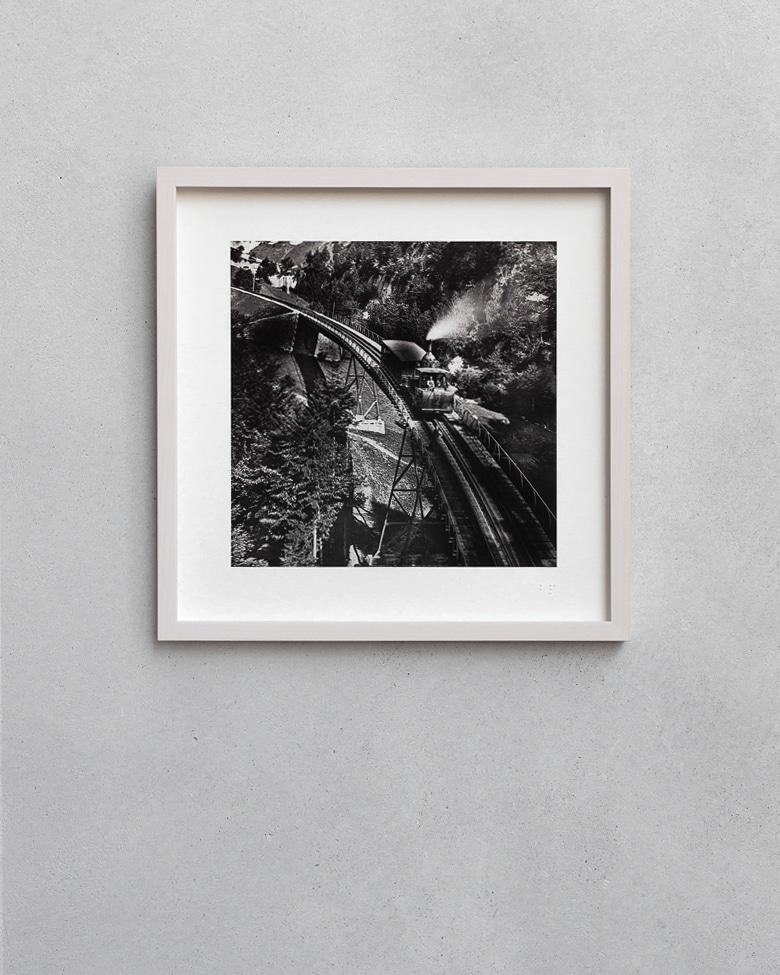
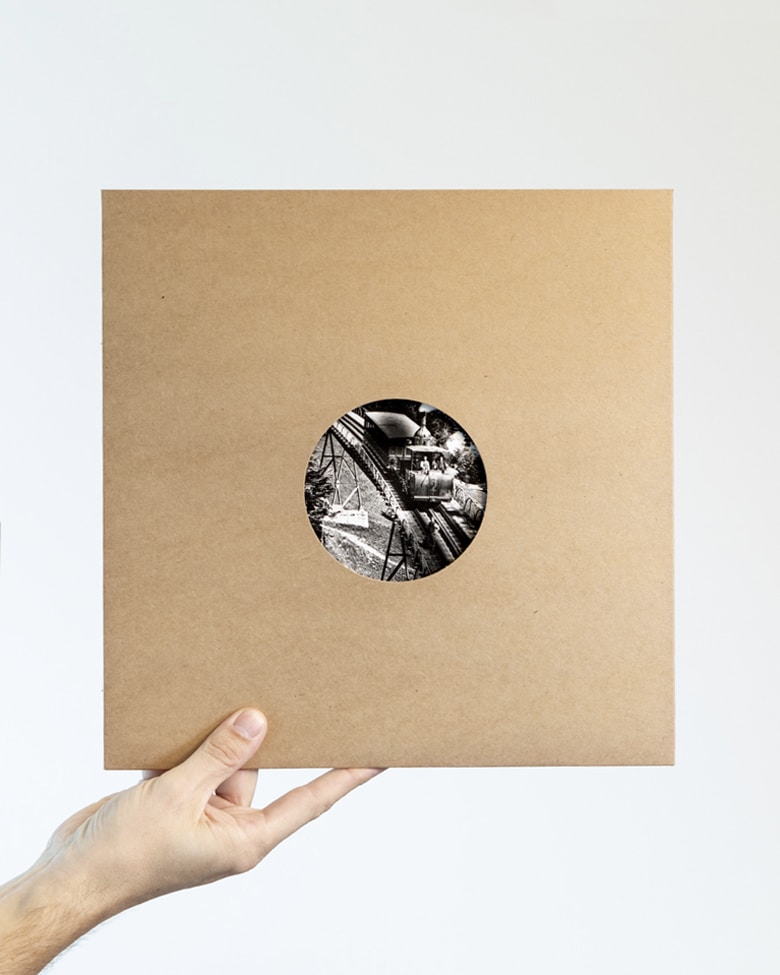
Stereoscopic glass slide, 8.3 × 17 cm, blackprint collection. Plate title and photographer not confirmed. Printed on Awagami Bamboo Washi, 250 g/m², 30 × 30 cm. Edition of 90, Zürich.