Ferrier & Soulier
Claude-Marie Ferrier (1811–1889) is credited with producing the first glass stereoview in 1852, working from the Paris atelier of optician Louis-Jules Duboscq. In 1859 he formed a partnership with his son Jacques-Alexandre and with Charles Soulier (1816–1886), establishing the firm known as Ferrier père, fils et Soulier. The business was acquired in 1864 by Léon & Lévy, who continued to sell the catalogue under those names. Their albumenized-on-glass process was technically unmatched among French studios of the period. Catalogue number 4032 places this plate within their Swiss series, which documented the country’s cities, landscapes, and infrastructure in the years immediately following the opening of the first Swiss railway lines.
The first station
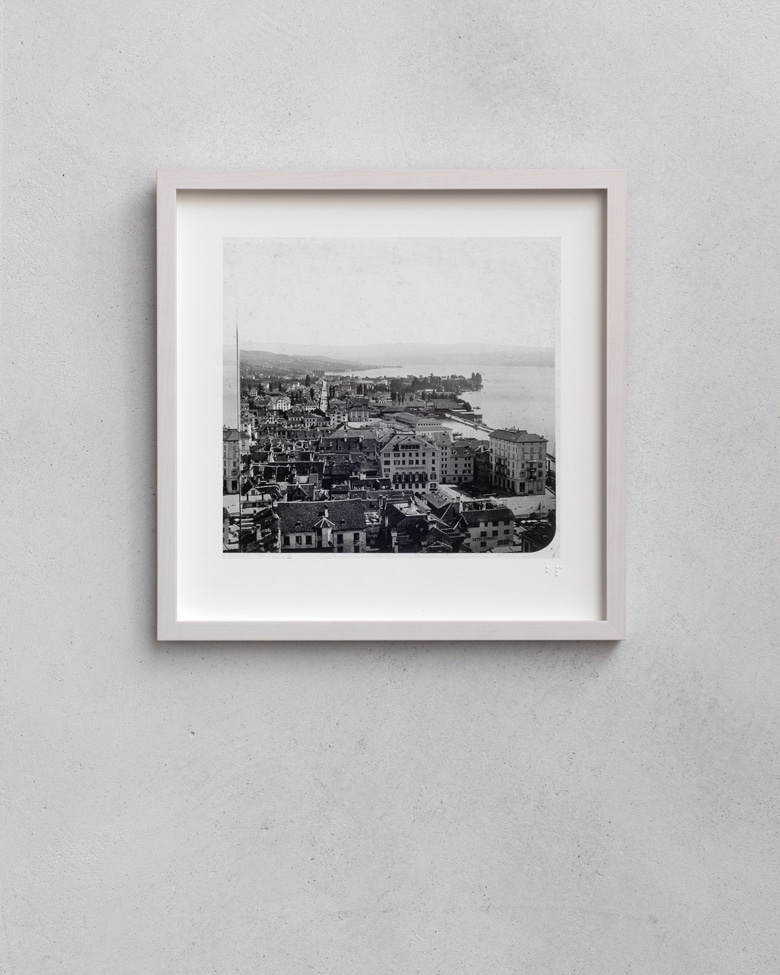
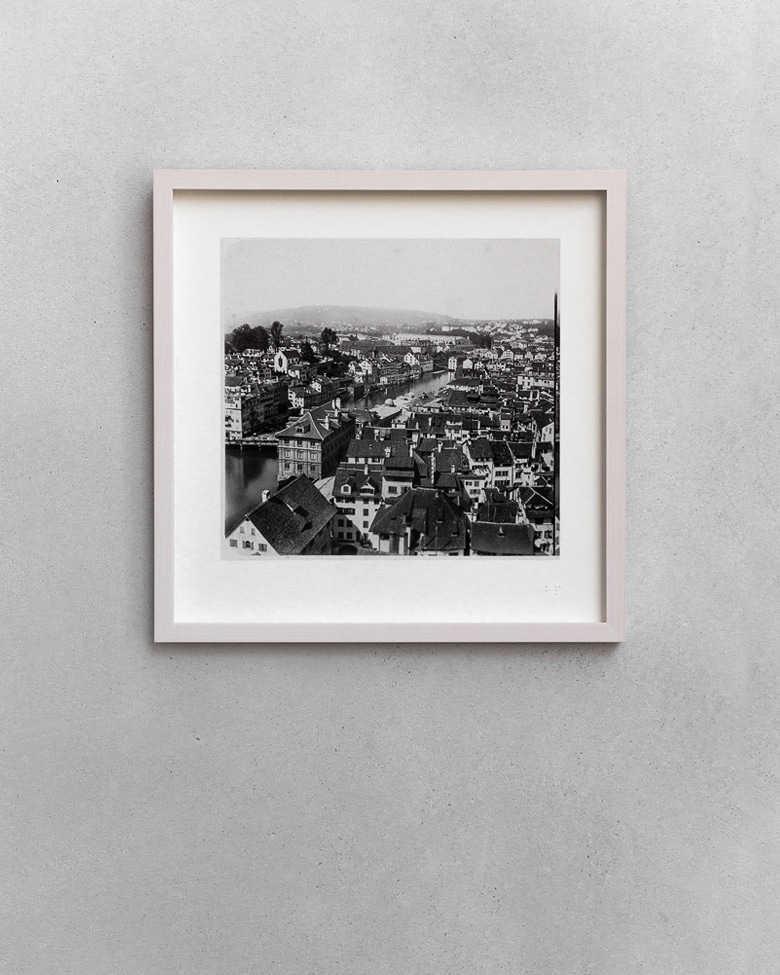
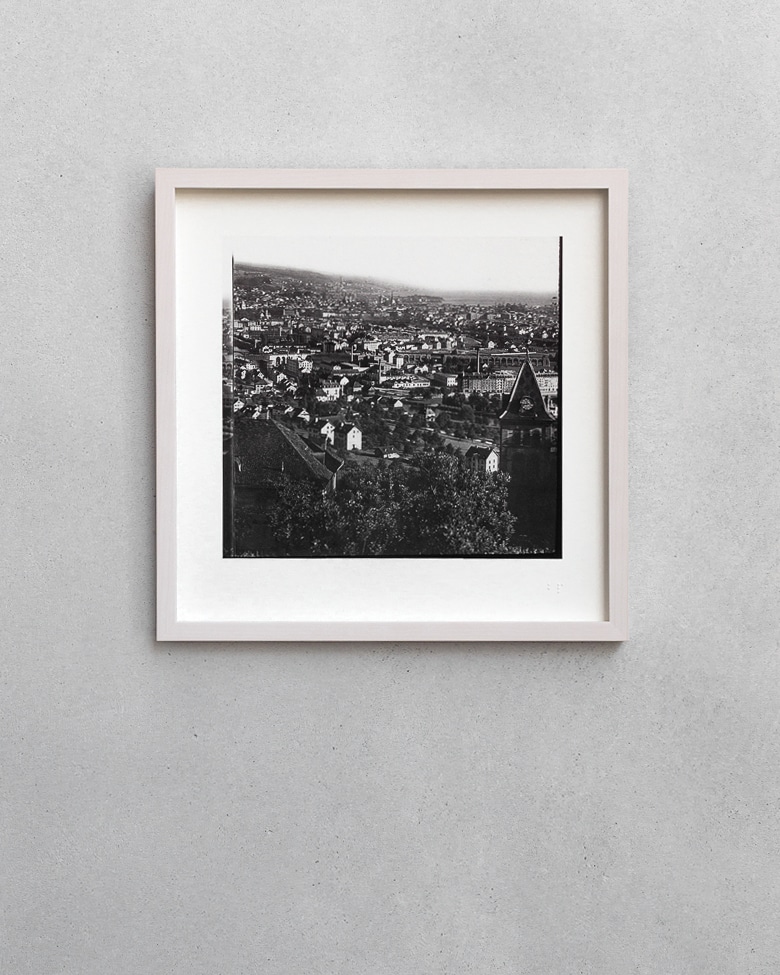
Switzerland’s first railway opened on 9 August 1847 between Zürich and Baden — a line quickly nicknamed the Spanisch-Brötli-Bahn by Zürich residents, after the sweet rolls they could now bring back from Baden within the hour. The Zürich terminus was a relatively modest timber structure, built for a city of some 30,000 inhabitants. By 1862, Zürich had grown considerably: the first industrial concerns had established themselves along the Sihl and Limmat banks, the city’s population was pressing against its old boundaries, and the station was already handling more traffic than its designers had anticipated. The question of a new building was under active discussion; the Neo-Renaissance hall designed by Jakob Friedrich Wanner would be completed in 1871. This plate records the city at the precise moment when the first station was still intact and the transformation it was about to undergo had not yet begun.
The composition
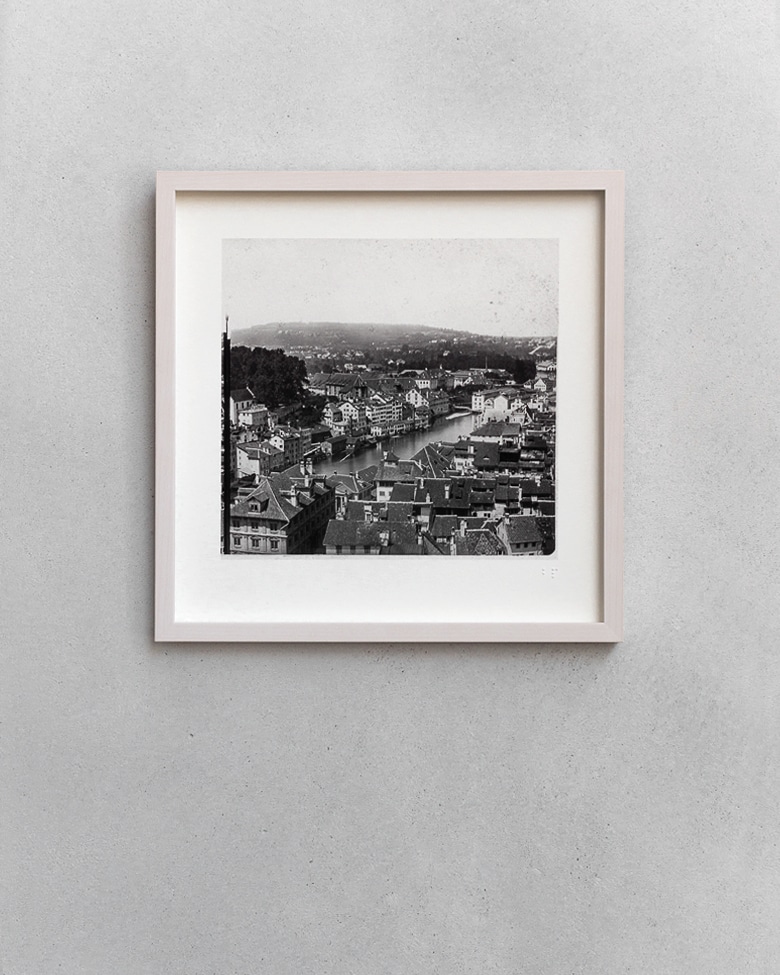
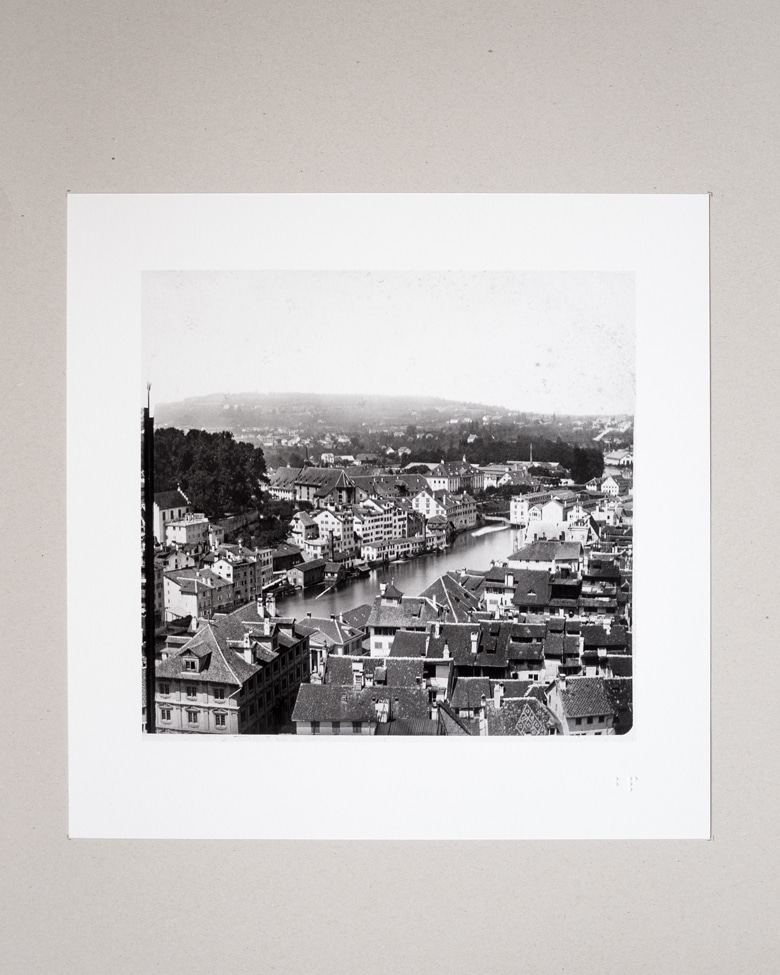
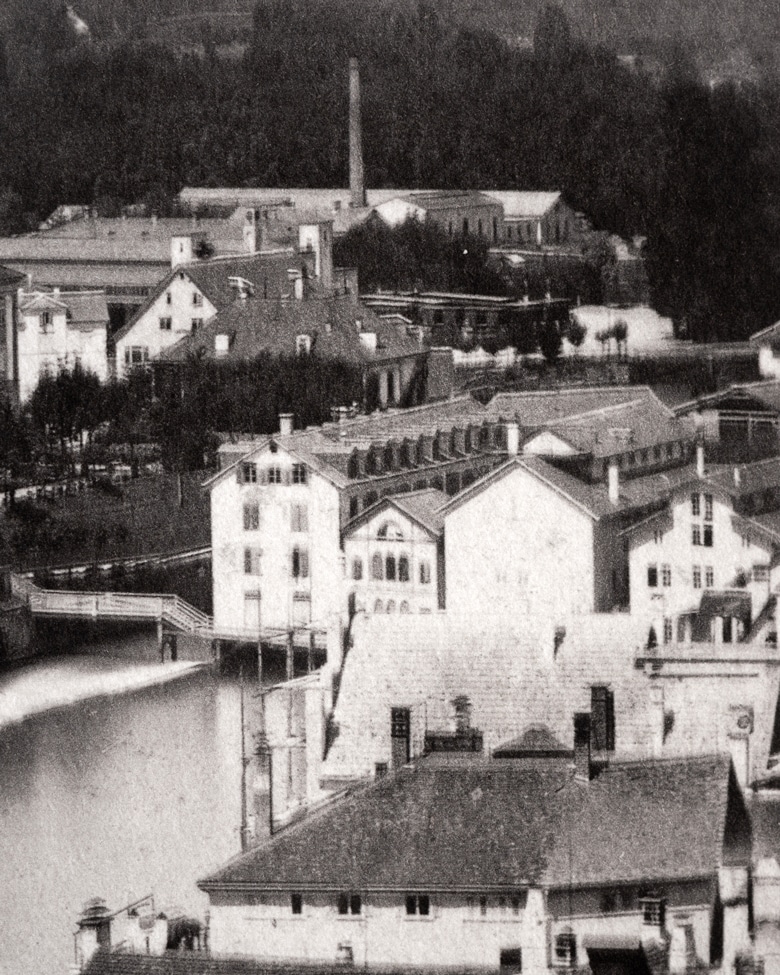
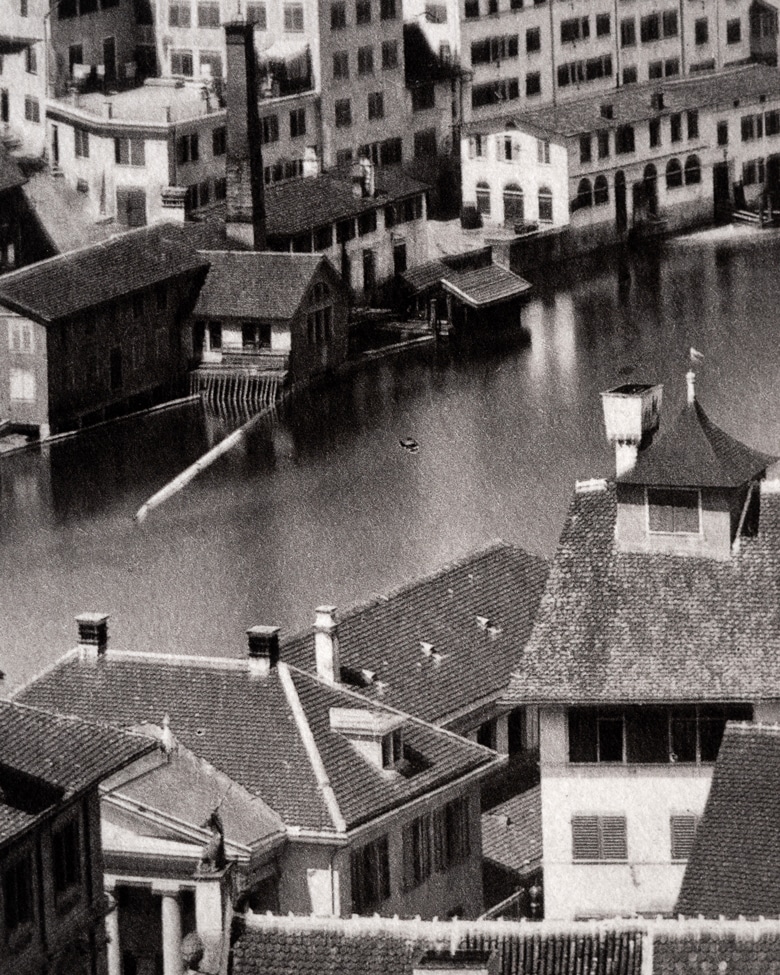
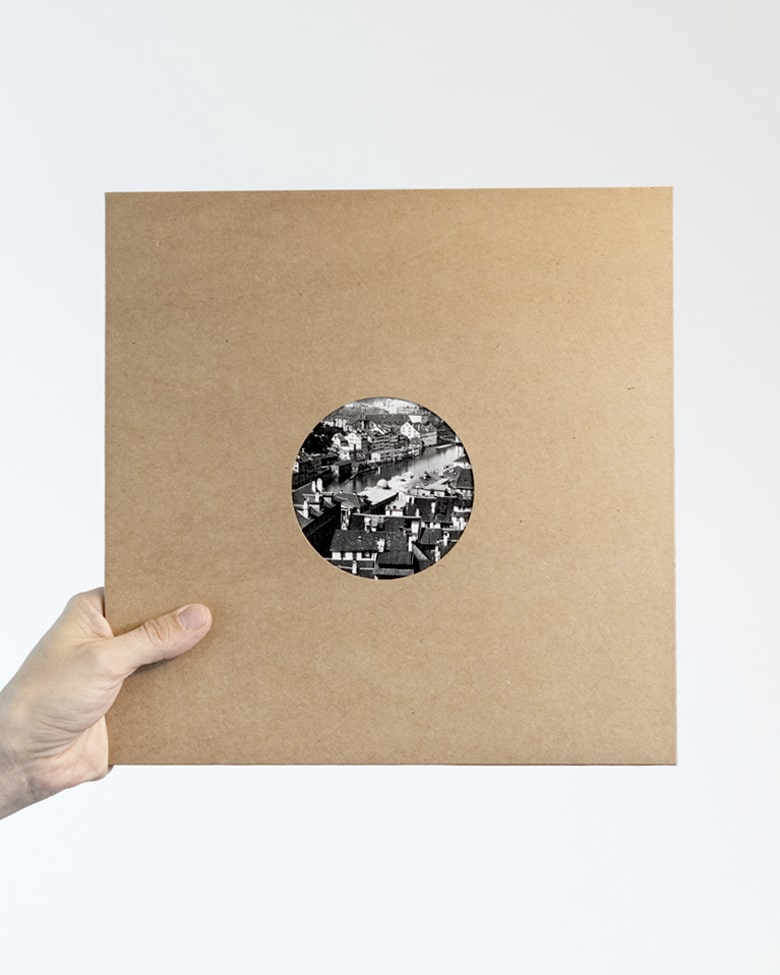
The camera was positioned at the top of the Grossmünster’s south tower, looking north along the Limmat. The river enters the frame from the right, narrows between the densely built banks of the Altstadt and Niederdorf, and recedes toward the station in the background left — the modest roofline of the 1847 building just legible against the horizon. In the middle distance on the west bank, a factory chimney marks the edge of the early industrial zone beginning to form along the Sihl. The foreground is occupied entirely by the compressed tile rooftops of the old city, their varied pitches and dormers filling the lower half of the frame without a single street or open space visible. The stereoscopic format — designed to be viewed through a handheld viewer producing the illusion of depth — made this compressed urban topography its primary subject: the city as a layered object, receding in planes from the tower to the horizon.
The plate
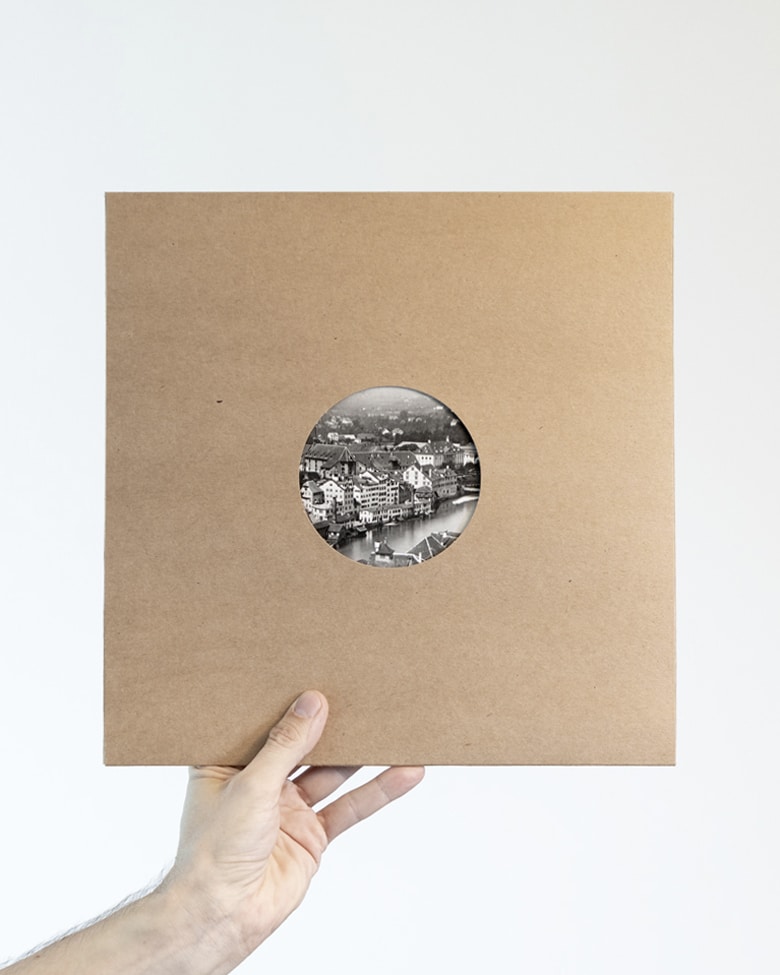
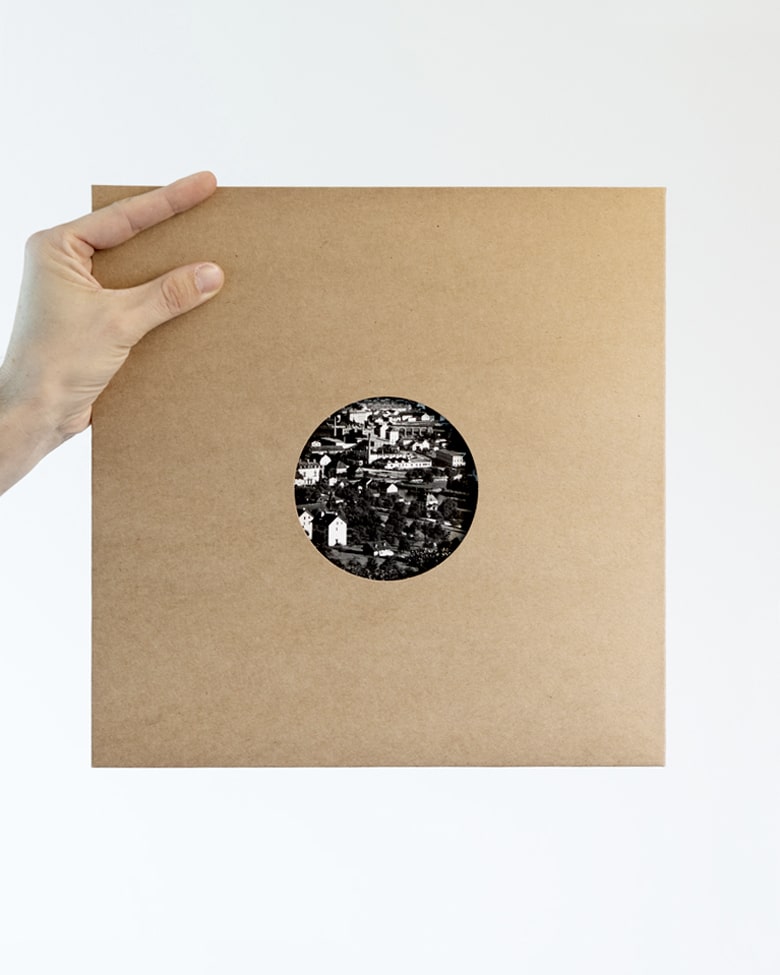
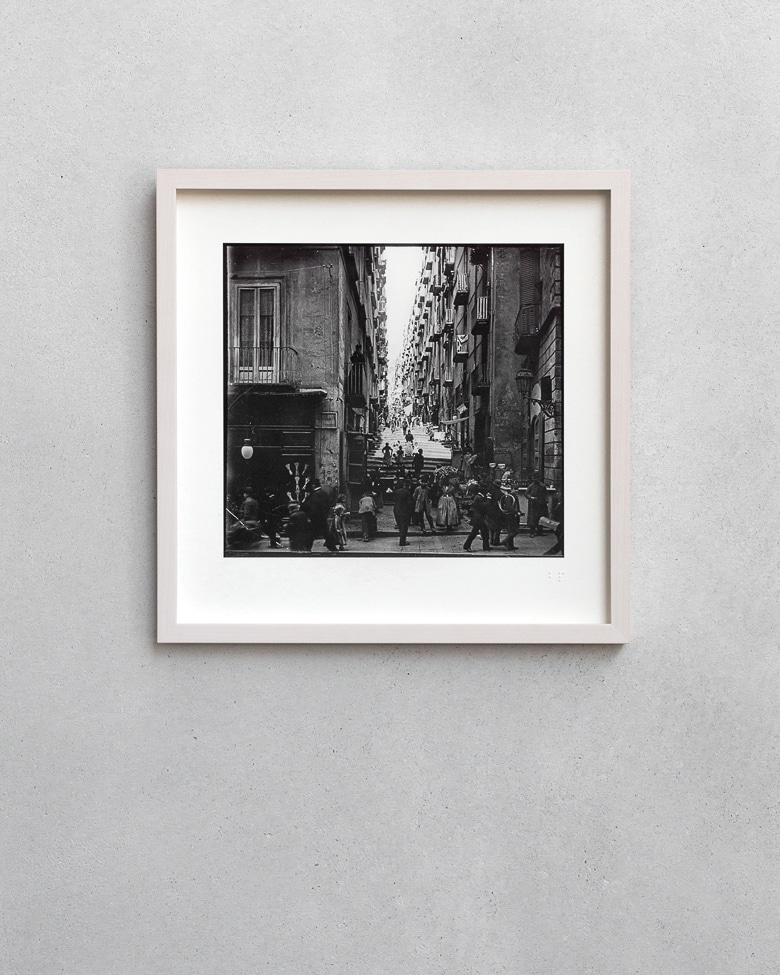
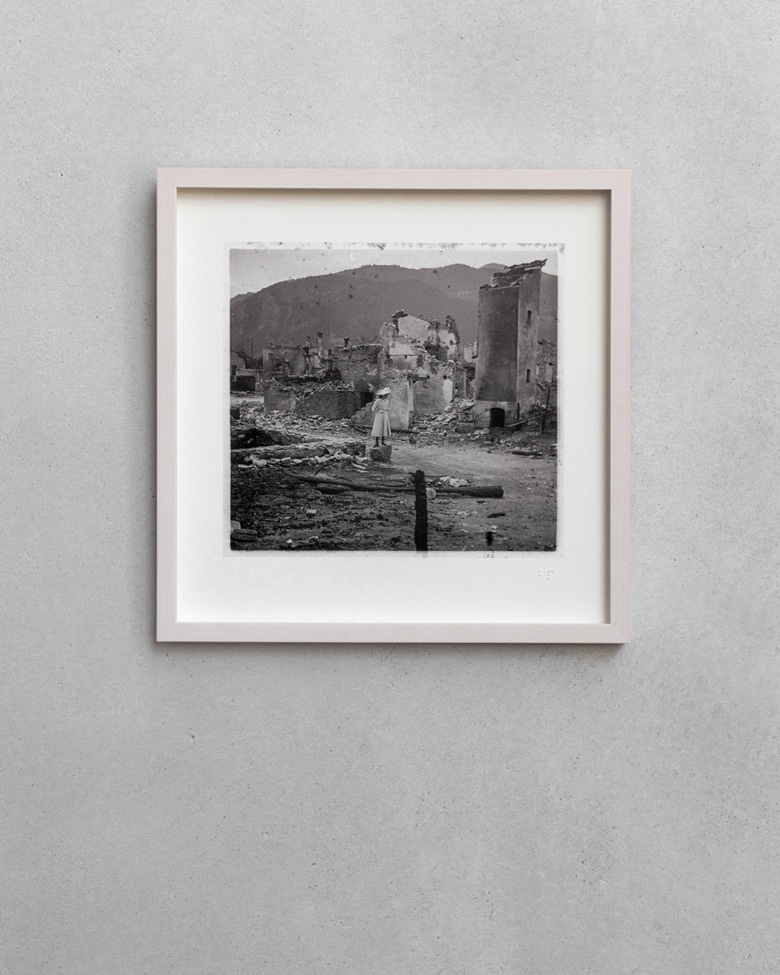
Stereoscopic glass slide, 8.3 × 17 cm, blackprint collection. Plate title: “4032. Panorama de Zurich et la Limmat (Suisse).” Photographer: Ferrier & Soulier, Paris. Printed on Awagami Bamboo Washi, 250 g/m², 30 × 30 cm. Edition of 90, Zürich.